
 EN
EN
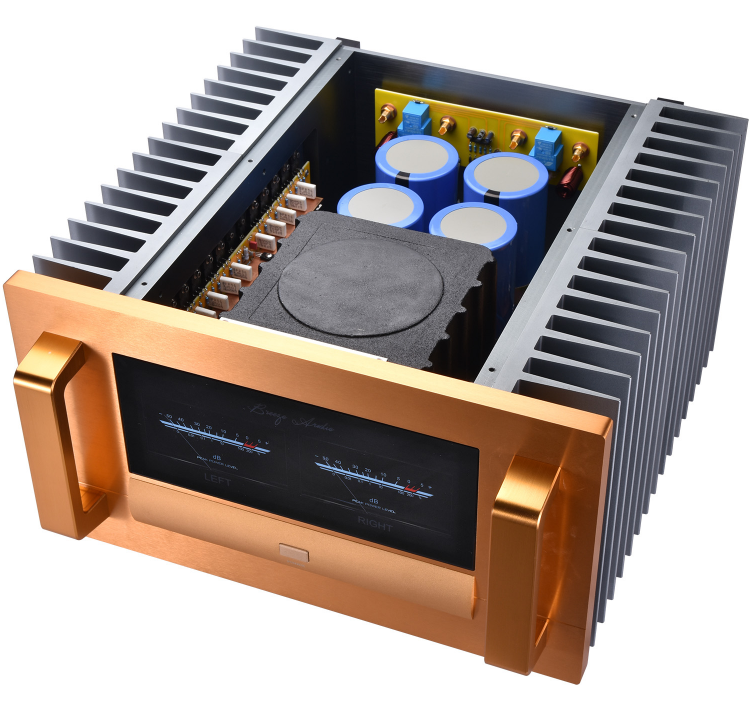
The class ab amplifier has earned a dominant position in HiFi audio manufacturing, and that reputation is no accident. Across decades of product development, audio engineers have consistently returned to the class ab amplifier as a practical and sonically rewarding solution. Understanding why requires a closer look at the core design logic, the listening experience it delivers, and how it fits into modern manufacturing realities.
At its foundation, a class ab amplifier operates by keeping its output transistors conducting for slightly more than half of each audio cycle. This seemingly small detail resolves the most significant weakness of class B designs while preserving much of their efficiency advantage. Manufacturers who build HiFi equipment recognize that the class ab amplifier sits at a uniquely valuable intersection: it offers low distortion, manageable heat output, and a circuit topology that scales well across power ratings.
The Core Design Advantage of a Class AB Amplifier
Eliminating Crossover Distortion Without Sacrificing Efficiency
One of the primary reasons the class ab amplifier became the preferred topology in HiFi audio is its ability to eliminate crossover distortion. In a pure class B design, the transition between the positive and negative halves of the audio signal creates a noticeable notch distortion that degrades audio clarity. The class ab amplifier solves this by applying a small bias current that keeps both transistors slightly active during the crossover region. The result is a smooth, continuous signal transfer that is essential for high-fidelity reproduction.
This correction comes with only a modest efficiency trade-off. A class ab amplifier typically operates at 50–70% efficiency under real-world signal conditions, far better than the near-constant power draw of a class A design. For HiFi manufacturers, this means a class ab amplifier can deliver excellent sound without demanding oversized power supplies or creating thermal management nightmares in compact chassis designs.
Circuit Topology That Engineers Trust
The circuit architecture of a class ab amplifier is well-understood, well-documented, and highly predictable. Engineers designing HiFi products benefit from decades of accumulated knowledge about bias setting, thermal compensation, and feedback loop behavior in a class ab amplifier. This maturity reduces development risk and allows engineering teams to focus on refinements rather than fundamental circuit challenges. It also makes a class ab amplifier easier to manufacture consistently at scale, which is a real competitive advantage for audio brands producing units in volume.
Sound Quality Characteristics Valued in HiFi Applications
Natural Harmonic Profile and Dynamic Response
Audio enthusiasts and professional reviewers often describe the sound signature of a class ab amplifier as natural and musically engaging. The harmonic distortion profile of a class ab amplifier tends to favor lower-order harmonics, which the human ear perceives as warm and lifelike rather than harsh. This characteristic makes the class ab amplifier particularly well-suited for reproducing vocals, acoustic instruments, and orchestral content with convincing realism. Manufacturers targeting discerning HiFi listeners frequently choose a class ab amplifier specifically because of this tonal quality.
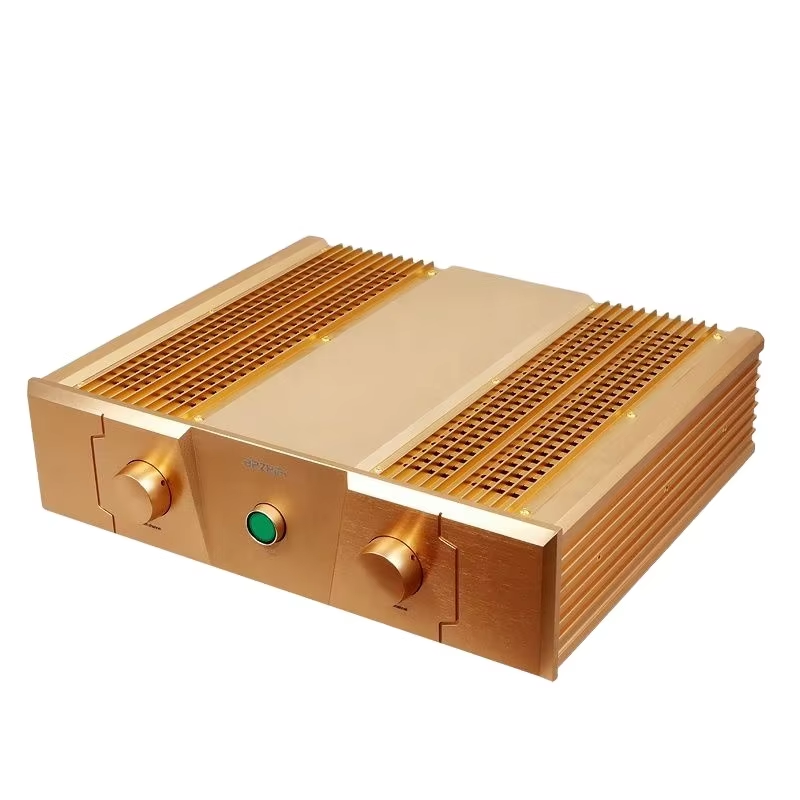
Dynamic response is another area where the class ab amplifier performs strongly. Musical transients, which are the sudden peaks in volume that define the energy of a live performance, require an amplifier to respond instantly and accurately. A properly designed class ab amplifier handles these transients with confidence, delivering power on demand without compressing or smearing the leading edges of notes. This dynamic capability is one of the reasons the class ab amplifier continues to appear in flagship HiFi products from serious audio manufacturers.
Compatibility With Diverse Speaker Loads
HiFi loudspeakers present complex impedance loads that can challenge amplifier designs. A class ab amplifier is engineered to handle varying impedance across the audio frequency range without significant changes in its performance characteristics. This load tolerance makes the class ab amplifier a versatile companion for a wide range of speaker systems, from compact bookshelf designs to large floorstanding models. Manufacturers appreciate this flexibility because it allows a single class ab amplifier platform to serve multiple product tiers and customer needs.
Manufacturing and Commercial Reasons for Its Continued Popularity
Cost-Effective Production Without Compromising Performance
From a manufacturing cost perspective, the class ab amplifier offers a compelling value proposition. The components required to build a high-quality class ab amplifier, including bipolar junction transistors or MOSFETs, passive components, and thermal management hardware, are widely available and competitively priced. This accessibility means that a class ab amplifier can be produced at a cost structure that supports profitable pricing across entry-level, mid-range, and audiophile product lines. Compared to class A designs, which require significantly larger heatsinks and power supplies, the class ab amplifier delivers comparable or superior measured performance at lower production cost.
Thermal management for a class ab amplifier is also straightforward to engineer. Because the class ab amplifier does not dissipate maximum power continuously, its thermal design can be optimized around average rather than peak heat load. This allows manufacturers to use smaller, lighter, and more aesthetically refined chassis designs without compromising long-term component reliability. The result is a class ab amplifier product that looks and feels premium while remaining economically viable to produce.
Meeting Market Expectations in HiFi Audio Segments
HiFi audio consumers have well-established expectations about amplifier performance, and the class ab amplifier consistently meets those expectations. Buyers in this segment look for low noise floors, wide frequency response, stable stereo imaging, and sufficient output power to drive demanding speakers. A well-engineered class ab amplifier delivers on all of these criteria. Manufacturers who offer a class ab amplifier in their lineup are responding to genuine market demand, supported by decades of positive consumer experience with this topology. The class ab amplifier also pairs naturally with features common in modern HiFi products, including tuners, USB inputs, and digital preprocessing stages.
FAQ
What makes a class ab amplifier different from a class A amplifier?
A class ab amplifier biases its output transistors to conduct slightly more than half the signal cycle, while a class A amplifier keeps both transistors fully conducting at all times. This means a class ab amplifier runs cooler and more efficiently than a class A amplifier, while still avoiding the crossover distortion associated with class B designs. For HiFi use, the class ab amplifier offers a practical balance that class A designs, despite their theoretical purity, cannot match in terms of thermal and power efficiency.
Is a class ab amplifier suitable for high-power HiFi applications?
Yes, the class ab amplifier scales well to high power levels. Many professional and audiophile-grade amplifiers delivering 100 watts per channel or more use a class ab amplifier topology. The design allows engineers to parallel multiple output devices within a class ab amplifier to achieve higher current and power capability without sacrificing the sonic and distortion advantages that define this topology. This scalability is one of the core reasons the class ab amplifier remains a standard choice across power ratings.
How does a class ab amplifier handle real-world listening conditions?
Under typical listening conditions, a class ab amplifier operates at a fraction of its rated output power for most of the time. This means the class ab amplifier stays well within its thermal and electrical comfort zone during normal use, contributing to long service life and consistent sonic performance. The class ab amplifier also responds accurately to dynamic signal variations, which is critical for realistic sound reproduction. This real-world reliability is a major reason why HiFi manufacturers and consumers continue to favor the class ab amplifier over alternative topologies.