
 EN
EN
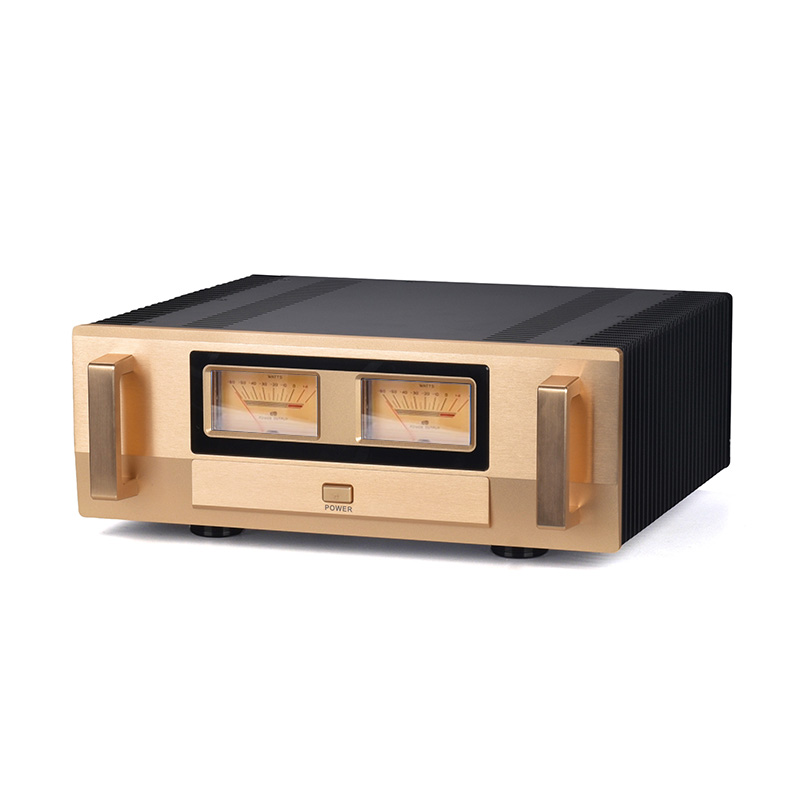
When evaluating audio amplifier topologies, the class ab amplifier consistently stands out as the most practical balance between sonic fidelity and power efficiency. Unlike Class A designs that run hot and waste energy, or Class D designs that prioritize efficiency over warmth, the class ab amplifier occupies a uniquely versatile middle ground. For B2B buyers, system integrators, and serious home audio enthusiasts, understanding what makes a class ab amplifier the preferred choice is essential before committing to a purchase.
A class ab amplifier is not simply a compromise device. It is an engineered solution that takes the best traits from both Class A and Class B amplifier topologies. The class ab amplifier uses a small quiescent current to keep both output transistors slightly active even when no signal is present, effectively eliminating the crossover distortion that plagues pure Class B designs while avoiding the thermal inefficiency of full Class A operation. This makes the class ab amplifier the dominant topology in both consumer and professional audio applications worldwide.
How a Class AB Amplifier Achieves Tonal Balance
The Role of Biasing in Sound Character
The defining sonic characteristic of a class ab amplifier comes from its biasing strategy. By setting a precise quiescent current level, the class ab amplifier ensures that signal transitions near the zero-crossing point are handled smoothly and without gaps. This eliminates the harsh, brittle coloration that results from crossover distortion. In practical listening terms, a well-biased class ab amplifier delivers midrange clarity, extended treble detail, and a natural low-frequency weight that many listeners associate with analog warmth.
The biasing level of a class ab amplifier can be tuned to lean closer to Class A behavior for purer sound, or closer to Class B behavior for greater efficiency. High-end implementations of the class ab amplifier often use elevated quiescent currents to push sonic performance toward Class A quality while keeping thermal output at manageable levels. This flexibility is one reason the class ab amplifier remains a favored topology among audiophile-grade designers.
Output Stage Design and Distortion Control
A high-quality class ab amplifier typically employs complementary symmetry in its output stage, pairing NPN and PNP transistors or equivalent devices to handle positive and negative signal swings with matched precision. This symmetrical topology in a class ab amplifier minimizes harmonic distortion and ensures that the amplified waveform closely tracks the input. Feedback networks in a class ab amplifier further reduce total harmonic distortion, often achieving figures below 0.1 percent in well-engineered units. The result is a class ab amplifier that sounds clean, dynamic, and tonally accurate across a wide frequency range.
Power Delivery and Efficiency in a Class AB Amplifier
Real-World Power Handling Compared to Other Classes
One of the most compelling practical arguments for a class ab amplifier is its power delivery capability relative to its heat and size requirements. A class ab amplifier operating at moderate signal levels produces far less heat than a pure Class A design of equivalent output power. This allows a class ab amplifier to be housed in compact enclosures without aggressive cooling systems, making it suitable for mini amplifiers, integrated stereo units, and rack-mount professional gear alike. In high-demand scenarios, a class ab amplifier can still deliver sustained, high-current output without thermal throttling, which is critical for driving low-impedance loudspeakers.
When a class ab amplifier is evaluated against Class D designs for power delivery quality, the class ab amplifier typically demonstrates superior performance at low to medium volume levels. The linear output stage of a class ab amplifier avoids the switching artifacts that can subtly color the sound in Class D units. For applications where audio transparency is a priority, a class ab amplifier is typically preferred even when efficiency is somewhat lower than switching-mode alternatives.
Efficiency Across the Signal Range
The efficiency of a class ab amplifier varies with signal level. At full output, a class ab amplifier can reach efficiency levels comparable to Class B, sometimes exceeding 70 percent. At lower volumes, efficiency drops because the quiescent bias current in a class ab amplifier continues to draw power regardless of signal activity. For home audio and audiophile applications where the amplifier often operates well below its rated output, this efficiency trade-off is considered acceptable given the sound quality advantage a class ab amplifier provides. System designers should factor this into power supply and thermal management planning when deploying a class ab amplifier in high-duty-cycle environments.
Selecting a Class AB Amplifier for Audiophile and Home Use
Key Specifications to Evaluate
When selecting a class ab amplifier for serious listening, several specifications deserve close attention. Output power rating determines how effectively the class ab amplifier can drive your speaker load. Signal-to-noise ratio indicates how quietly the class ab amplifier operates when no signal is applied, which directly affects perceived background silence. Total harmonic distortion plus noise, often listed as THD+N, reveals how accurately the class ab amplifier reproduces the input waveform. Damping factor describes how well the class ab amplifier controls woofer motion, influencing bass tightness and definition. A class ab amplifier with a high damping factor typically delivers more controlled and articulate low-frequency reproduction.
Design Features That Elevate Performance
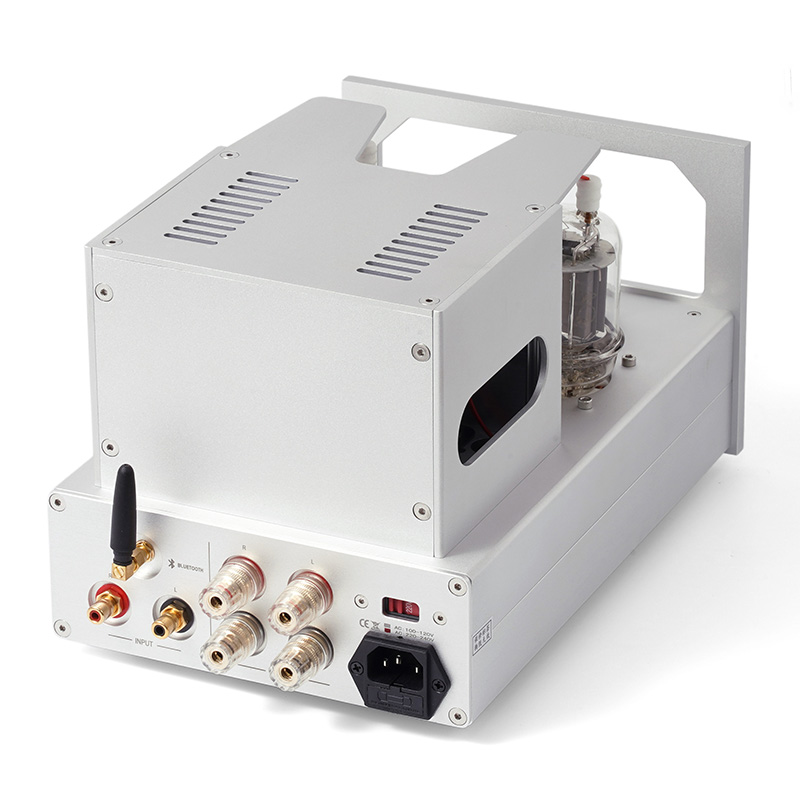
Beyond core specifications, the physical and circuit-level design of a class ab amplifier plays a significant role in its sonic outcome. Toroidal power transformers in a class ab amplifier provide lower electromagnetic interference than conventional laminated-core designs, contributing to a blacker noise floor. High-quality capacitors in the power supply section of a class ab amplifier improve transient response and dynamic headroom. Aluminum chassis construction in a class ab amplifier assists in heat dissipation and adds rigidity that reduces microphonic interference. When a class ab amplifier incorporates FM tuner capability or USB digital input alongside its analog amplification stage, it becomes a highly functional all-in-one solution for modern listening environments.
FAQ
What makes a class ab amplifier better than Class A for home audio?
A class ab amplifier offers sound quality that approaches Class A performance while generating significantly less heat and using power more efficiently. This makes a class ab amplifier far more practical for continuous home listening use, especially in compact enclosures.
How does a class ab amplifier handle high-power output without distortion?
A class ab amplifier uses complementary output transistors and negative feedback to manage large signal swings cleanly. The biasing design of a class ab amplifier ensures that both output devices remain slightly active at all times, preventing crossover distortion even at high volume levels.
Is a class ab amplifier suitable for driving low-impedance speakers?
Yes. A class ab amplifier is well suited to driving speakers with impedances as low as 4 ohms. The linear output stage of a class ab amplifier delivers stable current into low-impedance loads, maintaining tonal balance and dynamic range without the instability that some switching amplifiers exhibit under similar conditions.