
 EN
EN
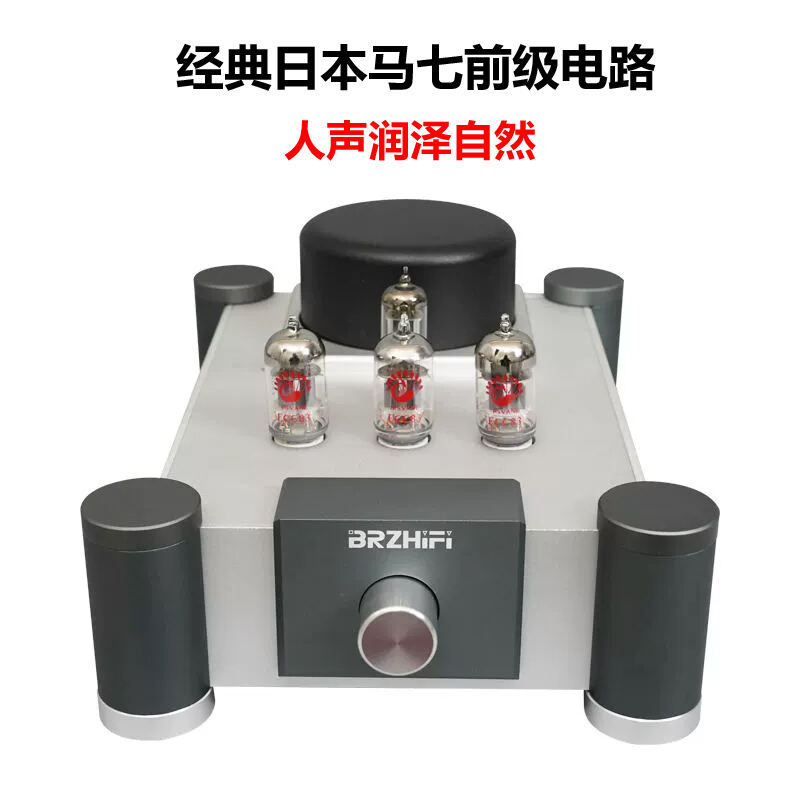
The debate between solid-state and tube amplification has captivated audiophiles for decades, with enthusiasts consistently praising the distinctive sonic characteristics that a tube amplifier delivers. This preference stems from the unique harmonic structure and signal processing inherent to vacuum tube technology, which creates a listening experience many describe as warmer, more musical, and remarkably natural. Understanding the technical foundations behind these sonic qualities reveals why the tube amplifier continues to hold a revered position in high-fidelity audio reproduction despite the prevalence of modern semiconductor alternatives.

The Science Behind Tube Amplification Warmth
Harmonic Distortion and Musical Enhancement
The perceived warmth of a tube amplifier originates from its characteristic harmonic distortion patterns, which differ significantly from solid-state alternatives. When a vacuum tube processes audio signals, it naturally generates even-order harmonics that are mathematically related to the fundamental frequencies. These harmonics, particularly the second and third order, are consonant with the original signal and enhance rather than degrade the musical content. This harmonic enrichment occurs throughout the frequency spectrum, creating depth and dimensionality that many listeners find more engaging than the clinical accuracy of transistor-based systems.
The nonlinear transfer characteristics of vacuum tubes contribute to a progressive compression effect that becomes more pronounced as signal levels increase. This soft limiting behavior prevents harsh clipping and instead produces a gradual saturation that musicians and recording engineers have long appreciated. The tube amplifier responds to dynamic peaks with a natural compression that maintains musical coherence while preserving transient information, resulting in a more forgiving presentation that remains listenable even at higher volumes.
Frequency Response and Tonal Balance
Vacuum tube circuits exhibit frequency response characteristics that complement human hearing preferences, particularly in the midrange frequencies where most musical content resides. The tube amplifier typically demonstrates a subtle emphasis in the lower midrange region, which enhances the fundamental tones of vocals and instruments while maintaining clarity in the upper frequencies. This natural tonal shaping occurs without the need for external equalization, creating a more cohesive and balanced sound signature that many find inherently pleasing.
The high-frequency response of tube circuits often exhibits a gentle rolloff that eliminates digital harshness without sacrificing detail retrieval. This characteristic proves particularly beneficial when reproducing modern recordings that may contain aggressive digital processing or compression artifacts. The tube amplifier effectively smooths these imperfections while preserving the essential musical information, resulting in extended listening sessions without fatigue.
Vacuum Tube Technology and Signal Processing
Electron Flow and Signal Amplification
The fundamental operation of a tube amplifier relies on thermionic emission, where heated cathodes release electrons that flow through a vacuum to the anode, controlled by grid voltages that correspond to the input signal. This electron flow process inherently differs from the solid-state junction behavior found in transistors, creating unique signal processing characteristics that influence the final audio output. The vacuum environment eliminates many of the minority carrier effects and junction capacitances that can introduce unwanted artifacts in semiconductor devices.
The triode configuration, commonly found in high-quality audio applications, provides a direct and linear relationship between input voltage and output current over a wide range of operating conditions. This linearity contributes to the transparency and naturalness that characterizes premium tube amplifier designs. The absence of negative feedback requirements in many tube circuits allows for a more direct signal path, reducing phase shift and temporal distortions that can affect soundstage imaging and instrument separation.
Output Transformer Influence on Sound Quality
The output transformer in a tube amplifier serves multiple critical functions beyond simple impedance matching, significantly influencing the overall sonic character of the system. These transformers must handle the high plate voltages and varying impedance characteristics of vacuum tubes while maintaining frequency response linearity across the audio spectrum. Quality output transformers contribute to the tube amplifier's ability to deliver powerful bass response and extended high-frequency performance without introducing unwanted resonances or phase anomalies.
The magnetic coupling provided by output transformers creates galvanic isolation between the high-voltage tube circuits and the speaker loads, enhancing safety while enabling optimal impedance matching for maximum power transfer. The core materials and winding techniques employed in these transformers directly affect the frequency response, with premium designs utilizing grain-oriented steel cores and carefully balanced primary and secondary windings to minimize losses and distortion throughout the audio bandwidth.
Psychoacoustic Factors in Tube Amplifier Preference
Human Hearing and Harmonic Perception
The human auditory system exhibits remarkable sensitivity to harmonic relationships and spectral content, factors that directly relate to why listeners perceive tube amplifier sound as more natural and pleasing. Research in psychoacoustics demonstrates that even-order harmonics, which are predominantly generated by vacuum tube circuits, align with the natural resonant modes of acoustic instruments and vocal cavities. This harmonic concordance creates a sense of familiarity and comfort that the brain interprets as natural sound reproduction.
The masking effects of tube-generated harmonics also play a crucial role in perceived sound quality, as these musical harmonics can effectively mask less pleasant distortion products that may be present in the source material or earlier stages of the audio chain. A well-designed tube amplifier leverages these psychoacoustic principles to create a more engaging listening experience that maintains long-term appeal without inducing listener fatigue.
Dynamic Range and Micro-Detail Resolution
Vacuum tube circuits demonstrate exceptional performance in preserving micro-dynamic information and subtle musical nuances that contribute significantly to the perception of naturalness in audio reproduction. The continuous nature of electron flow in tubes, combined with their inherent linearity, allows for accurate reproduction of low-level details that might be obscured or quantized in digital or solid-state systems. This capability proves particularly important for reproducing the subtle breath sounds, string resonances, and spatial cues that define live musical performances.
The soft compression characteristics of tube circuits also contribute to improved dynamic range perception by preventing sudden peaks from masking quieter passages, effectively enhancing the signal-to-noise ratio in complex musical material. This dynamic control occurs naturally within the tube amplifier circuitry without requiring external limiting or compression devices, maintaining the integrity of the original performance while improving overall listenability and musical engagement.
Technical Advantages of Modern Tube Design
Contemporary Circuit Topologies and Performance
Modern tube amplifier designs incorporate advanced circuit topologies and premium components that maximize the inherent advantages of vacuum tube technology while minimizing traditional limitations. Contemporary designs often feature regulated power supplies, precision bias circuits, and carefully optimized feedback networks that enhance stability and reduce distortion without compromising the characteristic tube sound signature. These improvements allow current tube amplifier products to achieve performance specifications that rival or exceed solid-state alternatives in many critical parameters.
The integration of modern manufacturing techniques and quality control processes ensures consistent performance and reliability in contemporary tube amplifier designs. Precision tube matching, computer-aided circuit optimization, and advanced transformer design methodologies contribute to improved channel balance, reduced noise floors, and extended component lifespans. These technological advances make modern tube amplification a viable choice for demanding audiophile applications where both sonic excellence and long-term reliability are essential requirements.
Component Selection and Build Quality Impact
The selection of premium components throughout the signal path significantly influences the final performance characteristics of any tube amplifier design, with particular emphasis on coupling capacitors, resistors, and wire materials. High-quality film capacitors provide transparent signal coupling without introducing the colorations associated with inferior dielectric materials, while precision metal film resistors maintain stable operating points and minimize thermal noise contributions. The attention to component quality extends to mechanical construction details, including chassis damping, tube socket quality, and internal wiring routing that affects both electrical performance and long-term reliability.
Premium tube selection represents another critical factor in achieving optimal performance from vacuum tube circuits, as different tube types and manufacturers exhibit varying characteristics that directly impact sound quality. NOS tubes, modern reproductions, and specialty audiophile variants each offer distinct sonic signatures that can be matched to specific musical preferences and system requirements. The ability to tune the performance characteristics through tube selection provides a level of customization unavailable in solid-state designs, allowing enthusiasts to optimize their systems for particular musical genres or listening preferences.
Comparing Tube and Solid-State Technologies
Distortion Characteristics and Musical Impact
The fundamental differences between tube amplifier distortion patterns and those generated by solid-state circuits create distinctly different listening experiences that appeal to various audiophile preferences. While transistor circuits excel at achieving extremely low total harmonic distortion measurements, these specifications often fail to account for the musical relevance of different distortion types. Vacuum tubes generate predominantly second and third-order harmonics that occur naturally in acoustic instruments, while solid-state devices tend to produce higher-order odd harmonics that the human ear perceives as harsh or unnatural.
The clipping behavior of these two technologies also differs significantly, with tube circuits exhibiting a gradual onset of compression that maintains musical coherence even when driven beyond their linear operating range. Solid-state circuits typically demonstrate abrupt clipping characteristics that can produce jarring artifacts when signal peaks exceed the available headroom. This difference becomes particularly relevant in dynamic musical passages where instantaneous power demands may briefly exceed the continuous power specifications of either amplifier type.
Power Delivery and Speaker Interface
The output characteristics of tube amplifier designs provide unique advantages in driving certain speaker loads, particularly those with complex impedance curves or sensitivity variations across the frequency spectrum. The relatively high output impedance of most tube circuits creates a damping factor that allows speakers to exhibit their natural resonant characteristics while still maintaining control over driver motion. This interaction often results in more natural bass response and improved transient behavior compared to the high damping factor approach typically employed by solid-state designs.
The current delivery capabilities of vacuum tube circuits also differ from solid-state alternatives, with tubes often providing better performance into difficult reactive loads that might challenge transistor-based designs. The inherent current limiting characteristics of tubes protect both the amplifier and connected speakers from damage due to short circuits or impedance anomalies, while maintaining stable operation across varying load conditions. These protective characteristics, combined with the forgiving nature of tube distortion, make vacuum tube amplification particularly suitable for high-efficiency speakers and horn-loaded systems.
Applications and System Matching Considerations
Speaker Compatibility and System Synergy
Selecting appropriate speakers for tube amplifier applications requires careful consideration of efficiency ratings, impedance characteristics, and tonal balance to achieve optimal system synergy. High-efficiency speakers, typically rated above 90dB sensitivity, pair exceptionally well with moderate-power tube designs, allowing the amplifier to operate within its linear range while delivering satisfying volume levels for most listening environments. The impedance stability of the chosen speakers also affects tube amplifier performance, with designs featuring relatively flat impedance curves providing more predictable frequency response and power delivery characteristics.
The tonal characteristics of different speaker designs must also be considered when building a tube-based system, as the natural warmth and harmonic richness of vacuum tube circuits can complement bright or analytical speakers while potentially overwhelming already warm-sounding designs. Careful system matching ensures that the tube amplifier enhances rather than masks the intended sonic signature of the chosen loudspeakers, creating a cohesive and engaging listening experience that maximizes the strengths of both components.
Room Acoustics and Listening Environment Integration
The acoustic characteristics of the listening room play a crucial role in determining how effectively a tube amplifier system will perform in a given environment, with factors such as room size, surface materials, and furniture placement all affecting the final sound quality. The natural compression and harmonic enhancement characteristics of tube circuits can help compensate for overly reflective rooms by reducing harshness and providing a more forgiving presentation of difficult acoustic conditions. Conversely, heavily damped rooms may benefit from the added warmth and harmonic richness that vacuum tube circuits naturally provide.
The power requirements for different room sizes must also be considered when selecting tube amplifier systems, as the relationship between amplifier power and room volume differs from solid-state applications due to the unique distortion and compression characteristics of vacuum tubes. Smaller listening spaces may achieve excellent results with lower-powered tube designs, while larger rooms might require higher-powered configurations or more efficient speakers to maintain the desired sound quality at realistic listening levels.
FAQ
What makes tube amplifiers sound warmer than solid-state amplifiers
The warmth associated with tube amplifiers results from their unique harmonic distortion patterns, which generate even-order harmonics that are consonant with the original musical signal. These harmonics, particularly the second and third order, enhance rather than degrade the musical content, creating a more pleasing and natural sound reproduction. Additionally, the soft compression characteristics and gentle frequency response shaping inherent to vacuum tube circuits contribute to the perceived warmth and musicality that many listeners prefer.
Are tube amplifiers suitable for modern high-resolution audio systems
Contemporary tube amplifier designs are fully capable of reproducing high-resolution audio formats with exceptional fidelity, often revealing subtle details and spatial information that may be obscured by solid-state alternatives. Modern tube circuits incorporate advanced design techniques and premium components that achieve excellent technical specifications while maintaining the characteristic tube sound signature. The key is selecting a well-designed tube amplifier with appropriate bandwidth and low noise characteristics that complement the resolution capabilities of modern source components.
How much power do I need from a tube amplifier for typical home listening
The power requirements for tube amplifier applications depend primarily on speaker efficiency and room size, with most home listening environments achieving excellent results with 10-50 watts per channel when paired with appropriately efficient speakers. High-efficiency speakers rated above 90dB can provide satisfying volume levels with even single-digit wattage from quality tube designs, while less efficient speakers may require 25-50 watts or more to achieve the same output levels. The key is matching the amplifier power to the speaker efficiency and listening preferences rather than assuming higher power is always better.
Do tube amplifiers require more maintenance than solid-state amplifiers
While tube amplifiers do require periodic tube replacement and occasional bias adjustments, modern designs are generally quite reliable and require minimal routine maintenance when properly operated. Vacuum tubes typically last thousands of hours under normal operating conditions, and most contemporary tube amplifier designs include features such as automatic bias circuits and protected operating modes that extend component life and reduce maintenance requirements. The primary maintenance involves replacing tubes when they reach end of life and ensuring proper ventilation for heat dissipation, both of which are straightforward procedures for most users.