
 EN
EN
In today's compact living environments and space-conscious audio setups, finding the perfect amplification solution can be challenging. A small class d power amp offers the ideal balance between high-performance audio output and minimal footprint requirements. These innovative amplifiers have revolutionized the audio industry by delivering exceptional sound quality while occupying significantly less space than traditional amplifier designs. Whether you're setting up a desktop audio system, upgrading a small apartment's entertainment center, or designing a professional studio with limited rack space, understanding the advantages of compact Class D technology becomes essential for making informed purchasing decisions.
Understanding Class D Amplification Technology
The Science Behind Class D Efficiency
Class D amplification operates on a fundamentally different principle compared to traditional linear amplifiers. Instead of continuously varying the output transistors' conduction, a small class d power amp uses pulse width modulation to create highly efficient switching patterns. This switching methodology allows the amplifier to achieve efficiency ratings exceeding 90%, significantly reducing heat generation and power consumption. The technology converts analog audio signals into high-frequency digital pulses, which are then filtered back to analog form at the output stage.
The switching frequency in modern Class D designs typically ranges from 300kHz to over 1MHz, well above the audible spectrum. This high-frequency operation enables the use of smaller output filters and transformers, directly contributing to the compact form factor that makes a small class d power amp so attractive for space-limited applications. Advanced control circuits monitor the output continuously, adjusting the pulse width in real-time to maintain accurate signal reproduction across the entire frequency spectrum.
Thermal Management Advantages
Traditional amplifier classes generate substantial heat during operation, requiring large heatsinks and cooling systems that significantly increase overall dimensions. A small class d power amp produces minimal waste heat due to its high efficiency, allowing manufacturers to design much more compact enclosures without compromising reliability. The reduced thermal stress also extends component lifespan and maintains consistent performance over extended operating periods.
This thermal efficiency becomes particularly important in enclosed spaces where ventilation may be limited. Desktop setups, entertainment centers, and rack-mounted installations benefit tremendously from the reduced heat output, as it prevents temperature buildup that could affect other nearby electronic components. The lower operating temperatures also contribute to improved reliability and longer service life compared to traditional amplifier technologies.
Space Optimization Benefits
Compact Form Factor Applications
Modern living spaces increasingly demand audio solutions that don't dominate room aesthetics or consume valuable real estate. A small class d power amp addresses these concerns by providing professional-grade amplification in packages often smaller than a paperback book. This miniaturization opens up installation possibilities previously impossible with conventional amplifiers, such as behind-monitor mounting, in-wall integration, or discrete placement within furniture.
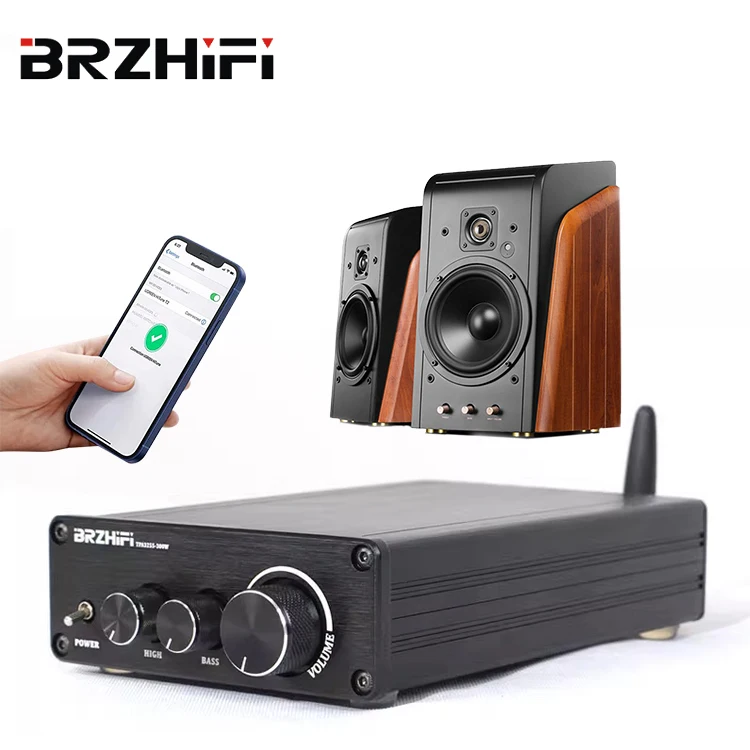
The reduced size doesn't compromise connectivity options, as manufacturers integrate multiple input formats including analog, digital, and wireless protocols into these compact units. Many models feature comprehensive control interfaces accessible through mobile applications, eliminating the need for dedicated physical control panels that would increase overall system footprint. This integration approach maximizes functionality while maintaining the space-saving advantages that make a small class d power amp ideal for contemporary audio applications.
Installation Flexibility
The compact dimensions of Class D amplifiers enable creative installation approaches that enhance both functionality and aesthetics. Wall-mounting options become viable due to the lightweight construction and minimal heat dissipation requirements. Desktop installations can be virtually invisible, with the amplifier easily hidden behind monitors or integrated into custom-built furniture pieces.
Professional installations benefit from the ability to place amplification closer to speakers, reducing cable runs and associated signal losses. The small class d power amp form factor also facilitates distributed audio systems where multiple zones require independent amplification without dedicating significant equipment rack space to each zone. This flexibility proves particularly valuable in commercial applications where space efficiency directly impacts installation costs and system scalability.
Performance Characteristics
Power Output Capabilities
Despite their compact size, modern Class D amplifiers deliver impressive power output figures that rival much larger traditional designs. A well-engineered small class d power amp can provide 50-200 watts per channel while maintaining distortion levels below 0.1% THD. This power output proves sufficient for most near-field monitoring applications, desktop systems, and small to medium-sized room installations.
The power delivery characteristics of Class D technology also provide excellent dynamic range and headroom for handling musical peaks without compression or clipping. Advanced designs incorporate sophisticated limiting and protection circuits that prevent damage during overload conditions while maintaining clean output up to the amplifier's maximum capabilities. This reliability ensures consistent performance across various musical genres and source material types.
Frequency Response and Audio Quality
Modern Class D implementations have overcome early concerns about audio quality through improved switching frequencies and advanced filtering techniques. A high-quality small class d power amp typically exhibits flat frequency response from 20Hz to 20kHz with minimal phase distortion. The absence of output transformers in many designs eliminates associated frequency response irregularities and phase shifts common in traditional amplifier topologies.
Signal-to-noise ratios often exceed 100dB, providing excellent clarity and detail reproduction even at low listening levels. The switching nature of Class D operation also eliminates crossover distortion that can affect the midrange clarity in conventional push-pull amplifier designs. These performance characteristics ensure that choosing a small class d power amp doesn't require compromising audio quality for space savings.
Integration and Connectivity Options
Modern Interface Standards
Contemporary Class D amplifiers incorporate comprehensive connectivity suites that maximize system integration possibilities. Digital inputs commonly include USB, optical, and coaxial connections supporting high-resolution audio formats up to 192kHz/24-bit. Many units also feature built-in digital-to-analog converters with advanced oversampling and noise shaping algorithms that enhance overall system performance.
Wireless connectivity has become standard in many small class d power amp designs, with Bluetooth implementations supporting advanced codecs like aptX HD and LDAC for near-lossless wireless audio transmission. Wi-Fi connectivity enables network streaming from various sources and integration with smart home systems. These connectivity options reduce cable management requirements while expanding source flexibility beyond traditional analog inputs.
Control and Automation Features
Advanced control systems in modern Class D amplifiers provide remote operation through dedicated mobile applications or integration with existing automation platforms. Volume control, input selection, and EQ adjustments can be managed remotely, eliminating the need for physical controls that would increase the amplifier's footprint. Some models feature automatic input detection and switching that seamlessly transitions between sources without user intervention.
Integration capabilities extend to professional audio systems through standard control protocols like RS-232 or Ethernet-based systems. This professional connectivity ensures that a small class d power amp can function as part of larger installed systems while maintaining the space-saving advantages that justify its selection. Preset memory functions allow storing multiple configuration settings for different listening scenarios or room configurations.
Energy Efficiency and Environmental Impact
Power Consumption Benefits
The high efficiency of Class D technology translates directly into reduced power consumption compared to traditional amplifier designs. A small class d power amp typically draws less than 10% of its rated power output when idle, compared to 20-30% for conventional Class AB designs. This efficiency advantage becomes particularly significant in always-on installations or systems with extended operating hours.
Energy savings extend beyond operational costs to include reduced cooling requirements in enclosed installations. The minimal heat generation eliminates the need for additional ventilation fans or air conditioning capacity that would be necessary with less efficient amplifier technologies. These secondary energy savings compound the direct consumption benefits, making Class D technology an environmentally responsible choice for conscious consumers and organizations.
Sustainability Considerations
The compact form factor and efficient operation of Class D amplifiers contribute to reduced material usage in manufacturing and smaller packaging requirements for shipping. The extended component lifespan resulting from lower operating temperatures also reduces replacement frequency and associated environmental impact. Many manufacturers now incorporate recycled materials in amplifier construction while maintaining the performance standards expected from a small class d power amp.
The energy efficiency benefits extend throughout the product lifecycle, from manufacturing through operation to eventual recycling. Lower power consumption reduces the carbon footprint of daily operation, while the compact size requires fewer raw materials during production. This environmental consideration increasingly influences purchasing decisions in both consumer and professional markets where sustainability goals factor into equipment selection criteria.
Cost-Effectiveness Analysis
Initial Investment Considerations
The manufacturing efficiency of Class D technology often results in competitive pricing compared to equivalent-power traditional amplifiers. A small class d power amp typically costs less to produce due to simplified thermal management requirements and reduced component count in the output stage. This cost advantage gets passed to consumers while maintaining higher profit margins for manufacturers.
The integrated nature of many Class D designs also eliminates the need for separate components like external DACs or preamps, reducing total system cost. When evaluating the complete system price including all necessary components, Class D solutions often provide superior value propositions compared to traditional separate component approaches. The space savings can also translate to reduced equipment rack costs in professional installations.
Long-term Ownership Benefits
Operating cost advantages of Class D amplifiers accumulate over time through reduced power consumption and lower maintenance requirements. The minimal heat generation extends component life and reduces the likelihood of temperature-related failures that require expensive repairs or replacements. A well-maintained small class d power amp can provide decades of reliable service with minimal intervention.
The upgradeability of many modern Class D designs through firmware updates also extends their useful life beyond what's possible with purely analog amplifiers. New features, improved algorithms, and expanded codec support can be added without hardware modifications, protecting the initial investment while enhancing functionality over time. This evolutionary capability makes Class D amplifiers particularly attractive for applications where technology standards continue advancing.
FAQ
What power output can I expect from a small Class D amplifier
Most compact Class D amplifiers deliver between 25-200 watts per channel depending on their specific design and intended application. A typical small class d power amp for desktop or near-field use provides 50-100 watts per channel, which proves adequate for most bookshelf speakers and moderate listening levels. Higher-power models reaching 150-200 watts per channel are available for larger speakers or higher volume requirements while maintaining compact form factors.
How does the audio quality compare to traditional amplifier classes
Modern Class D amplifiers achieve audio quality that equals or exceeds traditional Class AB designs in most measurable parameters. A well-designed small class d power amp typically exhibits lower distortion, better signal-to-noise ratios, and flatter frequency response than comparable traditional amplifiers. The absence of output transformers and reduced thermal effects contribute to cleaner signal reproduction, particularly in the midrange frequencies where most musical content resides.
Are there any compatibility concerns with different speaker types
Class D amplifiers work excellently with most speaker types including bookshelf monitors, floor-standing speakers, and professional studio monitors. The low output impedance of a typical small class d power amp provides excellent damping factor for tight bass control with most dynamic speakers. Some electrostatic or ribbon speakers may require careful impedance matching, but this applies to any amplifier technology and isn't specific to Class D designs.
What installation considerations are important for Class D amplifiers
Installation requirements for Class D amplifiers are generally less restrictive than traditional designs due to reduced heat generation and ventilation needs. A small class d power amp can be mounted in enclosed spaces or close to other equipment without significant thermal concerns. However, basic ventilation and protection from moisture remain important, and proper speaker wire gauge selection ensures optimal performance and protection circuit reliability.