
 EN
EN
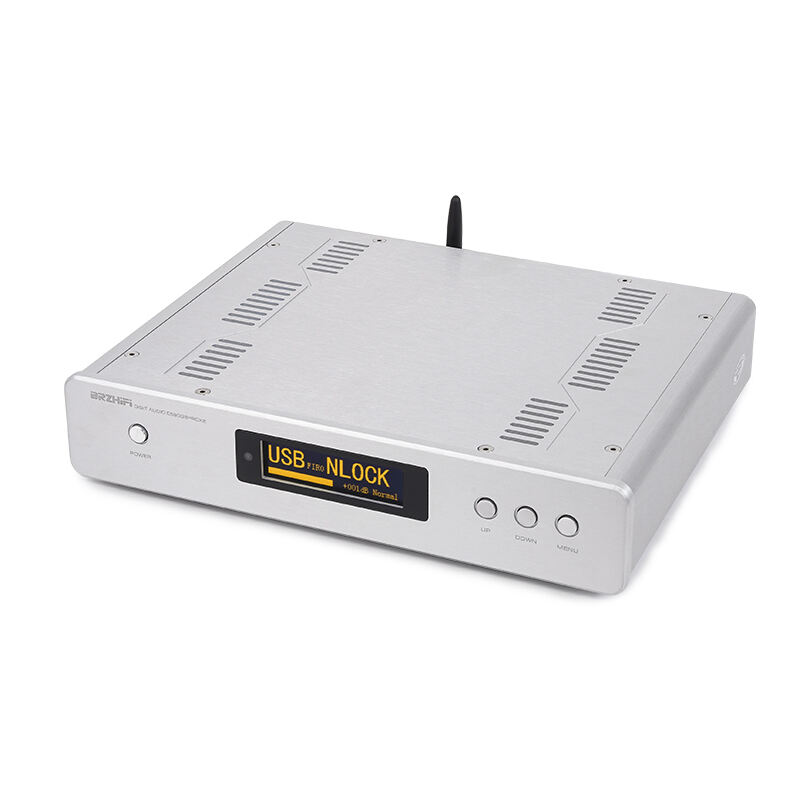
Audiophiles and music enthusiasts often find themselves searching for the perfect balance between clarity, power, and sonic accuracy when listening to their favorite tracks at home. A class a headphone amplifier represents the pinnacle of analog amplification technology, offering unparalleled sound quality through its unique operational characteristics. Unlike other amplifier classes, this technology operates in a continuous conduction mode, ensuring minimal distortion and exceptional linearity across the entire audio spectrum.
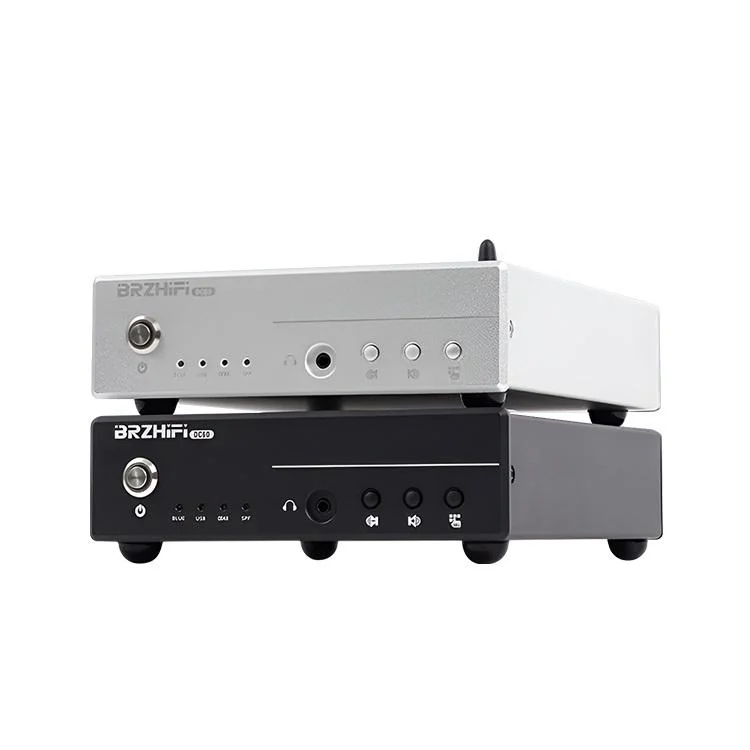
The sophisticated engineering behind these amplifiers makes them particularly valuable for discerning listeners who demand pristine audio reproduction. Professional audio engineers, mixing specialists, and serious hobbyists recognize that a class a headphone amplifier provides the clean, uncolored sound signature necessary for critical listening applications. This technology excels in revealing subtle details within recordings that might otherwise remain hidden with conventional amplification methods.
Home studio environments benefit significantly from incorporating this amplification technology into their monitoring chains. The superior signal-to-noise ratio and exceptional dynamic range capabilities ensure accurate audio representation during recording, mixing, and mastering processes. Musicians and producers rely on these characteristics to make informed decisions about their creative output.
Professional Audio Applications
Studio Monitoring Excellence
Recording studios and professional mixing facilities consistently choose class a headphone amplifier systems for their monitoring needs due to the technology's ability to provide transparent audio reproduction. The continuous current flow through the amplifier's active devices eliminates crossover distortion, resulting in smooth transitions between positive and negative signal cycles. This characteristic proves essential when evaluating vocal recordings, instrumental performances, and complex musical arrangements.
Audio engineers working on commercial releases require amplification systems that reveal every nuance within their recordings. A class a headphone amplifier delivers the necessary accuracy to identify problematic frequencies, timing issues, and spatial positioning errors that could compromise the final product. The amplifier's linear response ensures that EQ adjustments and dynamic processing decisions reflect the true nature of the source material.
Critical Listening Environments
Mastering engineers depend on extremely accurate monitoring systems to prepare recordings for various playback formats and distribution channels. The exceptional signal integrity provided by class a amplification technology allows these professionals to make precise adjustments to frequency response, dynamic range, and stereo imaging. The amplifier's ability to maintain consistent performance across varying load impedances ensures reliable results regardless of the headphone model being used.
Quality control specialists in the audio industry utilize class a headphone amplifier systems to evaluate recorded content before release. The technology's superior transient response and low-level detail retrieval capabilities enable accurate assessment of audio quality across different genres and production styles. This precision proves invaluable when determining whether recordings meet industry standards for commercial distribution.
Audiophile Home Listening
High-Impedance Headphone Compatibility
Serious music listeners often invest in high-impedance headphones that require substantial amplification to reach their full potential. A class a headphone amplifier provides the necessary current delivery and voltage swing to drive these demanding transducers effectively. The amplifier's high input impedance and low output impedance characteristics ensure optimal impedance matching with premium headphone models.
Planar magnetic and high-impedance dynamic headphones benefit significantly from the stable bias current maintained by class a amplification topology. This consistent operating point eliminates thermal variations that could affect sound quality during extended listening sessions. The result is unwavering performance that allows listeners to experience their music collections with unprecedented clarity and detail.
Musical Genre Versatility
Classical music enthusiasts appreciate how a class a headphone amplifier preserves the delicate interplay between orchestral instruments while maintaining proper dynamic scaling. The amplifier's wide bandwidth and excellent phase response ensure that complex harmonic structures remain intact throughout the listening experience. String sections, woodwind ensembles, and percussion instruments retain their natural timbral characteristics without unwanted coloration.
Electronic music genres with wide dynamic ranges and extended frequency content showcase the capabilities of class a amplification technology particularly well. The amplifier's ability to handle sudden transients and maintain composure during high-energy passages ensures that synthesized sounds, drum machines, and processed vocals are reproduced with accuracy and impact. Bass response remains tight and controlled even at elevated listening levels.
Technical Advantages and Performance Benefits
Distortion Characteristics
The continuous conduction mode operation of a class a headphone amplifier results in extremely low total harmonic distortion figures across the entire audio bandwidth. Unlike switching amplifier designs, this technology maintains constant current flow through its active devices, eliminating the switching artifacts that can compromise audio quality. The predominantly second-order harmonic content that does occur tends to be musically pleasing rather than harsh or fatiguing.
Intermodulation distortion remains exceptionally low due to the amplifier's linear transfer characteristics and absence of crossover distortion. This attribute proves particularly important when listening to complex musical passages containing multiple simultaneous frequencies. The class a headphone amplifier preserves the original harmonic relationships within the source material, allowing listeners to perceive musical content as intended by the recording engineers.
Power Supply Stability
Advanced power supply designs in quality class a headphone amplifier units provide exceptional regulation and low-noise operation. The constant current draw characteristics of class a topology simplify power supply requirements while enabling superior performance. High-capacity filter capacitors and precision voltage regulation circuits ensure stable operation even during demanding musical passages with significant dynamic range.
Temperature stability represents another advantage of well-designed class a amplification systems. The consistent operating point minimizes thermal drift effects that could alter the amplifier's frequency response or gain characteristics over time. This stability ensures repeatable performance during extended listening sessions and across varying ambient conditions.
Home Theater and Multi-Channel Applications
Surround Sound Processing
Home theater enthusiasts who prefer headphone listening for late-night movie watching benefit from the pristine signal quality provided by a class a headphone amplifier. The technology's excellent channel separation and low crosstalk characteristics preserve the spatial information encoded in surround sound formats. Dialog clarity, sound effect positioning, and musical score reproduction all benefit from the amplifier's transparent operation.
Virtual surround processing algorithms perform more effectively when fed by clean, undistorted signals from class a amplification stages. The amplifier's wide dynamic range accommodates the significant level variations present in film soundtracks without compression or clipping artifacts. Explosive action sequences and delicate ambient passages are reproduced with equal fidelity and impact.
Gaming Audio Enhancement
Competitive gamers recognize the advantages of using a class a headphone amplifier to enhance their audio experience during intense gaming sessions. The technology's fast transient response and accurate imaging capabilities help players locate opponents and environmental audio cues more precisely. Footsteps, weapon sounds, and communication clarity all benefit from the amplifier's superior signal integrity.
The consistent performance characteristics of class a amplification ensure that audio advantages remain stable throughout extended gaming periods. Temperature variations and component aging have minimal impact on the amplifier's performance, providing reliable audio enhancement for serious gaming applications. This consistency proves crucial for maintaining competitive advantages in audio-dependent gaming scenarios.
Investment Considerations and Long-Term Value
Build Quality and Durability
Premium class a headphone amplifier designs typically feature robust construction methods and high-quality components that ensure decades of reliable operation. The simple circuit topology and absence of switching elements reduce potential failure points while simplifying maintenance requirements. Discrete component designs allow for easy servicing and potential upgrades as technology advances.
The thermal management requirements of class a amplification necessitate substantial heatsinking and careful component selection. Quality manufacturers invest in precision-matched transistors, low-noise resistors, and high-grade capacitors that maintain their specifications over extended periods. This attention to detail results in products that retain their performance characteristics and resale value better than mass-market alternatives.
Compatibility and Future-Proofing
A well-designed class a headphone amplifier accommodates a wide range of headphone impedances and sensitivities, ensuring compatibility with current and future headphone technologies. The amplifier's high current delivery capability and low output impedance make it suitable for driving both efficient and demanding headphone designs. This versatility protects the investment as personal audio preferences evolve over time.
The analog nature of class a amplification technology provides inherent immunity to digital format changes and obsolescence concerns. While digital-to-analog conversion stages may require updates to accommodate new formats, the fundamental amplification technology remains relevant regardless of source equipment changes. This longevity makes a quality class a headphone amplifier a sound long-term investment for serious listeners.
FAQ
What makes a class a headphone amplifier different from other amplifier classes
A class a headphone amplifier operates with constant current flow through its active devices, meaning the transistors never turn completely off during operation. This continuous conduction mode eliminates crossover distortion and provides the most linear amplification possible. The trade-off is higher power consumption and heat generation, but the sonic benefits include superior signal integrity, lower distortion, and more natural sound reproduction compared to class AB or class D designs.
Do I need a class a headphone amplifier for low-impedance headphones
While low-impedance headphones can be driven by various amplifier types, a class a headphone amplifier still provides measurable benefits in terms of sound quality and control. The amplifier's low output impedance and high current delivery capability ensure optimal damping factor for the headphone drivers, resulting in tighter bass response and improved transient accuracy. Even sensitive headphones reveal the superior signal quality and reduced distortion characteristics of class a amplification.
How much power does a typical class a headphone amplifier consume
Class a headphone amplifier designs typically consume between 20 to 100 watts of continuous power, depending on the output capability and bias current settings. This power consumption remains relatively constant regardless of the signal level, as the amplifier maintains its operating point continuously. While this represents higher energy usage compared to other amplifier classes, the power consumption is still reasonable for home audio applications and the sonic benefits justify the additional energy cost for serious listeners.
Can a class a headphone amplifier damage sensitive headphones
A properly designed class a headphone amplifier includes appropriate protection circuits and output limiting to prevent damage to connected headphones. The amplifier's excellent signal quality and low distortion characteristics actually reduce the risk of driver damage compared to amplifiers that produce clipping or distortion artifacts. However, users should still exercise reasonable volume control and ensure proper impedance matching to maintain both optimal performance and headphone longevity.