
 EN
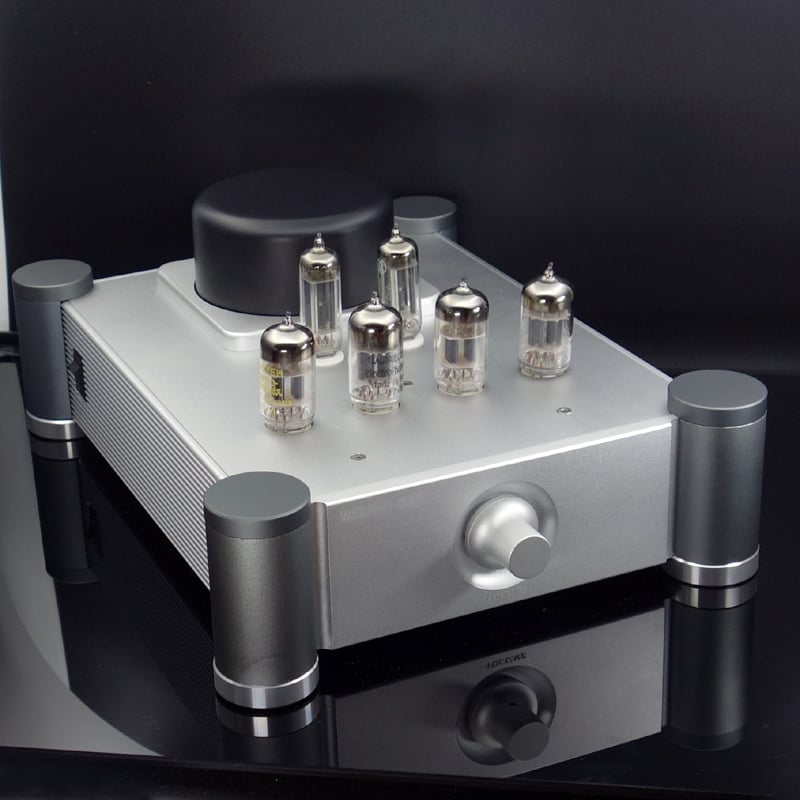
A high-quality preamp forms the sonic foundation of any serious audiophile system, yet many listeners overlook which preamp specifications actually impact the listening experience. The difference between a mediocre preamp and a truly exceptional one lies not in flashy features or excessive connectivity, but in fundamental design principles that preserve signal integrity from source to amplifier. Understanding which preamp attributes matter most empowers you to make informed decisions that directly improve your audio reproduction.
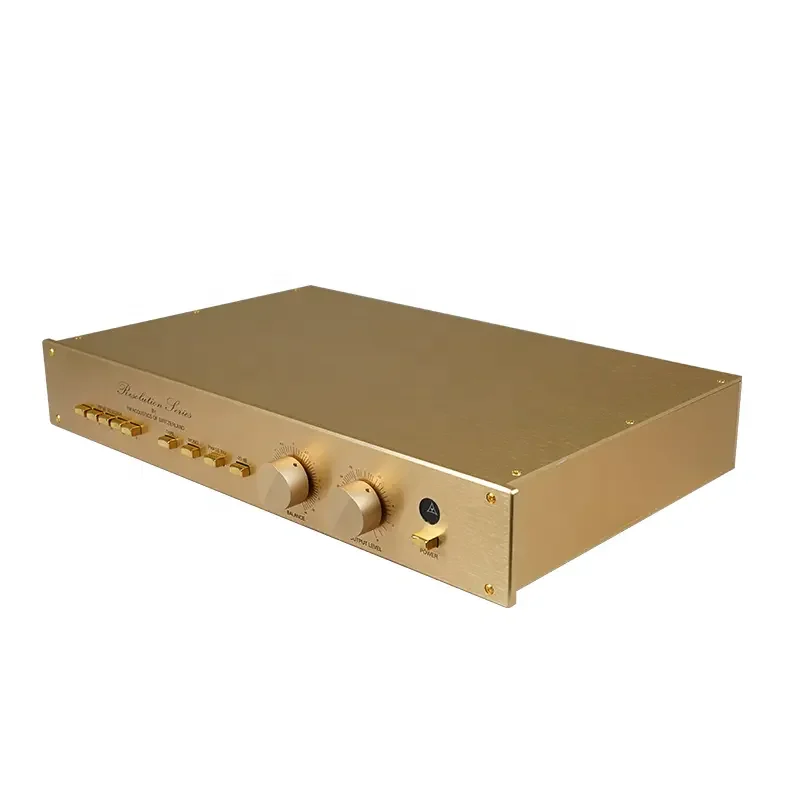
Audiophile preamp selection requires knowledge of how each technical parameter affects sound quality. A well-designed preamp operates as a silent intermediary, accurately passing audio signals without coloration, noise, or distortion. The best preamp implementations prioritize signal path minimalism, superior component selection, and careful impedance management rather than excessive features that compromise sound purity. This guide examines the preamp characteristics that truly distinguish reference-grade equipment from inferior alternatives.
Gain Structure and Signal-to-Noise Performance in Preamp Design
Optimal Gain Staging in a Preamp
The preamp gain structure determines how efficiently your source signal reaches your power amplifier without degradation. A properly designed preamp maintains gain in a range that minimizes noise while preventing clipping, typically between 6 to 12 decibels for line-level sources. When a preamp incorporates excessive gain, the noise floor rises and dynamic resolution suffers. Conversely, insufficient preamp gain forces your power amplifier to operate at higher volume settings, where thermal noise increases measurably. The ideal preamp balances these competing demands through precision resistor networks and careful operational amplifier selection that preserves the delicate low-level information in your music.
Noise Floor Specifications for Audiophile Preamps
Reference-grade preamp equipment typically achieves noise floors below 80 decibels A-weighted, meaning unwanted electronic noise remains inaudible during normal listening. A superior preamp employs premium passive components, shielded input stages, and low-noise amplification topology to suppress thermal and shot noise inherent in all electronic circuits. The preamp noise floor becomes particularly critical when amplifying high-impedance sources such as moving-coil cartridges or ribbon microphones, where the signal itself remains relatively weak. Measurement-grade preamp designs separate balanced and unbalanced circuits to prevent ground loop contamination, ensuring that your preamp noise performance remains consistent across all input configurations. This attention to noise architecture distinguishes professional-grade preamp implementations from consumer-oriented models where noise performance is compromised to reduce manufacturing costs.
Impedance Matching and Output Characteristics of Quality Preamps
Input and Output Impedance in a Preamp
Every preamp presents specific input and output impedances that must match your source components and power amplifier for optimal signal transfer. A well-designed preamp typically offers input impedance between 10 and 100 kilohms, sufficient to avoid loading down high-impedance sources while remaining low enough to reject radio frequency interference. The preamp output impedance should remain under 600 ohms to drive standard interconnect cables without high-frequency roll-off or susceptibility to cable capacitance effects. When a preamp incorporates balanced XLR outputs, the output impedance becomes even more critical because balanced preamp design directly influences signal common-mode rejection and transformer-based power amplifier input matching. Specification sheets often omit these crucial preamp impedance values, yet they profoundly affect the overall system frequency response and transparency.
Output Drive Capability and Preamp Design
The ability of a preamp to maintain stable output under various cable loads separates exceptional designs from mediocre alternatives. A robust preamp output stage employs low-impedance buffer amplifiers or passive summing networks that preserve performance across long cable runs and capacitive loads. When your preamp output exhibits insufficient drive capability, high-frequency extension collapses and dynamic transients soften perceptibly during loud passages. Premium preamp architectures employ complementary class-A output stages or carefully impedance-matched passive networks that deliver consistent performance regardless of interconnect cable characteristics. This preamp output stability proves essential in multiroom audio systems where lengthy cable runs between components become unavoidable, yet many affordable preamp designs overlook this fundamental requirement in pursuit of lower manufacturing costs.
Signal Path Design and Component Quality in Audiophile Preamps
Minimalist Signal Path Architecture in a Preamp
The most transparent preamp designs employ the shortest possible signal path, passing audio through the fewest components necessary to achieve volume control and signal buffering. A minimalist preamp architecture might contain only a precision passive attenuator, a single-stage buffer amplifier, and output protection circuitry, deliberately omitting tone controls, loudness compensation, and unnecessary switching logic that would introduce audible coloration. Each additional component in the preamp signal chain—including input buffers, switching matrices, and impedance converters—adds harmonic distortion and phase shift that accumulates subtly over repeated listening. The finest preamp implementations recognize that audio reproduction excellence derives from elimination rather than addition, removing everything except the essential elements that preserve signal purity. This philosophical approach to preamp design directly contradicts consumer-oriented marketing that emphasizes feature quantity, explaining why the most respected preamp manufacturers intentionally limit functionality to optimize sonic performance.
Component Selection and Material Quality in Preamps
Premium preamp implementation demands exceptional attention to component selection, particularly in the signal path where every resistor, capacitor, and connector directly influences the audio signal. Reference-grade preamp designs employ precision thin-film resistors with extremely low temperature coefficients, polypropylene or Teflon capacitors that preserve phase linearity, and premium audio-grade connectors with gold-plated contacts and shielded construction. The preamp power supply design proves equally critical, requiring dual-transformer construction, multiple regulated voltage rails, and substantial filtering to eliminate power line contamination from contaminating the delicate audio signal. When a preamp incorporates budget connectors, standard film capacitors, or undersized transformers, the sonic degradation becomes apparent through reduced dynamic headroom, compressed midrange presence, and fatiguing high-frequency character. The finest preamp brands invest substantially in component procurement, accepting higher manufacturing costs to ensure that their preamp products deliver measurably superior sound quality compared to economy alternatives.
FAQ
What makes a preamp appropriate for balanced versus unbalanced operation?
A preamp with both balanced and unbalanced connectivity should maintain identical sonic character on either output configuration, indicating that the preamp incorporates properly designed impedance-matched outputs for both connection types. Many consumer preamp models sacrifice balanced preamp output quality to reduce costs, implementing simple transformers or passive networks that introduce audible character. The finest preamp manufacturers maintain sonic consistency across balanced and unbalanced outputs by employing identical output buffer circuitry with different connector terminations, ensuring that your preamp selection need not depend on whether you choose balanced or unbalanced interconnection.
How does preamp bandwidth affect high-frequency performance in audio systems?
A preamp with insufficient bandwidth introduces high-frequency roll-off that compresses the bright transient details in cymbals, strings, and vocal sibilance, audibly darkening the overall sound character. Premium preamp designs maintain bandwidth well beyond the audible frequency range—typically to 500 kilohertz or higher—ensuring that phase shift remains negligible throughout the entire audio spectrum. The preamp bandwidth becomes particularly important when using high-impedance source components or extended cable runs where capacitive interaction can interact with insufficient preamp bandwidth to create unexpected tonal coloration.
What role does preamp input sensitivity play in system optimization?
Your preamp input sensitivity rating indicates how much voltage your preamp requires to reach full output, directly determining the volume control settings needed during normal listening. A preamp with excessive input sensitivity requires your volume control to operate in a restricted range, reducing resolution at typical listening levels and potentially introducing control logarithmic non-linearity. The ideal preamp input sensitivity matches your source output voltage, allowing comfortable volume control operation across the full range of the attenuator network, ensuring that every preamp volume position contributes to optimal signal-to-noise performance.