
 EN
EN
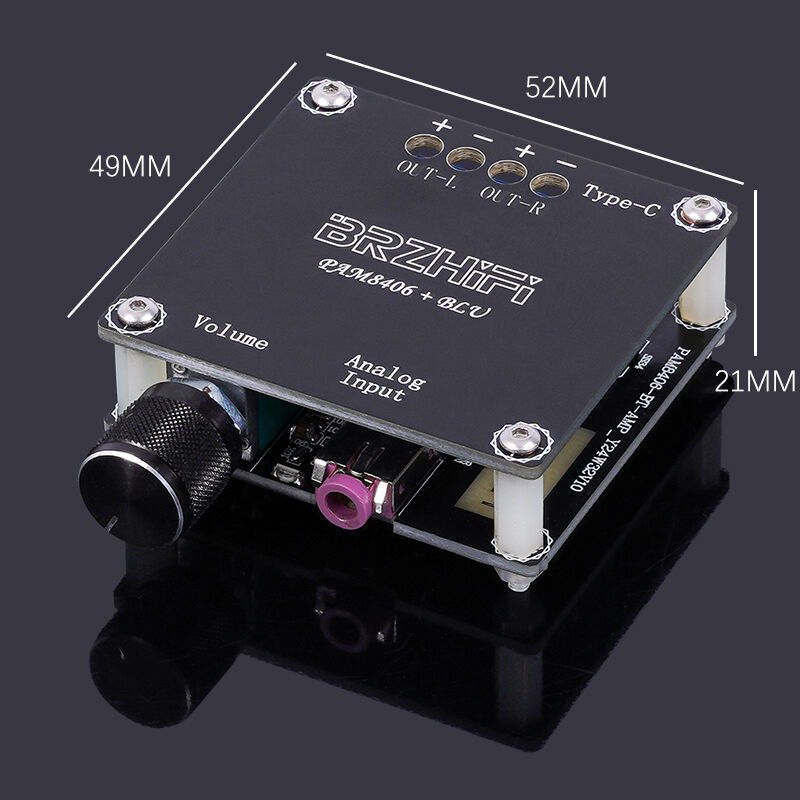
Audio enthusiasts and professionals often face the critical decision of selecting the right amplifier topology for their sound systems. Among the various amplifier classifications available in the market, the power amplifier ab represents a sophisticated balance between audio fidelity and operational efficiency. This amplifier class has established itself as a cornerstone in high-end audio applications, offering distinct advantages that make it particularly suitable for specific scenarios and requirements. Understanding when a power amplifier ab outperforms other classes requires careful consideration of technical specifications, application requirements, and performance characteristics that define superior audio reproduction.
Technical Foundations of Class AB Amplification
Operational Principles and Design Architecture
The power amplifier ab operates on a sophisticated principle that combines the best characteristics of Class A and Class B topologies. Unlike pure Class A amplifiers that maintain constant current flow regardless of signal presence, or Class B designs that suffer from crossover distortion, the power amplifier ab employs a carefully calibrated bias point. This strategic positioning allows both output transistors to conduct simultaneously during small signal conditions while transitioning to push-pull operation during larger signal excursions. The result is significantly reduced crossover distortion while maintaining reasonable efficiency levels that make it practical for extended operation periods.
The bias current in a power amplifier ab is typically set to approximately 10-20% of the maximum output current, creating an overlap region where both positive and negative output devices remain active. This overlap eliminates the dead zone that plagues Class B amplifiers, where neither transistor conducts during signal transitions near zero crossing points. The careful engineering of this bias point requires precision temperature compensation and thermal management to maintain consistent performance across varying operating conditions and ambient temperatures.
Efficiency Characteristics and Thermal Management
Efficiency represents a crucial advantage where the power amplifier ab excels compared to pure Class A designs while maintaining superior linearity compared to Class B configurations. Theoretical efficiency of a power amplifier ab can reach approximately 60-65% under optimal conditions, significantly higher than the 25% maximum efficiency of Class A amplifiers. This improved efficiency translates directly into reduced heat generation, lower power consumption, and decreased cooling requirements in practical installations.
The thermal characteristics of a power amplifier ab make it particularly suitable for applications requiring extended operation periods without excessive heat buildup. Professional audio installations, home theater systems, and high-end stereo configurations benefit from this thermal efficiency, as it allows for more compact chassis designs and reduced cooling fan noise. The lower operating temperatures also contribute to enhanced component longevity and improved long-term reliability, making the power amplifier ab an economically sound choice for demanding applications.
Performance Advantages in Audio Reproduction
Distortion Characteristics and Signal Fidelity
The distortion profile of a power amplifier ab demonstrates significant advantages over other amplifier classes, particularly in the critical midrange frequencies where human hearing sensitivity peaks. Total harmonic distortion in well-designed power amplifier ab circuits typically remains below 0.01% across the audio spectrum, with intermodulation distortion characteristics that preserve complex musical passages without audible artifacts. The absence of crossover distortion that plagues Class B designs ensures that low-level detail retrieval remains exceptional, making subtle musical nuances clearly perceptible to discerning listeners.
Dynamic range capabilities of a power amplifier ab exceed those of most competing topologies, particularly when driving challenging loudspeaker loads. The ability to maintain low distortion levels during transient peaks while preserving delicate low-level information makes this amplifier class particularly suitable for classical music, acoustic recordings, and any content requiring faithful reproduction of natural instrument timbres. The linear transfer characteristics ensure that the original recording's dynamic contrasts remain intact without compression or expansion artifacts that can compromise musical authenticity.
Load Driving Capabilities and Stability
The current delivery characteristics of a power amplifier ab provide exceptional stability when driving complex loudspeaker impedances that vary significantly across the frequency spectrum. Modern loudspeakers often present impedance dips below 4 ohms in specific frequency ranges, demanding amplifiers capable of maintaining stable operation under these challenging conditions. The robust output stage design typical of power amplifier ab configurations ensures consistent performance regardless of load variations, preventing oscillation or thermal runaway that might occur with less stable topologies.
The damping factor achieved by quality power amplifier ab designs typically exceeds 100 across the audio bandwidth, providing tight control over loudspeaker driver movement and resulting in improved bass definition and overall transient response. This high damping factor becomes particularly important when driving large woofers or subwoofers where cone control directly impacts low-frequency accuracy and punch. The combination of high current capability and low output impedance makes the power amplifier ab ideal for demanding loudspeaker systems requiring authoritative control and precise driver management.
Application Scenarios and Use Cases
Professional Audio and Studio Monitoring
Professional recording studios and mastering facilities consistently choose power amplifier ab topologies for critical monitoring applications where absolute accuracy takes precedence over efficiency considerations. The neutral sonic character and exceptional linearity of properly designed power amplifier ab circuits ensure that mixing and mastering decisions translate accurately to various playback systems. Studio monitors powered by these amplifiers reveal recording flaws, mixing imbalances, and mastering issues that might remain hidden with less transparent amplification approaches.
Live sound reinforcement applications benefit significantly from the reliability and consistent performance characteristics of power amplifier ab designs. The ability to maintain clean output levels during extended performance periods without thermal limiting or distortion buildup makes these amplifiers particularly valuable for touring applications and permanent installations. The predictable behavior under varying load conditions ensures consistent sound quality regardless of venue acoustics or speaker configuration changes that commonly occur in professional audio environments.
High-End Residential Audio Systems
Audiophile-grade stereo systems frequently incorporate power amplifier ab designs due to their superior resolution of spatial information and harmonic texture that enhances the listening experience. The low-noise characteristics and exceptional channel separation achieved by quality power amplifier ab implementations contribute to precise stereo imaging and soundstage depth that recreates the original recording venue's acoustic signature. These qualities become particularly apparent when reproducing large-scale orchestral works or intimate acoustic performances where spatial cues and ambient information carry significant musical importance.
Home theater applications demand the dynamic range and multi-channel capability that power amplifier ab configurations deliver consistently across all frequency ranges. The ability to reproduce explosive movie soundtracks without compression while maintaining dialogue intelligibility during quiet passages makes the power amplifier ab particularly suitable for premium home entertainment systems. The stability under continuous operation ensures that lengthy movie presentations maintain consistent audio quality without the thermal limiting that might degrade performance during climactic scenes.
Comparative Analysis with Alternative Amplifier Classes
Class A Comparison and Trade-offs
While Class A amplifiers offer theoretical advantages in linearity and simplicity, the power amplifier ab provides a more practical balance between performance and efficiency for most real-world applications. The constant power dissipation of Class A designs creates significant thermal challenges that require substantial cooling systems and limit practical power output levels. In contrast, the power amplifier ab achieves nearly identical sonic performance while consuming significantly less power during typical listening levels, making it suitable for extended operation without excessive heat generation or energy consumption concerns.
The cost implications of Class A versus power amplifier ab designs favor the latter in most scenarios, as the reduced heat generation allows for smaller heat sinks, less robust power supplies, and simpler thermal management systems. This economic advantage becomes particularly significant in multi-channel applications where the cumulative cost and complexity differences multiply across each amplifier channel. The power amplifier ab maintains the essential sonic characteristics that make Class A designs desirable while eliminating the practical limitations that restrict their widespread adoption.
Class D and Digital Amplification Considerations
Modern Class D amplifiers offer exceptional efficiency and compact form factors, but the power amplifier ab maintains advantages in specific areas that matter to discerning listeners and critical applications. The switching noise and electromagnetic interference generated by Class D designs can create compatibility issues with sensitive analog circuits and may introduce subtle sonic artifacts that become apparent in quiet listening environments. The power amplifier ab operates without high-frequency switching, eliminating these potential interference sources and providing a cleaner electromagnetic signature.
The frequency response linearity and phase characteristics of power amplifier ab designs remain superior to most Class D implementations, particularly at the frequency extremes where filter-related artifacts can affect the Class D output. While Class D technology continues improving, the power amplifier ab offers proven performance without relying on complex digital signal processing or high-frequency switching techniques that may introduce latency or processing artifacts in critical listening applications.
Selection Criteria and Implementation Considerations
Power Requirements and System Matching
Determining when a power amplifier ab represents the optimal choice requires careful analysis of power requirements, loudspeaker efficiency, and desired sound pressure levels in the intended listening environment. The power amplifier ab excels in applications requiring moderate to high power output with emphasis on audio quality rather than maximum efficiency. Typical power ranges from 50 watts to several hundred watts per channel make these amplifiers suitable for most residential and professional applications without the extreme power demands that might favor more efficient topologies.
System impedance matching becomes critical when implementing power amplifier ab designs, as the amplifier's performance characteristics depend heavily on proper load matching and thermal management. Low-impedance loads increase current demands and heat generation, potentially compromising the efficiency advantages that make the power amplifier ab attractive. Careful consideration of loudspeaker impedance characteristics across the frequency spectrum ensures optimal performance and prevents thermal stress that could degrade long-term reliability.
Budget and Performance Priority Assessment
The cost-performance ratio of power amplifier ab designs typically favors applications where audio quality justifies the additional expense compared to basic Class D alternatives. Professional applications, high-end consumer audio systems, and critical listening environments benefit from the superior performance characteristics that justify the higher initial investment and operational costs. The reduced maintenance requirements and enhanced longevity of quality power amplifier ab implementations often result in lower total cost of ownership despite higher purchase prices.
Performance priorities must align with the inherent strengths of power amplifier ab topology to justify its selection over alternative approaches. Applications prioritizing maximum efficiency, minimum size, or lowest cost may find better solutions in Class D or integrated amplifier designs. However, when sonic accuracy, reliability, and consistent performance under varying conditions take precedence, the power amplifier ab provides compelling advantages that outweigh its limitations and justify its continued popularity in demanding applications.
FAQ
What makes a power amplifier ab more suitable than Class D for audiophile applications
The power amplifier ab offers superior linearity and freedom from switching artifacts that can affect Class D designs. The analog operation eliminates high-frequency switching noise and provides more natural harmonic characteristics that many audiophiles prefer. Additionally, the power amplifier ab maintains consistent performance across all frequency ranges without the filter-related phase shifts that can affect Class D output, making it particularly suitable for critical listening applications where absolute fidelity takes precedence over efficiency.
How does the efficiency of a power amplifier ab compare to other amplifier classes
A power amplifier ab typically achieves 60-65% efficiency under optimal conditions, significantly better than Class A amplifiers at 25% but lower than Class D designs that can exceed 90%. However, this efficiency level provides an excellent balance between performance and heat generation, making the power amplifier ab practical for extended operation while maintaining superior audio quality compared to more efficient switching amplifier topologies.
What are the thermal management requirements for power amplifier ab operation
Power amplifier ab designs require adequate heat sinking and ventilation to maintain optimal performance, but thermal requirements are significantly less demanding than Class A amplifiers. Proper thermal management includes sufficient heat sink area, adequate airflow, and temperature compensation circuits to maintain stable bias conditions. Most quality power amplifier ab implementations include thermal protection circuits that prevent damage during extreme operating conditions while maintaining consistent performance under normal usage patterns.
When should someone choose a power amplifier ab over integrated amplifier solutions
A power amplifier ab becomes preferable when system flexibility, upgradeability, and ultimate performance take priority over convenience and cost. Separate power amplifiers allow for independent selection of preamplification and power amplification components, enabling system optimization for specific loudspeakers and listening preferences. Professional applications, high-end audio systems, and situations requiring multiple amplifier channels for bi-amping or multi-channel systems typically benefit from dedicated power amplifier ab implementations rather than integrated solutions.
Table of Contents
- Technical Foundations of Class AB Amplification
- Performance Advantages in Audio Reproduction
- Application Scenarios and Use Cases
- Comparative Analysis with Alternative Amplifier Classes
- Selection Criteria and Implementation Considerations
-
FAQ
- What makes a power amplifier ab more suitable than Class D for audiophile applications
- How does the efficiency of a power amplifier ab compare to other amplifier classes
- What are the thermal management requirements for power amplifier ab operation
- When should someone choose a power amplifier ab over integrated amplifier solutions