
 EN
EN
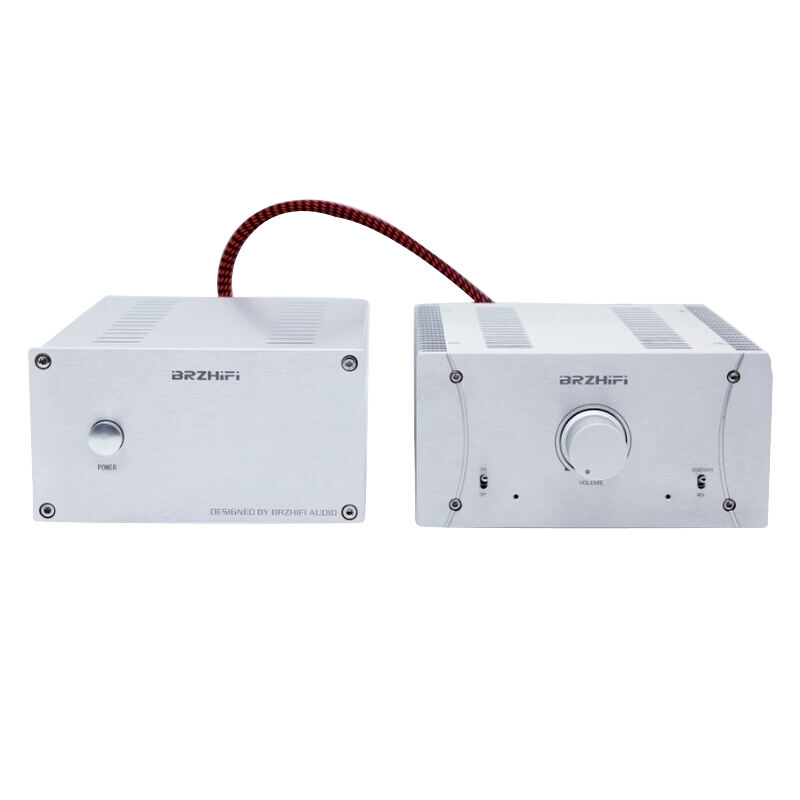
The world of high-fidelity audio has long been fascinated by the intricate relationship between amplification technology and stereo imaging quality. When audiophiles and audio engineers discuss the sonic characteristics of different amplifier topologies, the impact on stereo imaging emerges as one of the most critical factors determining overall listening experience. A class ab stereo amplifier represents a sophisticated balance between efficiency and audio fidelity, offering unique characteristics that directly influence how we perceive spatial information in recorded music. Understanding these relationships requires deep exploration into both the technical mechanisms of Class AB operation and the psychoacoustic principles that govern stereo perception.
Technical Foundations of Class AB Amplification
Operating Principles and Circuit Design
Class AB amplification represents a hybrid approach that combines the efficiency benefits of Class B operation with the linearity advantages of Class A designs. In a class ab stereo amplifier configuration, each channel operates with complementary transistor pairs that conduct for slightly more than half of the input signal cycle. This overlap period eliminates the crossover distortion characteristic of pure Class B designs while maintaining reasonable power efficiency. The biasing arrangement ensures that both transistors in the push-pull pair remain slightly conducting even during signal transitions, creating a smoother handoff between positive and negative signal excursions.
The circuit topology of a modern class ab stereo amplifier typically incorporates sophisticated feedback networks and compensation schemes to maintain stability across the entire audio frequency range. These design elements directly impact stereo imaging by ensuring that both channels maintain identical gain and phase characteristics throughout the amplification process. Any channel-to-channel variations in frequency response or timing can create subtle shifts in the stereo soundstage that experienced listeners readily detect. Professional-grade implementations often include matched transistor pairs and precision resistor networks to minimize these variations.
Thermal Management and Signal Integrity
Effective thermal management plays a crucial role in maintaining consistent stereo imaging performance from a class ab stereo amplifier. As operating temperatures fluctuate, transistor parameters can drift, potentially introducing channel imbalances that affect stereo separation and imaging precision. Advanced designs incorporate thermal coupling between channels and sophisticated heat dissipation systems to minimize these effects. The thermal tracking ensures that both channels experience similar operating conditions, preserving the delicate balance required for accurate stereo reproduction.
Signal integrity considerations extend beyond simple frequency response matching to include phase coherence and dynamic tracking between channels. A well-designed class ab stereo amplifier maintains consistent phase relationships between left and right channels across all frequency ranges and signal levels. This phase coherence proves essential for maintaining stable stereo imaging, as even small phase shifts can cause apparent movement in the perceived location of instruments and voices within the soundstage.
Stereo Imaging Characteristics and Performance
Soundstage Width and Depth Reproduction
The ability of a class ab stereo amplifier to reproduce convincing soundstage width stems from its capacity to preserve the subtle amplitude and timing differences encoded in stereo recordings. These microscopic variations between channels create the psychoacoustic cues that our auditory system interprets as spatial information. Class AB topology, with its inherently linear operation in the critical midrange frequencies, excels at preserving these delicate spatial cues without introducing the compression or distortion artifacts that can collapse or artificially expand the apparent soundstage width.
Depth reproduction represents another critical aspect of stereo imaging where class ab stereo amplifier design philosophy shows distinct advantages. The ability to resolve front-to-back layering in complex musical passages requires exceptional dynamic range and low-level detail retrieval. Class AB operation provides the necessary headroom to handle sudden transients while maintaining clarity in quiet passages where spatial cues often reside. This dynamic capability allows listeners to perceive the natural reverberation and ambiance that creates the illusion of three-dimensional space in well-recorded material.
Channel Separation and Crosstalk Management
Achieving optimal stereo imaging requires maintaining excellent channel separation throughout the entire signal path, and a properly implemented class ab stereo amplifier excels in this regard. The dual-mono design approach common in high-end Class AB implementations provides inherent isolation between channels, minimizing crosstalk that can blur stereo imaging. Advanced power supply regulation and careful ground plane design further enhance this separation, ensuring that signals in one channel do not influence the other through common impedances or electromagnetic coupling.
Crosstalk specifications alone do not tell the complete story of stereo imaging performance, as the frequency dependency and phase characteristics of any residual coupling prove equally important. A class ab stereo amplifier with well-controlled crosstalk maintains consistent isolation across the audio spectrum, preventing the subtle image shifting that can occur when separation varies with frequency. This consistency proves particularly important for maintaining stable imaging during complex musical passages with wide frequency content.
Implementation Considerations for Optimal Performance
Component Matching and Precision Manufacturing
The manufacturing precision required for optimal stereo imaging from a class ab stereo amplifier extends far beyond basic electrical specifications to encompass mechanical construction and component selection. Matched component pairs ensure that both channels exhibit identical transfer characteristics, preventing the subtle gain or phase differences that can shift apparent image locations. High-tolerance resistors, matched capacitors, and selected transistor pairs represent essential elements in achieving the consistency required for reference-quality stereo reproduction.
Mechanical construction techniques also significantly impact stereo imaging performance through their influence on vibration control and electromagnetic shielding. A well-constructed class ab stereo amplifier incorporates non-resonant chassis design and strategic component placement to minimize microphonic effects that can introduce spurious signals into the stereo image. Proper shielding techniques prevent external electromagnetic interference from corrupting the delicate spatial information present in high-quality source material.
Power Supply Design and Regulation
The power supply design of a class ab stereo amplifier profoundly influences stereo imaging through its impact on dynamic response and channel independence. Separate regulation for each channel, combined with adequate energy storage, ensures that demanding musical passages do not cause supply voltage variations that could affect one channel differently from the other. This supply independence maintains consistent imaging even during the most challenging musical content with asymmetrical channel demands.
Advanced power supply topologies incorporate multiple regulation stages and extensive filtering to minimize any residual ripple or noise that could interfere with low-level spatial cues. The class ab stereo amplifier benefits from these sophisticated supply designs through improved resolution of subtle ambient information and enhanced dynamic contrast. These improvements translate directly into more convincing stereo imaging with better defined instrument placement and more natural soundstage proportions.
Comparative Analysis with Other Amplifier Classes
Class A Versus Class AB Imaging Characteristics
While Class A amplifiers often receive praise for their linear operation and absence of crossover distortion, the practical advantages of class ab stereo amplifier designs become apparent when considering real-world performance requirements. Class A operation generates significant heat and requires substantial power supply capacity, factors that can actually degrade stereo imaging through thermal effects and supply voltage variations. The controlled bias approach of Class AB operation provides similar linearity benefits while avoiding the thermal management challenges that can compromise channel matching in Class A designs.
The efficiency advantages of class ab stereo amplifier topology also translate into improved dynamic performance that benefits stereo imaging. The ability to deliver substantial power without excessive heat generation allows for more robust power supply design and better thermal stability. These factors contribute to more consistent imaging performance across varying listening levels and ambient conditions, making Class AB designs more practical for extended listening sessions where thermal effects might otherwise degrade performance.
Digital Amplification and Hybrid Approaches
Modern digital amplification techniques offer impressive efficiency and power density but face unique challenges in maintaining the stereo imaging quality achieved by well-designed class ab stereo amplifier implementations. The switching nature of Class D operation can introduce timing uncertainties and electromagnetic interference that may affect the preservation of spatial cues. While advanced Class D designs incorporate sophisticated filtering and feedback systems to address these issues, the inherently analog nature of Class AB operation provides natural immunity to many digital artifacts.
Hybrid approaches that combine digital signal processing with class ab stereo amplifier output stages represent an emerging trend in high-performance audio design. These configurations attempt to capture the processing flexibility of digital techniques while preserving the natural stereo imaging characteristics of analog amplification. The success of such hybrid designs depends heavily on the implementation quality of the interface between digital and analog domains, particularly regarding timing precision and noise management.
Optimization Techniques for Enhanced Stereo Performance
System Integration and Setup Considerations
Maximizing the stereo imaging potential of a class ab stereo amplifier requires careful attention to system integration and setup procedures. Speaker positioning, room acoustics, and source component selection all interact with amplifier characteristics to determine final imaging performance. The relatively flat frequency response and predictable phase characteristics of well-designed Class AB amplification make these amplifiers excellent candidates for precision setup procedures that can unlock their full imaging potential.
Cable selection and connection techniques also influence the ability of a class ab stereo amplifier to deliver optimal stereo imaging. Low-inductance speaker cables and high-quality interconnects help preserve the timing accuracy and frequency response consistency essential for maintaining spatial information. The robust output characteristics of Class AB designs make them relatively tolerant of cable variations, but attention to these details can yield noticeable improvements in imaging precision and soundstage stability.
Maintenance and Long-term Performance Preservation
Maintaining optimal stereo imaging performance from a class ab stereo amplifier over extended periods requires attention to component aging and drift characteristics. Regular calibration and performance verification help ensure that both channels maintain matched characteristics as components age and operating conditions change. Professional service procedures include bias adjustment, offset calibration, and channel balance verification to preserve the factory-level performance that enables reference-quality stereo imaging.
Environmental factors such as temperature cycling, humidity exposure, and electromagnetic interference can gradually degrade the precision required for optimal stereo imaging. Proper installation in controlled environments and regular maintenance intervals help preserve the delicate balance that allows a class ab stereo amplifier to deliver consistent imaging performance throughout its operational lifetime. These considerations become increasingly important in professional applications where imaging accuracy directly impacts the quality of critical listening decisions.
FAQ
How does Class AB bias affect stereo imaging quality
The bias point in a class ab stereo amplifier directly influences stereo imaging by determining the linearity of the crossover region where signal transitions occur between complementary output devices. Proper bias adjustment eliminates crossover distortion that can blur stereo imaging while avoiding excessive Class A operation that might introduce thermal instabilities. The optimal bias point balances these competing factors to maintain consistent channel matching and preserve spatial information throughout the audio frequency range.
Why do some listeners prefer Class AB over Class D for stereo applications
Many experienced listeners prefer class ab stereo amplifier designs for critical stereo applications because of their naturally analog signal processing that preserves timing relationships and avoids the potential artifacts associated with switching amplification. The continuous operation of Class AB circuits maintains phase coherence and frequency response consistency that directly translate into more stable and natural stereo imaging. While modern Class D designs have made significant improvements, the inherent simplicity and predictability of Class AB operation continues to appeal to those prioritizing imaging performance.
What maintenance is required to preserve optimal stereo imaging
Maintaining peak stereo imaging performance from a class ab stereo amplifier requires periodic bias adjustment, channel balance verification, and component inspection to ensure continued matched operation between channels. Environmental factors such as temperature cycling and component aging can gradually introduce channel imbalances that affect imaging precision. Regular professional service including bias optimization and performance calibration helps preserve the factory-level channel matching essential for reference-quality stereo reproduction.
How important is power supply design for stereo imaging performance
Power supply design proves critical for stereo imaging in a class ab stereo amplifier because any variations in supply voltage between channels or over time can introduce gain differences that shift apparent image locations. Separate regulation for each channel, adequate energy storage, and low-noise design ensure that both channels receive identical operating conditions regardless of signal demands. Advanced supply designs with multiple regulation stages and extensive filtering preserve the low-level spatial cues that create convincing three-dimensional soundstages in high-quality recordings.