
 EN
EN
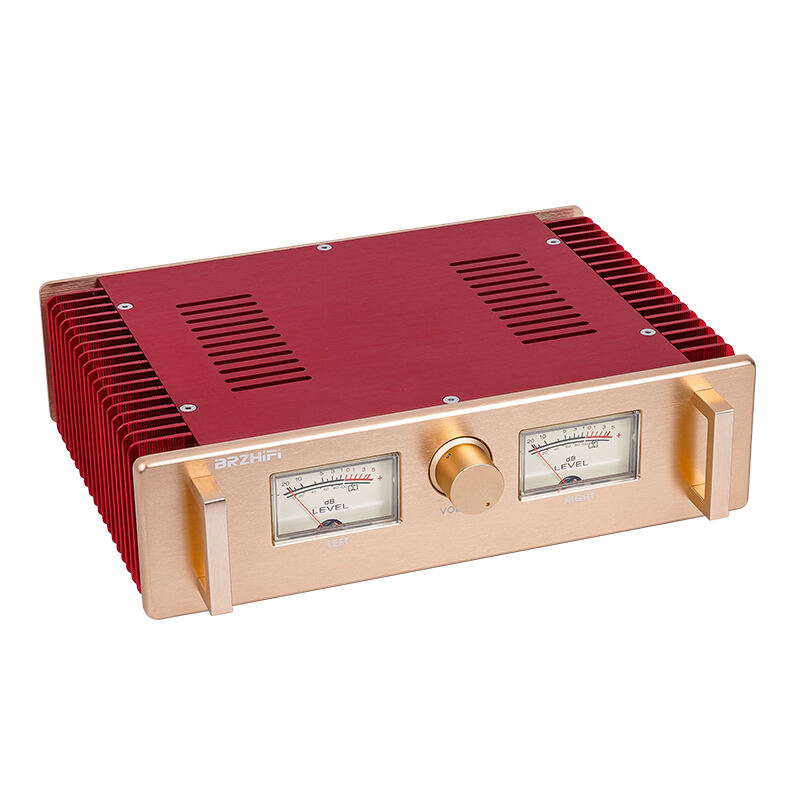
The power amplifier ab represents a crucial component in modern audio systems, offering an optimal balance between efficiency and sound quality that has made it the preferred choice for both professional and consumer applications. Understanding the specific load conditions that maximize performance in these amplifiers requires a deep dive into their operational characteristics and the complex relationship between impedance matching, thermal management, and signal integrity. Engineers and audio enthusiasts alike must consider multiple factors when selecting and implementing power amplifier ab solutions, as the wrong load conditions can significantly impact both performance and longevity.
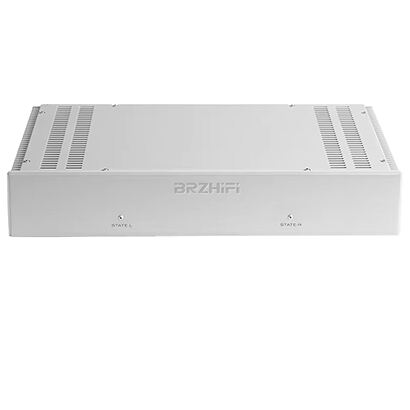
Understanding Power Amplifier AB Operating Principles
Class AB Operation Fundamentals
The power amplifier ab operates using Class AB topology, which combines the efficiency benefits of Class B operation with the linearity advantages of Class A design. This hybrid approach allows each output transistor to conduct for slightly more than half of the input signal cycle, typically around 180 to 200 degrees. The overlapping conduction periods eliminate the crossover distortion inherent in pure Class B designs while maintaining significantly higher efficiency than Class A amplifiers. This operational method makes the power amplifier ab particularly suitable for applications requiring both high-quality audio reproduction and reasonable power consumption.
The biasing arrangement in a power amplifier ab creates a small quiescent current flow through the output devices even when no input signal is present. This standing current ensures that both positive and negative output transistors remain partially active, preventing the dead zone that would otherwise occur during signal transitions. The precise control of this bias current determines the amplifier's performance characteristics, including distortion levels, efficiency, and thermal stability under various load conditions.
Load Impedance Characteristics
Load impedance plays a fundamental role in determining how effectively a power amplifier ab can transfer power to connected speakers or other loads. Most consumer power amplifier ab designs are optimized for standard speaker impedances of 4, 8, or 16 ohms, with 8-ohm loads being the most common reference point for specifications. The impedance matching between amplifier and load directly affects power transfer efficiency, with maximum power transfer occurring when the load impedance matches the amplifier's output impedance, though this condition rarely represents optimal efficiency.
The reactive nature of speaker loads adds complexity to impedance considerations, as speakers present varying impedance values across different frequencies. A power amplifier ab must handle these impedance variations while maintaining stable operation and consistent performance. Lower impedance loads demand higher current delivery from the amplifier, while higher impedance loads require greater voltage swing capability. Understanding these relationships is essential for selecting appropriate load conditions that maximize both performance and reliability.
Optimal Load Impedance Ranges
Standard Impedance Matching
The most suitable load conditions for a power amplifier ab typically fall within the 4 to 16-ohm range, with specific optimization points depending on the amplifier's design parameters. Eight-ohm loads represent the sweet spot for most power amplifier ab designs, providing an excellent balance between current demand and voltage requirements. This impedance level allows the amplifier to deliver substantial power while maintaining reasonable current draw and heat generation. Many manufacturers design their power amplifier ab circuits with 8-ohm loads as the primary specification target, resulting in optimal performance characteristics at this impedance level.
Four-ohm loads can extract higher power output from a power amplifier ab, as the lower impedance allows greater current flow for a given voltage. However, this increased current demand places higher stress on the output devices and power supply, potentially leading to thermal issues if the amplifier lacks adequate heat dissipation capability. While many modern power amplifier ab designs can handle 4-ohm loads effectively, extended operation at high power levels may require additional cooling considerations or output current limiting to prevent damage.
High Impedance Load Considerations
Sixteen-ohm loads present unique advantages for power amplifier ab operation, particularly in terms of reduced current stress and improved efficiency under certain conditions. The higher impedance reduces the current demand on the output devices, leading to lower heat generation and potentially improved reliability during extended operation. However, the power output capability decreases with higher load impedances, as the amplifier's voltage swing limitations become the primary constraint rather than current delivery capacity.
Professional installations often utilize higher impedance loads to enable longer cable runs without significant power loss or to facilitate multiple speaker connections through series wiring arrangements. A well-designed power amplifier ab can adapt to these higher impedance conditions while maintaining excellent audio quality and stable operation across the entire frequency spectrum.
Thermal Management and Load Relationships
Heat Dissipation Requirements
The thermal characteristics of a power amplifier ab are intimately connected to the load conditions under which it operates. Lower impedance loads generate higher current flow, which increases I²R losses in the output devices and associated circuitry. These increased losses manifest as heat that must be effectively dissipated to maintain stable operation and prevent thermal damage. The relationship between load impedance and heat generation is not linear, as factors such as signal crest factor, average power levels, and amplifier efficiency all contribute to the overall thermal load.
Proper thermal management becomes critical when operating a power amplifier ab under demanding load conditions. Heat sink sizing, ventilation requirements, and thermal protection circuitry must all be designed to handle the worst-case thermal scenarios that may occur with the intended load impedance range. Many power amplifier ab designs incorporate thermal monitoring and protection systems that reduce output power or shut down the amplifier when excessive temperatures are detected, preventing damage while maintaining system reliability.
Continuous vs Peak Power Handling
The distinction between continuous and peak power handling capabilities significantly affects load condition selection for power amplifier ab applications. While an amplifier may handle low-impedance loads effectively for short-duration peaks, continuous operation at high power levels may require higher impedance loads to maintain thermal stability. Music and speech signals typically have high crest factors, meaning the average power is significantly lower than peak power, allowing power amplifier ab circuits to handle challenging load conditions that would be problematic with continuous sine wave signals.
Understanding the duty cycle and signal characteristics in a particular application helps determine appropriate load conditions for reliable power amplifier ab operation. Applications with high average power requirements, such as sound reinforcement systems or background music installations, may benefit from higher impedance loads that reduce thermal stress. Conversely, applications with primarily transient power demands can often utilize lower impedance loads to achieve maximum dynamic range and impact.
Frequency Response and Load Interactions
Impedance Variations Across Frequency
Real-world loads present complex impedance characteristics that vary significantly across the audio frequency spectrum, and a quality power amplifier ab must maintain stable operation under these varying conditions. Speaker impedances typically exhibit wide variations, with values ranging from 3 ohms to over 50 ohms depending on the frequency and driver characteristics. These impedance variations can affect the power amplifier ab frequency response, potentially causing peaks or dips in output level that alter the overall system performance.
The output impedance of a power amplifier ab interacts with load impedance variations to create frequency response modifications through voltage divider effects. A well-designed power amplifier ab minimizes these interactions through low output impedance design, but some frequency response variations may still occur with reactive loads. Understanding these interactions helps in selecting appropriate load conditions and implementing any necessary frequency response compensation.
Reactive Load Handling
Capacitive and inductive components in speaker loads create reactive impedance elements that can challenge power amplifier ab stability under certain conditions. Capacitive loads, often resulting from long cable runs or certain speaker designs, can cause high-frequency oscillation in improperly designed amplifiers. The power amplifier ab must incorporate adequate compensation networks and stability margins to handle these reactive load conditions without compromising performance or reliability.
Inductive loads, common in transformer-coupled systems or certain speaker configurations, present different challenges for power amplifier ab operation. The phase shift between voltage and current in inductive loads affects power delivery and can influence amplifier behavior, particularly during transient conditions. Proper design of the power amplifier ab output stage and feedback networks ensures stable operation with both resistive and reactive load components across the full audio frequency range.
Power Supply Considerations
Supply Voltage and Current Requirements
The power supply design in a power amplifier ab must accommodate the current and voltage demands imposed by different load conditions. Lower impedance loads require higher current delivery capability from the power supply, necessitating robust transformer design, adequate rectifier current ratings, and sufficient filter capacitance to maintain voltage regulation under dynamic load conditions. The power supply's ability to deliver peak currents without significant voltage drop directly affects the amplifier's ability to handle challenging load conditions effectively.
Supply rail voltage selection impacts the maximum voltage swing available to drive various load impedances, with higher supply voltages enabling greater power delivery into higher impedance loads. The power amplifier ab design must balance supply voltage requirements against component stress, efficiency considerations, and safety requirements. Many professional power amplifier ab designs utilize dual-rail supplies with voltages ranging from ±35V to ±100V or higher, providing the voltage headroom necessary for demanding load conditions.
Regulation and Dynamic Response
Power supply regulation becomes increasingly important as load impedance decreases, as low-impedance loads can cause significant supply voltage variations under dynamic conditions. A power amplifier ab requires excellent supply regulation to maintain consistent performance across varying load conditions, particularly during high-power transients that can momentarily draw substantial current from the supply rails. Poor regulation can lead to compression, increased distortion, and reduced dynamic range, particularly noticeable with challenging load conditions.
The dynamic response of the power supply affects how well a power amplifier ab can handle sudden changes in load current demand. Large filter capacitors provide energy storage for transient conditions, but the supply's ability to quickly replenish this stored energy determines sustained performance under varying load conditions. Advanced power amplifier ab designs may incorporate switching power supplies or other high-efficiency technologies that provide excellent regulation and dynamic response while reducing overall system weight and heat generation.
Protection Circuitry and Load Safety
Overcurrent Protection Systems
Effective protection circuitry is essential for ensuring reliable power amplifier ab operation under various load conditions, particularly when loads may present impedances lower than the amplifier's design specifications. Current limiting circuits monitor output current and reduce drive levels when safe operating limits are approached, preventing damage to output devices while allowing continued operation under most conditions. These protection systems must be carefully designed to distinguish between normal operation with low-impedance loads and fault conditions such as short circuits.
Modern power amplifier ab designs often incorporate sophisticated protection algorithms that consider multiple parameters including output current, device temperature, and load impedance characteristics. These systems can adapt protection thresholds based on detected load conditions, providing maximum performance with safe loads while maintaining robust protection against fault conditions. The protection circuitry must respond quickly enough to prevent damage while avoiding false triggering that would interrupt normal operation.
Thermal Protection Implementation
Thermal protection systems in power amplifier ab designs monitor critical temperatures and implement protective measures when safe operating limits are approached. These systems typically use temperature sensors mounted on or near the output devices to provide accurate thermal monitoring under varying load conditions. When excessive temperatures are detected, the protection system may gradually reduce output power, activate cooling fans, or shut down the amplifier completely to prevent thermal damage.
The thermal protection thresholds and response characteristics must be tailored to the specific load conditions and operating environment expected for the power amplifier ab application. Systems designed for continuous operation with low-impedance loads require more aggressive thermal monitoring and faster response times compared to amplifiers intended for intermittent use with higher impedance loads. Proper thermal protection ensures long-term reliability while maximizing performance under the intended operating conditions.
Measurement and Testing Considerations
Load Testing Protocols
Comprehensive testing of power amplifier ab performance under various load conditions requires carefully designed test protocols that evaluate multiple performance parameters across the intended impedance range. Standard measurements include power output, total harmonic distortion, frequency response, and efficiency at different load impedances and power levels. These measurements provide insight into how well the power amplifier ab maintains performance consistency across varying load conditions and help identify optimal operating ranges.
Dynamic testing with reactive loads provides additional information about power amplifier ab behavior under real-world conditions where speaker impedances vary with frequency and loading conditions change continuously. Burst testing with various impedance loads helps evaluate thermal performance and protection circuit operation, while long-term reliability testing under continuous load conditions validates the amplifier's suitability for demanding applications. Proper testing protocols ensure that the power amplifier ab meets performance specifications under all intended operating conditions.
Performance Verification Methods
Verification of power amplifier ab performance with different load conditions requires sophisticated measurement equipment capable of accurately characterizing both steady-state and dynamic behavior. Audio analyzers with programmable load capabilities enable automated testing across multiple impedance values and signal conditions, providing comprehensive performance data for optimization and specification verification. These measurements must account for the complex interactions between amplifier characteristics and load impedance variations.
Real-world performance verification often involves testing the power amplifier ab with actual speaker loads rather than purely resistive test loads, as speakers present complex impedance characteristics that can reveal performance issues not apparent with simple resistive loading. This testing approach provides valuable insight into how the amplifier will perform in actual applications and helps validate the appropriateness of specific load condition recommendations for different use cases.
FAQ
What is the ideal impedance range for power amplifier ab operation?
The ideal impedance range for most power amplifier ab designs falls between 4 and 16 ohms, with 8 ohms being the most common optimization target. This range provides an excellent balance between power delivery capability and thermal management requirements. Lower impedances like 4 ohms can provide higher power output but increase current stress and heat generation, while higher impedances like 16 ohms reduce thermal stress but may limit maximum power capability. The specific optimal range depends on the amplifier's design parameters and intended application requirements.
How do reactive loads affect power amplifier ab performance?
Reactive loads, which include capacitive and inductive components, can significantly impact power amplifier ab performance by creating phase shifts between voltage and current. Capacitive loads may cause high-frequency instability if the amplifier lacks adequate compensation, while inductive loads can affect power delivery and transient response. Well-designed power amplifier ab circuits incorporate stability compensation and proper output networks to handle reactive loads effectively, ensuring consistent performance across the full audio frequency range with real-world speaker loads.
What happens when load impedance drops below the amplifier's recommended range?
When load impedance drops below the recommended range, the power amplifier ab experiences increased current demand that can lead to several issues including excessive heat generation, voltage supply sagging, increased distortion, and potential triggering of protection circuits. While many modern amplifiers can handle temporary operation with very low impedances, sustained operation below recommended levels may reduce reliability or cause the protection systems to limit output power. Proper impedance matching ensures optimal performance and long-term reliability.
How does speaker cable length affect load conditions for power amplifier ab systems?
Speaker cable length affects load conditions by adding series resistance and potentially creating reactive components that modify the impedance characteristics seen by the power amplifier ab. Long cable runs can cause power loss, high-frequency rolloff, and may contribute to stability issues if the cable capacitance is excessive. The impact depends on cable gauge, length, and the amplifier's output impedance characteristics. Proper cable selection and length management ensure that load conditions remain within acceptable ranges for optimal power amplifier ab performance.