
 EN
EN
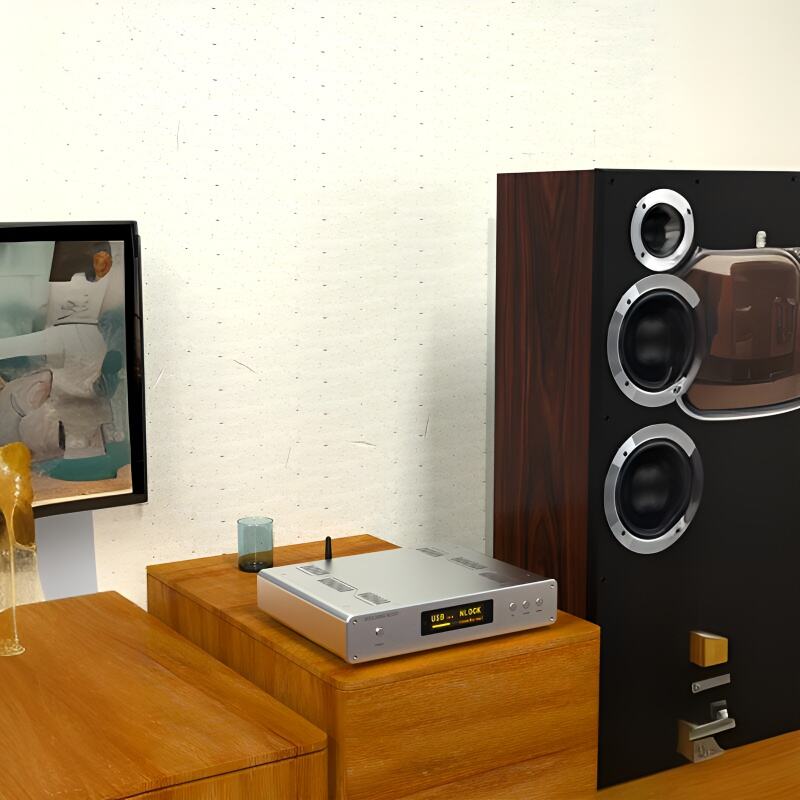
Professional audio environments demand precise signal management and exceptional sound quality that can only be achieved through carefully selected components. A high-quality preamp serves as the foundation of any serious audio setup, providing the critical amplification and signal conditioning necessary for optimal performance. Understanding the characteristics that define an ideal preamp for professional applications helps audio engineers and enthusiasts make informed decisions when building their systems. The balanced design approach has become increasingly important in modern audio configurations, offering superior noise rejection and signal integrity that professional environments require.
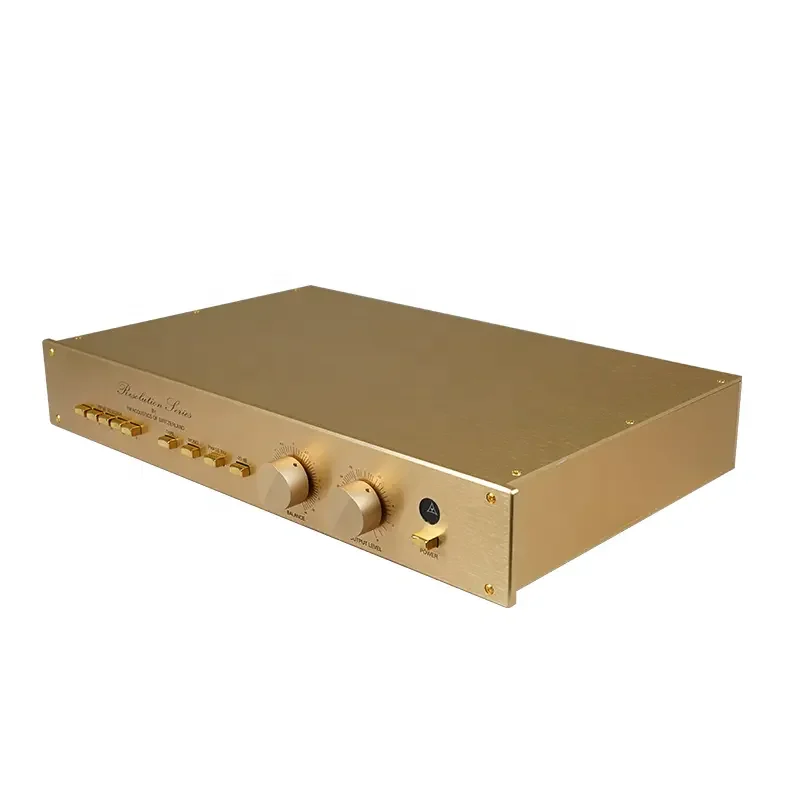
Understanding Balanced Audio Architecture
Differential Signal Processing
Balanced audio systems utilize differential signal processing to eliminate common-mode noise and interference. This approach involves transmitting audio signals through two conductors carrying identical information but with opposite polarity, along with a ground reference. When these signals reach the receiving end, any noise that has been picked up equally by both conductors gets canceled out, leaving only the desired audio signal. Professional preamp designs leverage this principle to maintain signal integrity across long cable runs and in electrically noisy environments.
The effectiveness of balanced operation depends heavily on the preamp's internal circuitry and its ability to maintain precise phase relationships between the differential signal pairs. Quality components and careful circuit design ensure that the balanced outputs provide maximum common-mode rejection ratio (CMRR), typically exceeding 60dB in professional applications. This superior noise rejection capability makes balanced preamp configurations essential for studio recording, live sound reinforcement, and broadcast applications where signal purity is paramount.
Circuit Topology Considerations
Modern balanced preamp designs often incorporate fully differential amplifier stages that process both phases of the audio signal symmetrically. This approach provides inherent advantages over single-ended designs, including lower distortion, increased dynamic range, and improved power supply rejection. The circuit topology must carefully balance gain distribution, bandwidth allocation, and noise characteristics to achieve optimal performance across the entire audio spectrum.
Advanced preamp implementations utilize multiple gain stages with precise impedance matching to ensure seamless signal transfer between components. The input stage typically features high-impedance JFET or MOSFET devices to minimize loading effects on source equipment, while subsequent stages provide the necessary gain and current drive capability for professional interface standards. Careful attention to component selection and layout minimizes parasitic effects that could degrade the balanced operation.
Key Performance Characteristics
Noise Floor and Dynamic Range
Professional audio applications demand exceptionally low noise floors to preserve the subtle details and ambience present in high-quality recordings. A superior preamp achieves noise performance measured in the low microvolts, typically below -90dBu equivalent input noise. This specification becomes critical when working with low-output sources such as ribbon microphones or when significant gain is required for distant miking applications. The noise characteristics must remain consistent across the entire gain range, ensuring predictable performance regardless of the operating conditions.
Dynamic range specifications directly impact the preamp's ability to handle both delicate musical passages and powerful transients without compression or distortion. Professional designs typically provide dynamic range exceeding 110dB, allowing for the faithful reproduction of complex musical material with wide amplitude variations. The relationship between noise floor and maximum output level determines this critical parameter, requiring careful optimization of both input and output stage designs.
Frequency Response and Phase Linearity
Accurate frequency response characteristics ensure that all spectral components of the audio signal receive equal treatment throughout the preamp's processing chain. Professional specifications typically require response within ±0.1dB from 20Hz to 20kHz, with extended bandwidth often reaching beyond 100kHz to preserve transient accuracy. The high-frequency extension must be achieved without introducing phase distortion that could affect stereo imaging or temporal accuracy in critical listening applications.
Phase linearity becomes particularly important in multi-channel applications where timing relationships between channels must be preserved. A well-designed preamp maintains consistent group delay across the audio spectrum, ensuring that complex waveforms emerge with their original time-domain characteristics intact. This attention to phase performance distinguishes professional equipment from consumer-grade alternatives.
Input and Output Interface Standards
Professional Connector Systems
Professional preamp designs incorporate standardized connector systems that ensure reliable connections in demanding environments. XLR connectors have become the industry standard for balanced audio interfaces, providing secure mechanical connection along with excellent electrical performance. The three-pin configuration accommodates the hot, cold, and ground connections required for balanced operation, while the locking mechanism prevents accidental disconnection during critical operations.
Input impedance characteristics must be carefully matched to the connected source equipment to ensure optimal signal transfer and prevent loading effects. Professional preamp inputs typically present impedances of 10kΩ or higher for line-level sources, while microphone inputs may utilize transformer coupling or active designs with impedances ranging from 1.5kΩ to 3kΩ. These specifications ensure compatibility with a wide range of professional audio equipment while maintaining optimal noise performance.
Output Drive Capability
The output stage of a professional preamp must provide sufficient current drive capability to handle multiple loads and long cable runs without degradation. Typical professional standards require the ability to drive loads as low as 600 ohms while maintaining specified performance parameters. This drive capability ensures compatibility with various downstream equipment including mixing consoles, audio interfaces, and power amplifiers.
Balanced output stages often utilize active driver configurations that can source and sink current symmetrically for both phases of the differential signal. This approach provides excellent common-mode rejection at the receiving end while maintaining low output impedance across the audio spectrum. The output stage design must also incorporate appropriate protection circuitry to prevent damage from short circuits or improper connections.
Gain Structure and Control Systems
Precision Gain Management
Professional applications require precise gain control with repeatable settings and minimal interaction between channels in multichannel configurations. High-quality preamp designs incorporate either stepped attenuators or precision potentiometers with tracking specifications better than ±0.1dB between channels. This accuracy ensures consistent results when matching levels between multiple sources or when recreating previous mix configurations.
The gain range must accommodate the diverse dynamic range requirements of professional audio sources. Microphone preamps typically provide 60-80dB of available gain to handle sources ranging from close-miked drums to distant orchestral pickup. Line-level preamp sections usually offer ±20dB of gain adjustment to accommodate the varying output levels of different professional equipment. The gain structure must maintain optimal noise performance throughout this range while preventing overload conditions.
Control Interface Design
User interface design significantly impacts the practical usability of professional preamp equipment in fast-paced production environments. Control layouts must provide intuitive operation with clear visual feedback regarding current settings. Illuminated switches, LED metering, and well-labeled controls contribute to efficient operation, particularly in dimly lit control rooms or live sound environments.
Remote control capability has become increasingly important in modern studio installations where preamp equipment may be located in machine rooms or equipment racks distant from the control surface. Digital control protocols allow integration with automation systems and recall of complex configurations. However, the implementation must not compromise the analog signal path quality that defines professional preamp performance.
Thermal Management and Reliability
Power Supply Design Considerations
Professional preamp applications demand exceptional power supply performance to maintain specified audio characteristics under all operating conditions. Linear power supply designs often provide superior performance compared to switching alternatives, particularly regarding noise characteristics and dynamic response. The power supply topology must provide adequate regulation, low noise, and fast transient response to support the demanding requirements of high-performance audio circuitry.
Thermal management becomes critical in professional installations where equipment operates continuously under demanding conditions. Proper heat dissipation ensures stable operation and long-term reliability while preventing thermal-induced performance degradation. Advanced preamp designs incorporate temperature compensation circuits that maintain consistent performance characteristics across the entire operating temperature range.
Component Selection and Manufacturing Quality
Professional preamp reliability depends heavily on component selection and manufacturing quality standards. Military-specification components, precision resistors, and long-life capacitors contribute to extended operational life and consistent performance over time. The manufacturing process must include comprehensive testing and quality assurance procedures to ensure that each unit meets the demanding specifications required for professional applications.
Environmental considerations play an important role in professional preamp design, as equipment must operate reliably in various climate conditions and electromagnetic environments. Proper shielding, conformal coating, and robust mechanical construction ensure reliable operation in challenging installations including outdoor venues, broadcast facilities, and mobile production units.
Integration with Professional Audio Systems
Signal Chain Optimization
Professional audio systems require careful attention to signal chain optimization to achieve maximum performance from each component. The preamp serves as a critical link in this chain, providing the interface between source equipment and downstream processing or recording systems. Proper impedance matching, level management, and signal routing ensure that the preamp contributes positively to overall system performance rather than becoming a limiting factor.
Modern professional workflows often involve both analog and digital signal processing, requiring preamp designs that integrate seamlessly with digital audio workstations and professional audio interfaces. The analog-to-digital conversion point becomes critical in determining overall system performance, making the preamp's contribution to signal quality even more important in hybrid analog-digital signal chains.
Scalability and Expansion Considerations
Professional installations often begin with modest requirements but must accommodate future expansion and changing operational needs. Modular preamp designs allow for incremental system growth while maintaining consistent performance characteristics across all channels. Standardized interface protocols and mechanical packaging enable seamless integration with existing equipment and future additions.
The ability to integrate multiple preamp units into larger systems requires careful attention to grounding schemes, power distribution, and signal routing. Professional designs incorporate features that simplify system integration while maintaining the electrical isolation and noise immunity essential for high-performance audio applications. This scalability ensures that the initial equipment investment continues to provide value as system requirements evolve.
FAQ
What advantages does a balanced preamp offer over unbalanced designs
Balanced preamp configurations provide superior noise immunity through common-mode rejection, making them ideal for professional environments with electrical interference. The differential signal processing eliminates noise picked up equally by both signal conductors, resulting in cleaner audio reproduction. Additionally, balanced designs typically offer greater dynamic range and lower distortion compared to unbalanced alternatives, making them essential for high-quality audio production where signal integrity is paramount.
How important is the power supply design in professional preamp performance
Power supply design significantly impacts preamp performance, particularly regarding noise floor, dynamic range, and transient response. Linear power supplies generally provide superior performance for audio applications due to their low noise characteristics and excellent regulation. The power supply must provide clean, stable voltages while maintaining fast transient response to support the demanding requirements of professional audio signals. Poor power supply design can limit even the best analog circuitry.
What gain range should a professional preamp provide
Professional preamp applications typically require different gain ranges depending on the intended use. Microphone preamps should provide 60-80dB of gain to accommodate sources from high-output dynamic microphones to low-output ribbon designs. Line-level preamps usually offer ±20dB of adjustment to match various professional equipment output levels. The gain control should maintain consistent noise performance throughout the range while providing precise, repeatable settings for professional workflow requirements.
Why is phase linearity important in professional preamp design
Phase linearity ensures that complex audio waveforms maintain their original time-domain characteristics throughout the preamp processing chain. This becomes critical in stereo and multichannel applications where timing relationships between channels must be preserved for accurate imaging and soundstage reproduction. Non-linear phase response can degrade transient accuracy and affect the perceived quality of the audio reproduction, making phase linearity a key specification for professional preamp designs used in critical listening applications.