
 EN
EN
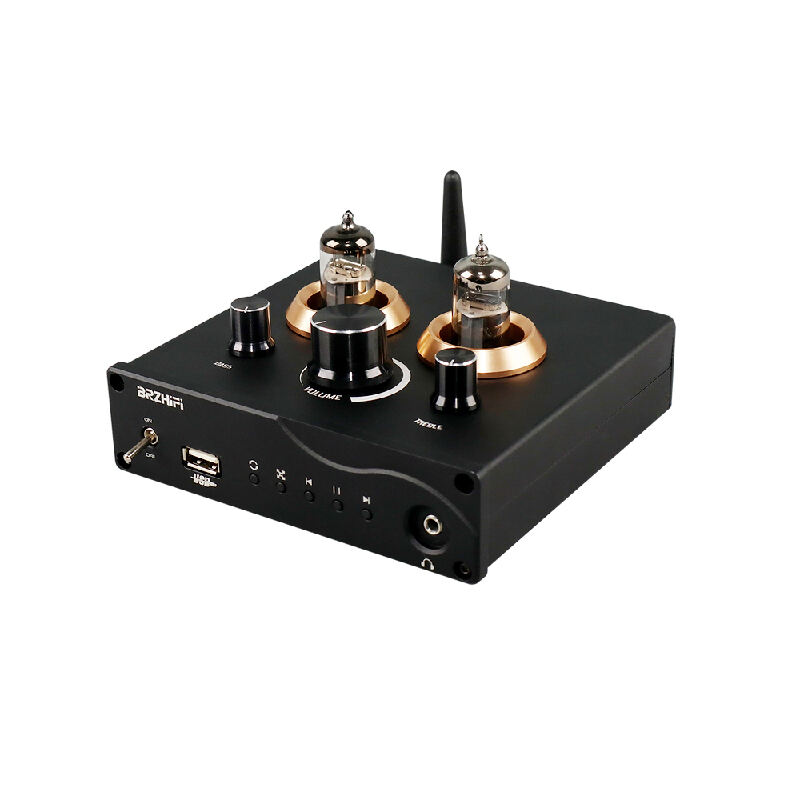
Audio enthusiasts and professionals constantly seek the perfect balance between efficiency and sound quality in their amplification systems. The ab power amplifier represents a compelling solution that bridges the gap between pure Class A warmth and Class B efficiency. This hybrid approach has revolutionized modern audio reproduction by combining the best characteristics of both topologies while minimizing their respective weaknesses. Understanding how these amplifiers achieve this delicate balance is crucial for anyone serious about high-fidelity audio reproduction.
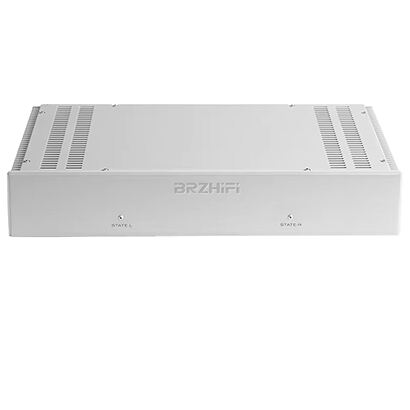
Understanding Class AB Amplifier Topology
The Hybrid Design Philosophy
Class AB amplifiers represent an ingenious compromise in amplifier design that has become the industry standard for high-quality audio reproduction. Unlike pure Class A amplifiers that continuously draw current regardless of signal level, or Class B amplifiers that only activate during signal peaks, the ab power amplifier operates with a carefully calculated bias point. This bias allows both output transistors to conduct simultaneously for small signals while transitioning to push-pull operation for larger signals. The result is significantly improved efficiency compared to Class A designs while maintaining superior linearity compared to Class B implementations.
The key to understanding ab power amplifier operation lies in the concept of quiescent current. This idle current flows through the output stage even when no signal is present, keeping both transistors in a slightly conductive state. This eliminates the crossover distortion that plagues Class B amplifiers while avoiding the excessive heat generation and power consumption of Class A designs. The careful selection of this bias point determines the amplifier's character, with higher bias currents approaching Class A behavior and lower bias currents prioritizing efficiency.
Circuit Architecture and Component Selection
The internal architecture of an ab power amplifier requires precise component matching and thermal management to achieve optimal performance. Output transistors must be carefully paired for matching characteristics, and thermal coupling ensures that both devices track temperature changes uniformly. The driver stage typically employs complementary transistor pairs to provide symmetric drive to the output stage, while the input stage often utilizes differential amplifier configurations for excellent common-mode rejection and low noise performance.
Power supply design plays a crucial role in ab power amplifier performance, with large filter capacitors providing the energy storage necessary for dynamic transients. The transformer design must accommodate both the steady-state bias current and the peak current demands during signal reproduction. Modern implementations often incorporate sophisticated protection circuits including thermal shutdown, overcurrent protection, and DC offset detection to safeguard both the amplifier and connected speakers.
Efficiency Characteristics and Thermal Management
Power Consumption Analysis
The efficiency advantages of ab power amplifier designs become apparent when analyzing their power consumption patterns across different operating conditions. At low signal levels, where music typically spends most of its time, Class AB amplifiers operate in a quasi-Class A mode, providing excellent linearity with moderate power consumption. As signal levels increase, the amplifier transitions to Class B operation, dramatically improving efficiency during high-output passages. This dynamic behavior results in typical efficiency ratings of 50-70%, significantly better than the 25-30% efficiency of pure Class A designs.
Real-world efficiency measurements reveal that an ab power amplifier can deliver substantial power output while generating manageable amounts of waste heat. This efficiency improvement translates directly into reduced operating costs, smaller heat sinks, and more compact chassis designs. The thermal benefits extend beyond mere convenience, as lower operating temperatures contribute to improved component longevity and enhanced reliability over extended operating periods.
Heat Dissipation Strategies
Effective thermal management remains critical for ab power amplifier performance and longevity. Despite their improved efficiency compared to Class A designs, these amplifiers still generate significant heat that must be efficiently dissipated. Heat sink design involves careful consideration of surface area, fin spacing, and mounting techniques to optimize thermal transfer. The use of thermal interface materials between output transistors and heat sinks ensures maximum heat transfer efficiency.
Advanced ab power amplifier designs incorporate temperature-dependent bias control circuits that automatically adjust the quiescent current based on operating temperature. This thermal tracking helps maintain optimal crossover behavior while preventing thermal runaway conditions. Some high-end implementations even feature active cooling systems with variable-speed fans that respond to thermal conditions, ensuring consistent performance regardless of ambient temperature or loading conditions.
Sound Quality Optimization Techniques
Distortion Characteristics and Linearity
The sonic signature of an ab power amplifier results from its unique distortion profile, which combines the best aspects of Class A and Class B topologies. The careful bias selection minimizes crossover distortion while avoiding the second-harmonic emphasis typical of pure Class A designs. This balanced approach produces a natural, uncolored sound that accurately reproduces source material without imposing a particular sonic character. The distortion spectrum typically shows predominantly second and third harmonics, which are generally considered more musically pleasant than higher-order distortions.
Modern ab power amplifier designs employ sophisticated feedback techniques to further reduce distortion and improve linearity. Global negative feedback helps maintain flat frequency response and low output impedance, while local feedback loops can address specific circuit imperfections. The challenge lies in applying sufficient feedback to achieve good measurements while avoiding the potential sonic degradation that excessive feedback can introduce. The best implementations strike a careful balance that preserves musical dynamics while maintaining technical excellence.
Dynamic Response and Transient Handling
The transient response capabilities of an ab power amplifier directly influence its ability to accurately reproduce musical dynamics and spatial information. The hybrid nature of Class AB operation provides excellent slew rate characteristics, allowing rapid voltage swings necessary for accurate transient reproduction. The continuous bias current ensures that both output transistors remain active during low-level passages, eliminating the switching delays that can blur fine detail resolution.
Power supply design significantly impacts dynamic performance, with large reservoir capacitors providing the instantaneous current delivery required for musical peaks. The internal impedance of the power supply affects the amplifier's ability to maintain voltage regulation under varying load conditions. Superior designs incorporate separate power supplies for different amplifier stages, preventing interactions between high-current output stages and sensitive input circuits.
Application Considerations and System Integration
Speaker Matching and Load Characteristics
Successful ab power amplifier implementation requires careful consideration of speaker load characteristics and system impedance matching. The amplifier's output impedance interacts with speaker impedance variations across the frequency spectrum, potentially affecting frequency response and damping factor. Low output impedance designs provide better speaker control, particularly important for controlling bass response and maintaining accurate transient reproduction. The amplifier's current delivery capability must match the dynamic requirements of the connected speakers.
Complex speaker loads that present reactive components can challenge ab power amplifier stability, particularly at high frequencies where capacitive loads may cause oscillation. Modern designs incorporate stability compensation networks that maintain proper phase margins across all likely load conditions. Some implementations feature output networks that isolate the amplifier from difficult loads while preserving signal integrity.
Environmental and Installation Factors
The installation environment significantly affects ab power amplifier performance and longevity. Adequate ventilation ensures proper thermal management, while protection from dust and moisture prevents component degradation. Electrical considerations include proper grounding techniques to minimize noise and interference, along with appropriate AC power conditioning to ensure clean operating voltages. The physical placement affects both thermal performance and susceptibility to mechanical vibration.
Professional installations often require specialized mounting and cooling solutions to maintain optimal ab power amplifier operation in challenging environments. Rack-mounted configurations must consider airflow patterns and heat dissipation strategies, while portable applications prioritize rugged construction and efficient cooling. The electrical infrastructure must provide adequate current capacity and proper grounding to support full-power operation without voltage sag or ground loops.
Performance Measurement and Evaluation
Technical Specifications and Bench Testing
Comprehensive evaluation of ab power amplifier performance requires understanding the relationship between technical measurements and subjective sound quality. Traditional specifications like total harmonic distortion, signal-to-noise ratio, and frequency response provide baseline performance indicators, but more sophisticated measurements reveal deeper insights into amplifier behavior. Intermodulation distortion testing exposes nonlinearities that simple harmonic distortion measurements might miss, while transient intermodulation distortion reveals dynamic performance characteristics.
Modern test equipment enables detailed analysis of ab power amplifier behavior under realistic operating conditions. Multitone testing simulates complex musical signals more accurately than simple sine wave tests, revealing how the amplifier handles simultaneous multiple frequencies. Load-pull testing demonstrates performance variations with different speaker impedances, while thermal testing ensures stable operation across temperature ranges. These comprehensive measurements provide the foundation for understanding real-world performance capabilities.
Subjective Evaluation Methods
While technical measurements provide important performance data, subjective evaluation remains crucial for assessing ab power amplifier musical performance. Controlled listening tests using high-quality source material and reference speakers reveal characteristics that measurements alone cannot capture. The amplifier's ability to preserve spatial information, dynamic contrasts, and timbral accuracy becomes apparent through careful audition with familiar recordings spanning various musical genres.
Long-term listening evaluation helps identify subtle characteristics that may not be immediately apparent during brief demonstrations. The ab power amplifier's behavior with different source components and speaker systems reveals its versatility and system compatibility. Comparative evaluation against reference amplifiers of known performance provides context for understanding the amplifier's strengths and limitations within the broader landscape of available options.
Future Developments and Technology Trends
Advanced Circuit Topologies
Contemporary ab power amplifier development continues to evolve with advances in semiconductor technology and circuit design techniques. Modern power transistors offer improved switching characteristics and thermal performance, enabling more sophisticated biasing schemes and better linearity. The integration of digital control systems allows dynamic optimization of operating parameters based on signal content and environmental conditions, potentially improving both efficiency and sound quality.
Emerging technologies such as gallium nitride semiconductors promise significant improvements in ab power amplifier performance through reduced switching losses and higher operating frequencies. These developments may enable new circuit topologies that combine the best characteristics of traditional linear amplifiers with the efficiency advantages of switching designs. The integration of digital signal processing capabilities opens possibilities for real-time optimization and adaptive performance enhancement.
Environmental and Sustainability Considerations
The growing emphasis on energy efficiency and environmental sustainability influences ab power amplifier development priorities. Improved efficiency not only reduces operating costs but also minimizes environmental impact through reduced power consumption. The use of recyclable materials and environmentally responsible manufacturing processes becomes increasingly important in product development decisions.
Future ab power amplifier designs may incorporate intelligent power management systems that automatically adjust operating parameters to minimize energy consumption while maintaining performance standards. The integration of renewable energy compatibility and grid-tie capabilities could enable amplifiers to participate in smart grid systems, further reducing environmental impact while maintaining superior audio performance.
FAQ
What makes Class AB amplifiers more efficient than Class A designs
Class AB amplifiers achieve better efficiency by operating in a push-pull configuration during high signal levels while maintaining bias current for low-level linearity. This hybrid approach typically achieves 50-70% efficiency compared to Class A's 25-30%, significantly reducing heat generation and power consumption while preserving sound quality.
How does bias current affect ab power amplifier sound quality
Bias current determines how much each output transistor conducts at idle, directly affecting crossover distortion and thermal stability. Higher bias currents approach Class A behavior with improved linearity but reduced efficiency, while lower bias currents prioritize efficiency but may introduce subtle crossover artifacts. The optimal bias represents a careful balance between these competing factors.
Can ab power amplifiers drive difficult speaker loads effectively
Well-designed ab power amplifiers can handle challenging speaker loads through robust current delivery capabilities and stability compensation networks. The key factors include adequate power supply capacity, low output impedance, and proper phase compensation to maintain stability with reactive loads. Quality implementations provide consistent performance across various speaker impedances and configurations.
What maintenance requirements do ab power amplifiers have
Ab power amplifiers require minimal maintenance but benefit from periodic cleaning of heat sinks and ventilation areas to maintain proper thermal performance. Bias adjustment may be necessary over time as components age, and power supply capacitors may eventually require replacement after many years of service. Proper installation with adequate ventilation significantly extends component life and maintains optimal performance.