
 EN
EN
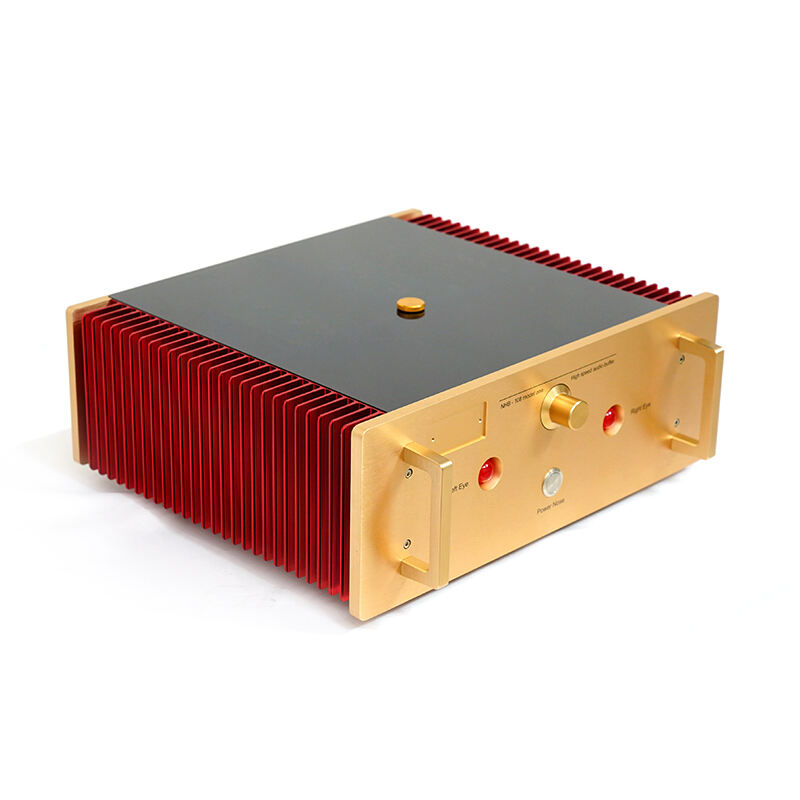
Selecting the right power amplifier for your audio system requires careful consideration of multiple technical specifications and performance characteristics. A quality power amplifier serves as the backbone of any serious audio setup, converting low-level signals from your source components into the robust electrical power needed to drive loudspeakers effectively. Whether you're building a home theater system, studio monitoring setup, or high-fidelity stereo configuration, understanding the essential features that distinguish exceptional power amplifier designs from mediocre alternatives will ensure optimal sound reproduction and long-term reliability.
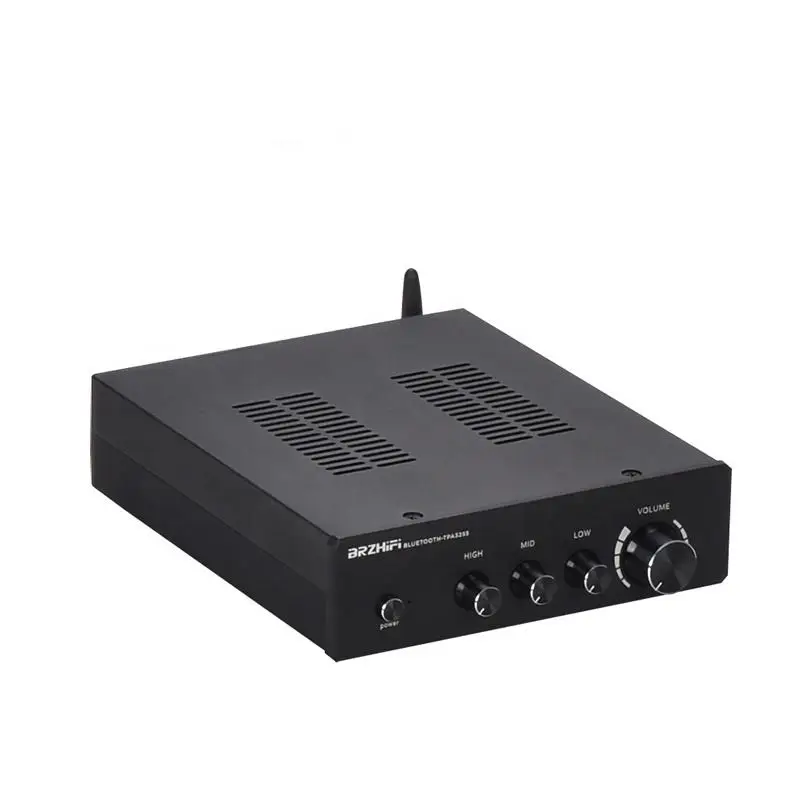
Modern power amplifier technology has evolved significantly, incorporating advanced circuit topologies, sophisticated thermal management systems, and innovative digital processing capabilities. These developments have created amplifiers that deliver unprecedented levels of performance while maintaining efficiency and reliability standards that were previously unattainable. Understanding these technological advances becomes crucial when evaluating different amplifier options for your specific audio requirements.
Power Output Specifications and Performance Metrics
Understanding Wattage Ratings and RMS Power
The most fundamental specification of any power amplifier is its continuous power output rating, typically measured in watts RMS (Root Mean Square). This measurement represents the amplifier's ability to deliver sustained power over extended periods without distortion or thermal shutdown. Unlike peak power ratings that manufacturers sometimes emphasize for marketing purposes, RMS power provides a realistic indication of the amplifier's actual performance capabilities during normal listening conditions.
When evaluating power ratings, consider both the impedance load and frequency response characteristics. A quality power amplifier should maintain consistent power delivery across various speaker impedances, typically rated at 8 ohms, 4 ohms, and sometimes 2 ohms. The ability to double power output as impedance halves indicates robust power supply design and adequate current delivery capability, essential characteristics for driving demanding loudspeaker loads effectively.
Additionally, examine the power bandwidth specification, which indicates the frequency range over which the amplifier maintains its rated power output. Professional-grade amplifiers typically specify power bandwidth from 20 Hz to 20 kHz, ensuring full-range performance across the entire audible spectrum without significant power compression at frequency extremes.
Dynamic Range and Headroom Considerations
Dynamic range represents the difference between the amplifier's noise floor and its maximum clean output level, expressed in decibels. Superior power amplifier designs achieve dynamic ranges exceeding 100 dB, providing the clean headroom necessary for reproducing musical peaks without audible distortion or compression. This specification becomes particularly important when reproducing orchestral music, cinematic soundtracks, or other program material with wide dynamic contrasts.
Headroom refers to the amplifier's ability to handle transient peaks that exceed the average power requirements. Quality amplifiers incorporate oversized power supplies and robust output stages that can deliver several times their continuous power rating for brief periods, accommodating the sudden power demands of percussion instruments, explosive sound effects, or other high-impact audio content without strain or distortion.
Circuit Topology and Amplification Classes
Class D Digital Amplification Technology
Modern Class D amplification represents a significant advancement in power amplifier design, utilizing pulse-width modulation and switching technology to achieve exceptional efficiency ratings often exceeding 90%. This technology enables compact amplifier designs that generate minimal heat while delivering substantial power output, making them ideal for applications where space constraints or thermal management present challenges.
Contemporary Class D implementations have overcome the early limitations associated with switching artifacts and frequency response irregularities. Advanced designs incorporate sophisticated feedback systems, high-frequency switching rates, and carefully engineered output filters that deliver sonic performance rivaling traditional linear amplification while maintaining the efficiency advantages inherent to switching topology.
The reduced heat generation of efficient Class D designs allows for more compact chassis configurations without compromising reliability or performance. This thermal efficiency translates to lower operating costs, reduced cooling requirements, and improved long-term component stability, making Class D technology particularly attractive for professional installations and environmentally conscious consumers.
Linear Amplification Classes and Their Characteristics
Traditional Class A and Class AB amplification continue to hold relevance in high-end audio applications where ultimate sonic purity takes precedence over efficiency considerations. Class A operation, where output devices remain active throughout the entire signal cycle, provides the lowest distortion characteristics and most linear transfer function, albeit at the cost of significant heat generation and reduced efficiency.
Class AB represents a practical compromise, operating in Class A mode for low-level signals while transitioning to Class B operation for higher power levels. This approach maintains much of Class A's sonic purity while achieving improved efficiency compared to pure Class A operation. Quality Class AB power amplifier designs incorporate sophisticated bias systems and thermal tracking to minimize crossover distortion and maintain consistent performance across varying operating conditions.
Input and Output Connectivity Options
Analog Input Configurations
Comprehensive input connectivity ensures compatibility with various source components and system configurations. Professional power amplifier designs typically include balanced XLR inputs alongside unbalanced RCA connections, providing flexibility for both consumer and professional audio applications. Balanced inputs offer superior noise rejection and common-mode interference suppression, particularly beneficial in installations involving long cable runs or electrically noisy environments.
Input sensitivity controls allow proper gain matching between the amplifier and preceding components, ensuring optimal signal-to-noise ratios and preventing input overload conditions. Quality amplifiers provide continuous gain adjustment rather than stepped controls, enabling precise system calibration and accommodating sources with varying output levels without compromising dynamic range or introducing unnecessary noise.
Some advanced power amplifier designs incorporate multiple input options, including digital inputs with integrated DAC functionality, eliminating the need for separate digital-to-analog conversion stages and reducing overall system complexity while maintaining signal integrity throughout the digital domain.
Speaker Output and Protection Systems
Speaker output terminals should accommodate various connection methods, including binding posts for bare wire, spade lugs, and banana plugs. High-current applications benefit from robust terminal designs with substantial contact area and secure mechanical connections that maintain low resistance under thermal cycling and mechanical stress.
Comprehensive protection circuitry safeguards both the amplifier and connected loudspeakers from various fault conditions. Essential protection features include DC offset detection, thermal shutdown, short-circuit protection, and overvoltage protection. Advanced systems incorporate soft-start circuits that gradually apply power to minimize speaker cone excursion during power-up sequences, extending loudspeaker life and reducing audible artifacts.
Thermal Management and Reliability Features
Cooling System Design and Heat Dissipation
Effective thermal management directly impacts amplifier reliability, performance consistency, and component longevity. Quality power amplifier designs incorporate oversized heat sinks, strategically positioned cooling fans, or convection cooling systems that maintain safe operating temperatures under sustained high-power conditions. Thermal monitoring systems should provide early warning of excessive temperatures while implementing gradual power reduction rather than abrupt shutdown to minimize system disruption.
Chassis design plays a crucial role in thermal performance, with extruded aluminum heat sinks, ventilated enclosures, and optimized airflow patterns contributing to effective heat dissipation. Internal component layout should minimize thermal coupling between heat-generating elements and temperature-sensitive components, ensuring stable operation across varying ambient conditions and power levels.
Power Supply Design and Regulation
The power supply represents the foundation of amplifier performance, determining dynamic capability, regulation under varying loads, and overall sonic character. Robust power supply designs incorporate oversized transformers, substantial filter capacitance, and tight voltage regulation to maintain consistent performance regardless of AC line variations or dynamic load demands.
Advanced power supplies include power factor correction, reducing harmonic distortion on the AC line and improving efficiency. Switch-mode power supplies, when properly implemented, can provide excellent regulation and reduced weight compared to linear supplies, making them particularly suitable for portable or rack-mounted applications where space and weight considerations are important.
Control Features and User Interface
Remote Control and System Integration
Modern power amplifier designs often include remote control capability, enabling convenient adjustment of volume, input selection, and other operational parameters from the listening position. Advanced systems provide RS-232, Ethernet, or wireless connectivity for integration with home automation systems or professional control networks, allowing centralized management of multiple amplifiers in complex installations.
Trigger inputs and outputs facilitate automatic power management, allowing the amplifier to respond to signals from source components or other system elements. This automation reduces power consumption during standby periods while ensuring seamless operation when audio signals are present, contributing to both convenience and energy efficiency.
Display and Monitoring Capabilities
Informative display systems provide real-time feedback on operating status, power levels, thermal conditions, and fault states. Quality implementations include LED indicators or digital displays that communicate essential information without creating visual distraction in darkened listening environments. Some advanced designs incorporate spectrum analyzers or real-time power meters that assist in system optimization and troubleshooting.
Protection status indicators alert users to various fault conditions, enabling quick identification and resolution of system issues. Clear status communication reduces downtime and prevents damage to connected components while providing valuable diagnostic information for professional installations or critical applications.
Frequency Response and Audio Performance Specifications
Bandwidth and Phase Response Characteristics
Frequency response specifications indicate the amplifier's ability to reproduce audio signals accurately across the entire audible spectrum. Quality power amplifier designs maintain flat frequency response from well below 20 Hz to beyond 20 kHz, with minimal deviation typically specified as ±0.5 dB or better within the audio bandwidth. Extended frequency response beyond the audible range helps ensure proper phase relationships and transient response characteristics.
Phase response becomes particularly important in multi-amplifier systems or applications requiring precise time alignment between channels. Linear phase response minimizes group delay variations that can affect soundstage imaging and temporal accuracy, especially important in critical listening environments or professional monitoring applications where spatial accuracy is paramount.
Distortion Specifications and Measurement Standards
Total Harmonic Distortion (THD) measurements provide insight into the amplifier's linearity and signal purity. Modern power amplifier designs achieve THD specifications below 0.1% at rated power, with the best examples reaching levels below 0.01%. However, distortion measurements should be evaluated across the entire power range, as some designs exhibit lower distortion at moderate power levels while others maintain consistency up to maximum output.
Intermodulation Distortion (IMD) specifications reveal the amplifier's ability to handle complex musical signals without generating spurious frequency components. Quality amplifiers maintain low IMD levels across various test conditions, ensuring that complex musical passages retain their clarity and definition without audible artifacts or muddy character that can result from poor linearity.
FAQ
What power rating should I choose for my speakers
The ideal power rating depends on your speaker's sensitivity, impedance, and your listening preferences. A general guideline suggests choosing an amplifier with power output matching or slightly exceeding your speaker's recommended power handling. For speakers with 85-90 dB sensitivity, 50-100 watts typically provides adequate headroom for most listening environments. Higher sensitivity speakers require less power, while lower sensitivity models may need 200 watts or more for optimal performance.
How important is amplifier efficiency for home use
Amplifier efficiency significantly impacts operating costs, heat generation, and environmental considerations. Class D amplifiers achieving 90% efficiency generate minimal heat and consume substantially less electricity than traditional Class AB designs operating at 60-70% efficiency. In home applications, efficient designs reduce cooling requirements, enable smaller chassis, and contribute to lower utility bills, especially during extended listening sessions or in multi-amplifier systems.
Do I need balanced inputs for home audio systems
Balanced inputs provide superior noise rejection and are particularly beneficial in systems with long cable runs, multiple components, or electrically noisy environments. While many home systems function adequately with unbalanced connections, balanced inputs offer improved signal integrity and can prevent ground loop issues. Professional-quality power amplifier designs often include both balanced and unbalanced inputs, providing maximum flexibility for various system configurations and upgrade paths.
What protection features are essential in a power amplifier
Essential protection features include thermal shutdown, short-circuit protection, DC offset detection, and overvoltage protection. These systems safeguard both the amplifier and connected speakers from damage due to fault conditions or component failures. Advanced protection circuits should respond quickly to dangerous conditions while avoiding false triggering during normal operation. Soft-start circuits and gradual shutdown procedures help extend component life while minimizing audible artifacts during power transitions.