
 EN
EN
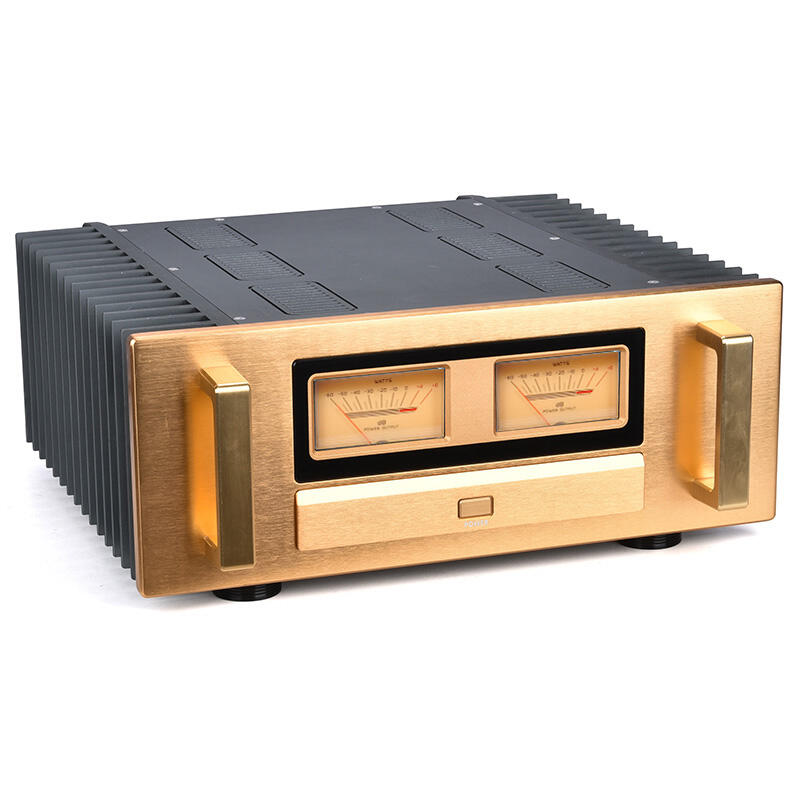
When selecting audio equipment for professional or home use, understanding the differences between various power amplifier technologies becomes crucial for optimal performance. A power amplifier serves as the heart of any audio system, converting low-level audio signals into high-power outputs capable of driving speakers effectively. Modern audio enthusiasts and professionals often debate between Class AB and Class D amplifier designs, each offering distinct advantages depending on specific applications and requirements. The choice between these amplifier classes significantly impacts sound quality, efficiency, heat generation, and overall system performance, making it essential to understand their unique characteristics and benefits.
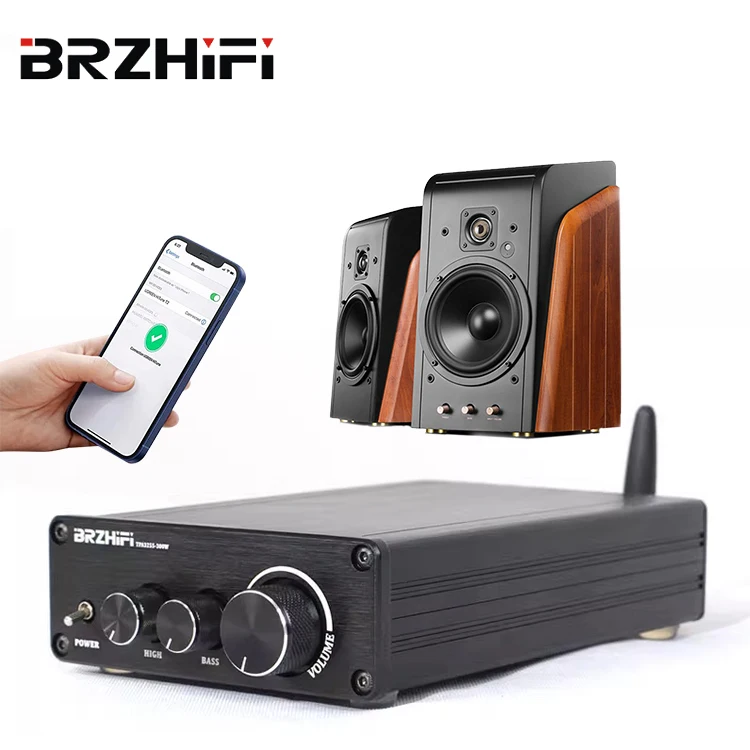
Understanding Class AB Power Amplifier Technology
Operating Principles of Class AB Design
Class AB power amplifier technology represents a sophisticated balance between efficiency and audio fidelity, operating through a unique biasing system that keeps output transistors partially conducting at all times. This design philosophy ensures that one transistor handles the positive half of the audio waveform while another manages the negative portion, creating seamless signal reproduction without the crossover distortion commonly found in Class B designs. The power amplifier maintains a small quiescent current flow even during silence, which eliminates the dead zone where neither transistor conducts, resulting in smoother audio reproduction and reduced harmonic distortion.
The technical implementation involves carefully matched complementary transistor pairs that work in push-pull configuration, with precise bias voltage adjustment determining the transition point between transistors. This meticulous engineering approach allows the power amplifier to deliver consistent performance across varying load conditions while maintaining excellent linearity throughout its operating range. Professional audio engineers particularly appreciate how Class AB designs handle complex musical passages with multiple instruments, as the amplifier responds dynamically to changing signal levels without introducing unwanted artifacts or coloration to the original audio content.
Sound Quality Characteristics
Class AB power amplifier designs excel in delivering natural, uncolored sound reproduction that remains faithful to the original source material across all frequency ranges. The continuous conduction of output transistors eliminates switching artifacts and maintains exceptional signal integrity, particularly during low-level passages where subtle musical details become most apparent. This technology provides superior dynamic range capabilities, allowing the power amplifier to handle sudden transient peaks without compression or distortion, which proves especially important for classical music, jazz, and other genres requiring precise instrumental separation and spatial imaging.
Musicians and audio professionals consistently praise Class AB amplifiers for their ability to reproduce complex harmonic structures accurately, maintaining the natural timbre of acoustic instruments while preserving the emotional impact of vocal performances. The power amplifier responds immediately to input signal changes without delay or overshoot, creating a direct connection between the listener and the musical performance. This responsiveness becomes particularly noticeable during live recording sessions where every nuance must be captured and reproduced with absolute precision.
Exploring Class D Power Amplifier Advantages
Efficiency and Thermal Management
Class D power amplifier technology revolutionizes energy efficiency in audio systems by utilizing pulse-width modulation switching techniques that dramatically reduce power consumption and heat generation. Unlike traditional linear amplifier designs, Class D circuits switch output transistors rapidly between fully on and fully off states, minimizing the time spent in intermediate positions where maximum power dissipation occurs. This innovative approach allows the power amplifier to achieve efficiency ratings exceeding 90%, compared to the 60-70% typical of Class AB designs, resulting in significant energy savings and reduced operating costs.
The superior efficiency translates directly into improved thermal performance, with Class D amplifiers generating substantially less heat during operation than their linear counterparts. This characteristic enables manufacturers to design more compact amplifier chassis without massive heat sinks, reducing overall system weight and installation requirements. Professional sound reinforcement companies particularly benefit from this technology when deploying multiple power amplifier units in rack-mounted configurations, as reduced heat generation improves reliability and extends component lifespan while lowering air conditioning costs in equipment rooms.
Compact Design and Portability Benefits
The inherent efficiency of Class D technology enables power amplifier manufacturers to create remarkably compact and lightweight designs without sacrificing output power capabilities. Traditional transformer-based power supplies give way to efficient switching designs that operate at higher frequencies, allowing for smaller magnetic components and reduced overall system weight. This miniaturization proves invaluable for portable audio applications, touring sound systems, and installations where space constraints limit equipment options.
Modern Class D power amplifier implementations incorporate advanced digital signal processing capabilities directly into the amplifier circuitry, eliminating the need for separate processing equipment while maintaining precise control over crossover frequencies, limiting functions, and protection circuits. This integration streamlines system design and reduces interconnection complexity, making Class D amplifiers particularly attractive for applications requiring multiple channels of amplification in minimal rack space. The reduced weight also translates into lower shipping costs and easier installation procedures for both permanent and temporary audio system deployments.
Performance Comparison Between Amplifier Classes
Power Output and Load Handling
When comparing power output capabilities, Class AB and Class D amplifier technologies demonstrate different characteristics that suit various application requirements. Class AB designs typically exhibit excellent stability when driving complex or reactive speaker loads, maintaining consistent performance even when connected to speakers with varying impedance characteristics across the frequency spectrum. The linear nature of Class AB operation provides predictable behavior with different speaker types, from high-efficiency horn systems to power-hungry planar magnetic drivers, making this power amplifier technology particularly suitable for critical listening applications.
Class D power amplifier designs have evolved significantly in their ability to handle challenging loads, with modern implementations incorporating sophisticated feedback systems and output filtering that ensures stable operation across a wide range of speaker impedances. Advanced Class D circuits now match or exceed the load-driving capabilities of traditional linear designs while maintaining their efficiency advantages. The switching frequency optimization in contemporary Class D amplifiers minimizes electromagnetic interference while providing clean power delivery that satisfies even the most demanding professional audio applications.
Frequency Response and Distortion Characteristics
The frequency response characteristics of Class AB power amplifier designs typically extend well beyond the audible range, with many implementations providing flat response from DC to several hundred kilohertz. This extended bandwidth ensures accurate reproduction of musical transients and harmonics while maintaining phase linearity across the audio spectrum. The inherent linearity of Class AB operation results in predominantly second-harmonic distortion at moderate levels, which many listeners find musically pleasing and less fatiguing during extended listening sessions.
Modern Class D power amplifier technology has achieved remarkable improvements in frequency response and distortion performance through advanced modulation schemes and sophisticated output filtering. High-frequency switching rates well above the audio band ensure minimal interference with musical content, while carefully designed reconstruction filters eliminate switching artifacts without introducing phase distortion in the audible range. Contemporary Class D implementations often measure better than Class AB designs in total harmonic distortion specifications, particularly at higher power levels where Class AB amplifiers begin to exhibit compression and nonlinear behavior.
Application-Specific Benefits and Considerations
Professional Audio and Live Sound Applications
In professional audio environments, the choice between Class AB and Class D power amplifier technologies depends heavily on specific application requirements and operational priorities. Class AB amplifiers remain preferred for high-end studio monitoring applications where absolute sonic accuracy takes precedence over efficiency concerns. The linear response characteristics and proven reliability of Class AB designs provide the confidence that audio professionals require when making critical mixing and mastering decisions that will affect the final product quality.
Class D power amplifier technology excels in live sound reinforcement scenarios where efficiency, weight reduction, and thermal management become paramount concerns. Touring companies appreciate the reduced transportation costs and simplified rigging requirements that result from lighter amplifier racks, while the improved efficiency reduces generator requirements and operating costs during outdoor events. The reliability improvements achieved through reduced thermal stress make Class D amplifiers particularly attractive for installations requiring continuous operation in challenging environmental conditions.
Home Audio and Hi-Fi Systems
Home audio enthusiasts often gravitate toward Class AB power amplifier designs for their traditional sound characteristics and proven performance with high-end loudspeaker systems. The continuous linear operation provides the dynamic headroom necessary for reproducing orchestral crescendos and percussion transients without compression, while the natural harmonic distortion structure contributes to the organic, musical sound quality that many audiophiles prefer. Class AB amplifiers also demonstrate exceptional compatibility with a wide range of loudspeaker designs, from electrostatic panels to multi-way dynamic systems.
The compact form factor and energy efficiency of Class D power amplifier technology make it increasingly popular for modern home audio installations where space constraints and energy consciousness influence purchasing decisions. Contemporary Class D designs deliver audiophile-level performance while consuming significantly less electricity during operation, making them environmentally responsible choices for conscientious consumers. The reduced heat generation also eliminates the need for forced ventilation in many installations, reducing system noise and improving domestic acceptance of high-performance audio equipment.
Future Developments and Technology Trends
Emerging Class D Innovations
The evolution of Class D power amplifier technology continues advancing through innovations in semiconductor technology, digital signal processing, and modulation techniques. Gallium nitride transistors promise even higher efficiency and switching speeds, enabling amplifier designs that approach theoretical efficiency limits while maintaining excellent audio performance. These advances allow manufacturers to create power amplifier products that combine the sonic advantages traditionally associated with linear designs with the practical benefits of switching technology.
Advanced digital control systems integrated into modern Class D power amplifier designs provide unprecedented flexibility and precision in audio reproduction. Software-configurable parameters allow users to optimize amplifier performance for specific speaker loads and listening preferences, while built-in diagnostics and protection systems ensure reliable operation under varying conditions. The integration of network connectivity enables remote monitoring and control capabilities that prove valuable in both professional and residential installations.
Class AB Refinements and Hybrid Approaches
Traditional Class AB power amplifier technology continues evolving through improved circuit topologies, higher-grade components, and refined manufacturing techniques. Advanced bias control systems maintain optimal operating points across varying temperature and load conditions, while sophisticated power supply designs provide improved regulation and reduced noise interference. These refinements preserve the sonic characteristics that make Class AB amplifiers attractive while addressing practical concerns about efficiency and reliability.
Hybrid amplifier designs attempt to combine the best characteristics of both Class AB and Class D technologies, using Class AB stages for initial signal amplification and Class D output sections for efficient power delivery. These innovative approaches seek to maintain the sonic purity of linear amplification while achieving the efficiency benefits of switching technology. The power amplifier industry continues exploring various hybrid topologies that optimize performance for specific applications while addressing the diverse needs of professional and consumer markets.
FAQ
What makes Class D power amplifiers more efficient than Class AB designs?
Class D power amplifiers achieve superior efficiency by operating output transistors as switches rather than linear devices, rapidly switching between fully on and fully off states instead of operating in intermediate positions where maximum power dissipation occurs. This switching operation minimizes wasted energy as heat, allowing Class D amplifiers to achieve efficiency ratings exceeding 90% compared to the 60-70% typical of Class AB designs, resulting in reduced power consumption and heat generation.
Do Class AB power amplifiers provide better sound quality than Class D amplifiers?
Class AB power amplifiers traditionally offered superior sound quality due to their linear operation characteristics, but modern Class D technology has largely closed this performance gap through advanced modulation techniques and sophisticated output filtering. While Class AB designs may still provide slight advantages in certain critical listening applications, contemporary Class D amplifiers deliver audiophile-level performance that satisfies most professional and consumer requirements while offering significant practical advantages in efficiency and form factor.
Which power amplifier type works better for driving difficult speaker loads?
Class AB power amplifiers generally demonstrate more predictable behavior when driving complex or reactive speaker loads due to their linear operating characteristics and continuous output transistor conduction. However, modern Class D designs have incorporated sophisticated feedback systems and optimized output filtering that enables stable operation with challenging loads, making the practical differences between amplifier classes less significant for most real-world applications than in previous generations of switching amplifier technology.
Are Class D power amplifiers suitable for high-end audio applications?
Modern Class D power amplifiers have achieved performance levels that make them entirely suitable for high-end audio applications, with many contemporary designs measuring better than traditional linear amplifiers in distortion, noise, and frequency response specifications. While some audiophiles maintain preferences for Class AB designs based on subjective listening preferences, objective measurements demonstrate that properly implemented Class D technology can deliver exceptional audio quality while providing practical advantages in efficiency, size, and weight that benefit both professional and consumer applications.
Table of Contents
- Understanding Class AB Power Amplifier Technology
- Exploring Class D Power Amplifier Advantages
- Performance Comparison Between Amplifier Classes
- Application-Specific Benefits and Considerations
- Future Developments and Technology Trends
-
FAQ
- What makes Class D power amplifiers more efficient than Class AB designs?
- Do Class AB power amplifiers provide better sound quality than Class D amplifiers?
- Which power amplifier type works better for driving difficult speaker loads?
- Are Class D power amplifiers suitable for high-end audio applications?