
 EN
EN
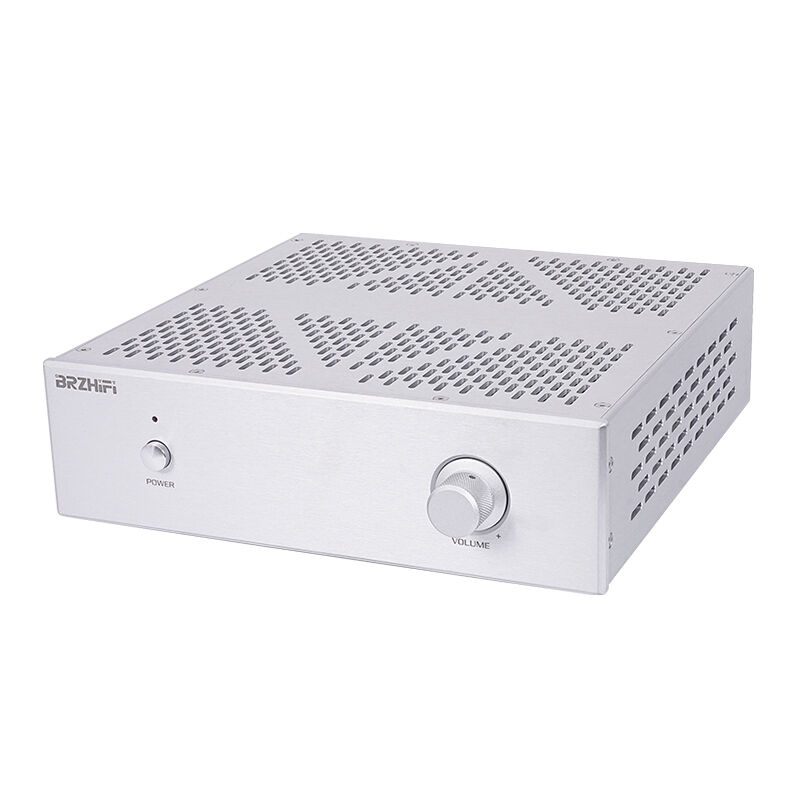
Audio enthusiasts and professionals alike understand that selecting the right amplification technology forms the backbone of any exceptional sound system. A class ab stereo amplifier represents the sweet spot between performance and practicality, offering superior sound quality while maintaining reasonable efficiency and thermal characteristics. These sophisticated devices have become the gold standard in high-fidelity audio reproduction, combining the best aspects of Class A warmth with Class B efficiency to deliver exceptional musical experiences.
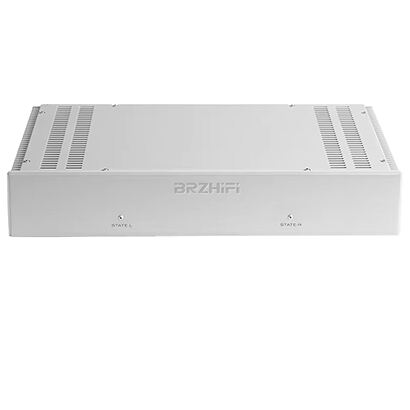
Understanding Class AB Amplification Technology
Fundamental Operating Principles
The class ab stereo amplifier operates through a sophisticated biasing scheme that positions the output transistors in a partially conductive state. This approach eliminates the crossover distortion inherent in pure Class B designs while avoiding the excessive heat generation and power consumption of pure Class A configurations. The result is an amplification topology that delivers exceptional linearity and dynamic range while maintaining practical thermal management requirements.
Modern class ab stereo amplifier designs incorporate carefully matched complementary transistor pairs that handle positive and negative signal excursions with remarkable precision. The quiescent current setting becomes crucial in determining the amplifier's sonic character, with higher bias currents approaching Class A operation for improved low-level detail retrieval. Professional audio engineers recognize that proper bias adjustment significantly impacts both harmonic distortion characteristics and overall musical presentation quality.
Efficiency and Thermal Management Benefits
Unlike pure Class A designs that operate at maximum current draw regardless of signal level, a class ab stereo amplifier dynamically adjusts its power consumption based on musical demands. This intelligent power management approach typically achieves efficiency ratings between 50-70%, making these amplifiers suitable for extended listening sessions without excessive heat buildup. The improved thermal characteristics translate directly into enhanced reliability and component longevity.
Sophisticated thermal management systems in premium class ab stereo amplifier designs include carefully engineered heatsink arrays, intelligent fan control circuits, and thermal protection mechanisms. These features ensure consistent performance even during demanding musical passages while protecting valuable output devices from thermal damage. The combination of moderate heat generation and robust thermal protection makes these amplifiers ideal for professional studio applications and high-end home audio systems.
Critical Design Elements for Superior Performance
Power Supply Architecture and Regulation
The foundation of any exceptional class ab stereo amplifier lies in its power supply design, which must provide stable, low-noise voltage rails capable of supporting instantaneous current demands. High-quality designs incorporate oversized transformers with generous current handling capabilities, ensuring adequate headroom for dynamic musical passages. The regulation circuitry must maintain tight voltage stability across varying load conditions while minimizing ripple and noise injection into sensitive audio circuits.
Premium class ab stereo amplifier implementations often feature dual-mono power supply configurations that provide complete channel isolation and eliminate crosstalk between left and right channels. Large reservoir capacitors with low equivalent series resistance maintain voltage stability during peak current demands, while multiple smaller capacitors provide high-frequency decoupling. This comprehensive approach to power supply design directly impacts the amplifier's ability to reproduce complex musical dynamics with authority and precision.
Output Stage Design and Component Selection
The output stage of a class ab stereo amplifier requires carefully matched semiconductor devices capable of handling high current and voltage swings while maintaining linear operation. Modern designs utilize advanced MOSFET or bipolar transistor technologies that offer superior linearity and thermal stability compared to older device types. The selection of output devices significantly influences the amplifier's sonic character, with different semiconductor technologies imparting distinct harmonic signatures and dynamic behaviors.
Critical component matching extends beyond the output devices to include precision resistors, low-distortion capacitors, and high-quality interconnect materials throughout the signal path. Each element in the class ab stereo amplifier chain contributes to overall performance, making component selection and circuit topology crucial factors in achieving reference-level audio reproduction. Professional designers often employ computer-aided matching techniques to ensure optimal device pairing and circuit balance.
Signal Path Optimization and Circuit Topology
Input Stage Configuration and Gain Structure
The input section of a premium class ab stereo amplifier typically employs differential amplifier configurations that provide excellent common-mode rejection and low noise characteristics. Carefully designed gain structures ensure optimal signal-to-noise ratios while maintaining headroom for peak signal handling. The input impedance must be sufficiently high to avoid loading effects on source components while providing stable operation with various cable types and lengths.
Modern class ab stereo amplifier designs often incorporate servo circuits that maintain DC offset correction and ensure long-term stability across temperature variations. These sophisticated control systems continuously monitor and adjust operating points to maintain optimal bias conditions and prevent drift that could affect audio performance. The integration of these systems requires careful attention to loop stability and transient response characteristics.
Feedback Network Design and Stability Considerations
The feedback network in a class ab stereo amplifier determines both the closed-loop gain characteristics and overall stability margins. Proper compensation ensures stable operation into reactive loads while maintaining good transient response and low distortion across the audio bandwidth. The feedback topology significantly influences the amplifier's sonic character, with different approaches yielding varying degrees of speed, transparency, and musical naturalness.
Advanced class ab stereo amplifier designs may incorporate multiple feedback loops with different time constants to optimize both steady-state and transient performance. The careful balance between stability and performance requires extensive simulation and measurement to ensure reliable operation under all conditions. Professional amplifier designers utilize sophisticated modeling tools to predict and optimize feedback network behavior before prototype construction.
Performance Specifications and Measurement Standards
Power Output and Dynamic Range Capabilities
Accurate power specifications for a class ab stereo amplifier must include continuous power ratings at specific load impedances, along with dynamic headroom measurements that indicate short-term peak handling capabilities. Professional specifications typically reference both RMS continuous power and peak instantaneous power to provide comprehensive performance data. The relationship between these measurements reveals important information about the amplifier's ability to handle real-world musical signals.
Dynamic range specifications in a quality class ab stereo amplifier should demonstrate the system's ability to reproduce both quiet passages and explosive dynamics with equal fidelity. Signal-to-noise ratios exceeding 100dB ensure that background noise remains inaudible during quiet musical passages, while peak power capabilities determine the system's ability to reproduce large orchestral works or rock concerts at realistic levels. These specifications must be verified through standardized measurement protocols to ensure accuracy and repeatability.
Distortion Analysis and Frequency Response
Total harmonic distortion measurements reveal how faithfully a class ab stereo amplifier reproduces input signals without introducing unwanted artifacts. Modern designs typically achieve THD figures below 0.01% across the audio bandwidth, with the best examples reaching levels below 0.005%. Intermodulation distortion specifications provide additional insight into the amplifier's linearity when handling complex musical signals containing multiple frequency components.
Frequency response specifications for premium class ab stereo amplifier designs should demonstrate flat response from below 10Hz to beyond 50kHz, ensuring accurate reproduction of both fundamental frequencies and harmonic content. Phase response characteristics become equally important, as poor phase linearity can affect stereo imaging and soundstage presentation. Comprehensive specifications include both magnitude and phase measurements across the full audio spectrum and beyond.
Load Compatibility and Speaker Interface Considerations
Impedance Matching and Load Stability
A well-designed class ab stereo amplifier must demonstrate stable operation into a wide range of speaker impedances, from high-efficiency designs presenting 16-ohm loads to demanding electrostatic panels with complex reactive characteristics. The amplifier's output impedance should remain low across the audio frequency range to maintain proper damping factor control over loudspeaker drivers. This characteristic directly affects bass control and overall dynamic precision.
Load stability testing ensures that the class ab stereo amplifier maintains consistent performance regardless of speaker characteristics or cable types. Professional designs undergo extensive testing with capacitive, inductive, and resistive loads to verify stable operation under all conditions. The amplifier's ability to drive difficult loads without oscillation or thermal stress indicates superior circuit design and component selection throughout the signal path.
Protection Systems and Reliability Features
Comprehensive protection systems in a quality class ab stereo amplifier include thermal shutdown, overcurrent limiting, and DC offset detection circuits that safeguard both the amplifier and connected speakers. These systems must respond quickly enough to prevent damage while avoiding false triggering during normal musical reproduction. The sophistication of protection circuitry often distinguishes professional-grade amplifiers from consumer designs.
Modern class ab stereo amplifier protection systems may incorporate soft-start circuits that gradually bring the amplifier to operating condition, reducing stress on power supply components and connected speakers. Advanced designs include speaker protection relays that disconnect outputs during fault conditions and provide visual or audible fault indication. These features enhance both system reliability and user confidence during critical applications.
Construction Quality and Build Standards
Mechanical Design and Vibration Control
The physical construction of a premium class ab stereo amplifier requires careful attention to mechanical resonance control and electromagnetic interference shielding. Heavy-gauge chassis construction provides both thermal mass for heat dissipation and mechanical stability that reduces microphonic effects. Internal bracing and damping materials help control vibrations that could otherwise affect sensitive circuit performance.
Sophisticated class ab stereo amplifier designs incorporate isolated mounting systems for critical components such as transformers and large capacitors that might generate mechanical vibrations. The physical layout must consider both thermal management and electromagnetic compatibility requirements, with sensitive input circuits isolated from high-current output stages. Professional construction techniques ensure long-term reliability and consistent performance across varying environmental conditions.
Component Quality and Manufacturing Standards
Premium class ab stereo amplifier designs utilize components that exceed standard commercial ratings for voltage, current, and temperature handling capabilities. This conservative approach ensures reliable operation even under extreme conditions while providing substantial safety margins for long-term durability. Component selection often emphasizes parts with known track records in professional audio applications.
Manufacturing quality control for high-end class ab stereo amplifier production includes comprehensive testing protocols that verify both electrical performance and mechanical assembly integrity. Each unit typically undergoes extended burn-in procedures that stress all circuits and reveal potential weak points before shipment. These manufacturing standards ensure that customers receive products that meet published specifications and provide reliable long-term service.
FAQ
What makes Class AB amplification superior to other amplifier classes?
Class AB amplification combines the sonic benefits of Class A operation with the efficiency advantages of Class B designs. A class ab stereo amplifier operates with both output devices conducting during small signal conditions, eliminating crossover distortion while maintaining reasonable power efficiency. This approach delivers exceptional sound quality with manageable heat generation and power consumption, making it ideal for both professional and audiophile applications.
How much power do I need from a Class AB stereo amplifier?
The required power output depends on your speakers' sensitivity, listening room size, and desired maximum volume levels. A quality class ab stereo amplifier should provide adequate headroom above your typical listening levels to handle dynamic peaks without distortion. For most home applications, 50-200 watts per channel proves sufficient, while professional installations may require significantly higher power levels depending on venue requirements and speaker characteristics.
What should I look for in Class AB amplifier specifications?
Key specifications for a class ab stereo amplifier include continuous power output at your speaker's impedance, total harmonic distortion figures below 0.01%, signal-to-noise ratios exceeding 100dB, and frequency response extending from below 20Hz to above 20kHz. Additionally, examine the amplifier's ability to drive difficult loads, protection features, and build quality indicators such as component grades and construction materials used throughout the design.
Do Class AB amplifiers require special maintenance or care?
A well-designed class ab stereo amplifier requires minimal maintenance beyond keeping ventilation areas clean and ensuring adequate airflow around the unit. Avoid exposing the amplifier to excessive moisture, dust, or temperature extremes that could affect component reliability. Professional servicing every few years can verify optimal bias settings and component condition, but quality amplifiers should provide many years of trouble-free operation with basic care and proper installation practices.