
 EN
EN
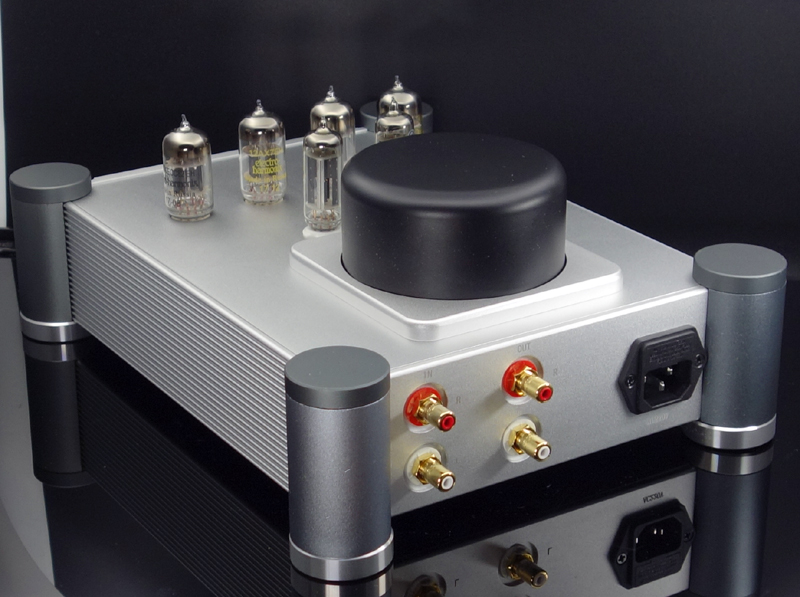
Selecting the right tube amplifier for vintage and HiFi audio markets requires understanding how these classic devices deliver their signature warm, harmonically rich sound. Unlike solid-state alternatives, a tube amplifier uses vacuum tubes to amplify audio signals, creating natural compression and even-order harmonic distortion that many audiophiles prefer. Whether restoring vintage equipment or building a modern HiFi system, choosing a tube amplifier involves evaluating power output, circuit design, tube type, impedance matching, and build quality to ensure optimal performance with your speakers and listening environment.

The vintage audio market values authenticity and sonic character, while the HiFi segment prioritizes transparency and accuracy. A tube amplifier serves both markets by offering flexibility in tonal shaping, compatibility with efficient speakers, and long-term reliability when properly maintained. This guide examines the critical factors that determine which tube amplifier best suits your specific application, from single-ended triode designs for intimate listening spaces to push-pull configurations for demanding full-range systems. Understanding these technical and practical considerations enables informed decisions that align with your audio goals and budget constraints.
Understanding Tube Amplifier Power Requirements
Matching Output Power to Speaker Sensitivity
The first consideration when selecting a tube amplifier involves matching its output power to your speaker sensitivity rating. A tube amplifier typically delivers less wattage than solid-state amplifiers, but the subjective loudness often exceeds the raw specifications due to different clipping characteristics. For speakers with sensitivity ratings above 90 dB, a tube amplifier producing 8 to 15 watts per channel provides adequate volume for most listening rooms. High-efficiency vintage speakers, often rated at 95 dB or higher, pair exceptionally well with low-power tube amplifier designs, allowing single-ended triode circuits to shine without strain.
When working with less efficient modern speakers rated below 88 dB sensitivity, a tube amplifier must deliver at least 30 to 50 watts per channel to achieve satisfying dynamic range. Push-pull tube amplifier configurations using output tubes like KT88, 6550, or EL34 provide this power level while maintaining the characteristic tube sound. The relationship between a tube amplifier and speaker efficiency directly affects headroom, bass control, and overall system dynamics, making this matching process essential before purchase.
Evaluating Power Supply Design
The power supply design within a tube amplifier fundamentally determines its ability to deliver clean, stable power during demanding musical passages. A quality tube amplifier employs oversized transformers, high-voltage capacitors, and robust rectification to minimize voltage sag and maintain consistent performance across varying load conditions. Tube rectification, using tubes like 5U4 or 5AR4, offers slower turn-on characteristics that extend tube life, though solid-state rectification provides tighter bass response and greater power reserves.
Examining the power transformer size and weight provides immediate insight into a tube amplifier build quality. Manufacturers who invest in substantial power supplies demonstrate commitment to performance rather than cost-cutting. A tube amplifier with inadequate power supply design exhibits soft bass, compressed dynamics, and premature tube failure under moderate use. Dual-mono power supply configurations, where each channel receives dedicated transformer windings and filtering, represent the premium approach, eliminating channel crosstalk and ensuring each side of a tube amplifier operates independently for superior stereo imaging.
Circuit Topology and Tube Type Selection
Single-Ended Triode Versus Push-Pull Configurations
Circuit topology choice defines the sonic signature of any tube amplifier. Single-ended triode designs, utilizing tubes like 300B, 2A3, or 45, deliver the purest midrange tonality and dimensional soundstaging but sacrifice power output and efficiency. A single-ended tube amplifier typically produces 2 to 10 watts, making it ideal for nearfield listening or pairing with horn-loaded speakers. The absence of phase splitting and output transformer complications in a single-ended tube amplifier results in lower negative feedback and more direct signal path, characteristics highly valued in vintage audio circles.
Push-pull tube amplifier designs employ paired output tubes working in opposite phases, effectively canceling even-order distortion while increasing power output. This topology allows a tube amplifier to drive less efficient speakers while maintaining reasonable efficiency. Tubes such as EL34, KT88, 6L6, and KT150 commonly appear in push-pull configurations, each imparting distinct tonal characteristics. A push-pull tube amplifier balances power, efficiency, and tube longevity better than single-ended designs, making it more practical for general HiFi applications where speaker choice flexibility matters.
Output Tube Selection and Sonic Character
Different output tubes impart distinct sonic signatures that influence how a tube amplifier reproduces music. Triode tubes like the 300B offer liquid midrange and natural decay but require careful impedance matching. The 2A3 tube amplifier produces slightly leaner bass with exceptional clarity, while 45 tubes deliver intimate, delicate presentation suited to acoustic music. Each triode type affects how the tube amplifier responds to transient information and sustains harmonic complexity.
Pentode and beam tetrode tubes provide greater power and efficiency in a tube amplifier design. EL34 tubes deliver British voicing with emphasized midrange presence, making a tube amplifier ideal for rock and vocal-centric material. KT88 and 6550 tubes offer American-style sound with extended bass and treble, suitable when a tube amplifier must handle full-range speakers with authority. The KT150 represents modern high-power tube technology, enabling a tube amplifier to deliver over 70 watts per channel while maintaining tube characteristics. Understanding these tube families helps predict how a specific tube amplifier will perform with your music preferences and speaker characteristics.
Driver Stage and Input Tube Considerations
While output tubes receive primary attention, the driver and input stages of a tube amplifier significantly influence overall performance. Input tubes such as 12AX7, 12AU7, and 6SN7 set the gain structure and initial signal integrity. A tube amplifier using 6SN7 dual triodes typically exhibits more linear response and lower distortion than 12AX7-based designs, though requiring larger tube sockets and chassis space. The driver stage determines how effectively a tube amplifier controls the output tubes, affecting damping factor and bass articulation.
Premium tube amplifier designs employ direct-coupled driver stages, eliminating coupling capacitors that can color the sound. Others use transformer coupling for superior isolation and extended frequency response. The quality of small-signal tubes matters as much as output tubes since any distortion or noise introduced early in the signal path gets amplified by subsequent stages. When evaluating a tube amplifier, examine which input and driver tubes the manufacturer selected and whether the design allows tube rolling for sonic customization.
Build Quality and Component Selection
Output Transformer Quality Assessment
The output transformer represents the most critical and expensive component in any tube amplifier, responsible for matching high-impedance tube outputs to low-impedance speaker loads while maintaining frequency response and phase integrity. A quality tube amplifier employs large, heavy output transformers with generous iron cores and careful winding techniques to minimize leakage inductance and extend bandwidth. Cheap output transformers limit bass extension, compress dynamics, and introduce phase anomalies that degrade stereo imaging.
Examining output transformer specifications reveals much about a tube amplifier capabilities. Look for transformers with multiple secondary taps accommodating 4, 8, and 16-ohm speakers, ensuring optimal impedance matching regardless of speaker choice. A tube amplifier with custom-wound transformers designed specifically for its circuit topology outperforms designs using generic off-the-shelf units. Transformer size and weight directly correlate with performance capability—undersized transformers indicate cost-cutting that compromises a tube amplifier sonic potential and long-term reliability.
Capacitor Quality and Signal Path Integrity
Capacitor selection throughout a tube amplifier determines signal purity, frequency balance, and long-term stability. Coupling capacitors linking gain stages directly influence tonal character, with oil-filled paper capacitors offering vintage warmth while modern film capacitors provide neutral transparency. A tube amplifier using premium coupling capacitors from manufacturers like Mundorf, Jensen, or Duelund demonstrates attention to signal path optimization. Power supply filter capacitors must handle high voltages and ripple currents without failure, making quality brands essential for reliability.
Cathode bypass capacitors in a tube amplifier affect gain, frequency response, and distortion characteristics. Larger values increase gain and bass extension but may reduce clarity, while smaller values or their complete omission yields more linear response with reduced power output. Evaluating the capacitor types used throughout a tube amplifier reveals the manufacturer philosophy—whether prioritizing vintage authenticity, modern transparency, or specific tonal shaping. A tube amplifier built with quality capacitors maintains performance for decades, while budget components degrade sonically and electrically over time.
Chassis Construction and Layout Engineering
Physical construction quality indicates how seriously a manufacturer approaches tube amplifier design. Heavy steel or aluminum chassis provides mechanical stability, shields against electromagnetic interference, and dissipates heat effectively. A well-engineered tube amplifier positions power transformers away from signal stages to minimize hum, uses star grounding to eliminate ground loops, and provides adequate ventilation for tube longevity. Point-to-point wiring with high-quality wire and robust solder joints outperforms printed circuit boards in signal integrity, though modern PCB designs can achieve excellent results when properly executed.
The tube socket quality in a tube amplifier affects connection reliability and microphonics control. Ceramic sockets handle heat better than phenolic types, while gold-plated contacts ensure long-term conductivity. A tube amplifier with accessible, well-organized internal layout facilitates maintenance, tube replacement, and future upgrades. Manufacturers who photograph and document their internal construction demonstrate confidence in their workmanship, while those hiding internals may conceal cost-cutting measures that compromise performance or reliability.
FAQ
What power output should I choose for a tube amplifier in vintage audio applications?
For vintage audio applications using high-efficiency speakers rated above 92 dB sensitivity, a tube amplifier producing 8 to 15 watts per channel provides sufficient volume for most rooms. If working with less efficient vintage speakers below 90 dB, select a tube amplifier delivering at least 25 to 40 watts per channel. The key is matching the tube amplifier power to your specific speaker efficiency and listening space size rather than assuming more power always produces better results.
How does tube type affect the sound signature of a tube amplifier?
Different tube types produce distinct sonic characteristics in a tube amplifier. Triode tubes like 300B offer rich midrange warmth and dimensional soundstaging, making a tube amplifier ideal for vocal and acoustic music. Pentode tubes such as EL34 provide more power with emphasized midrange presence, while KT88 tubes deliver extended bass and treble suitable for full-range applications. The tube type selection directly determines how a tube amplifier voices your system, so matching tube characteristics to your musical preferences ensures satisfaction.
What maintenance does a tube amplifier require for optimal performance?
A tube amplifier requires periodic tube replacement based on usage hours, typically every 2,000 to 5,000 hours for output tubes and longer for small-signal tubes. Regular bias checking ensures the tube amplifier operates within safe parameters and maintains optimal sound quality. Keep the tube amplifier chassis clean from dust accumulation, ensure adequate ventilation, and allow tubes to cool before moving the unit. Quality tube amplifier designs minimize maintenance needs through robust construction and conservative operating points that extend tube life while preserving performance.