
 EN
EN
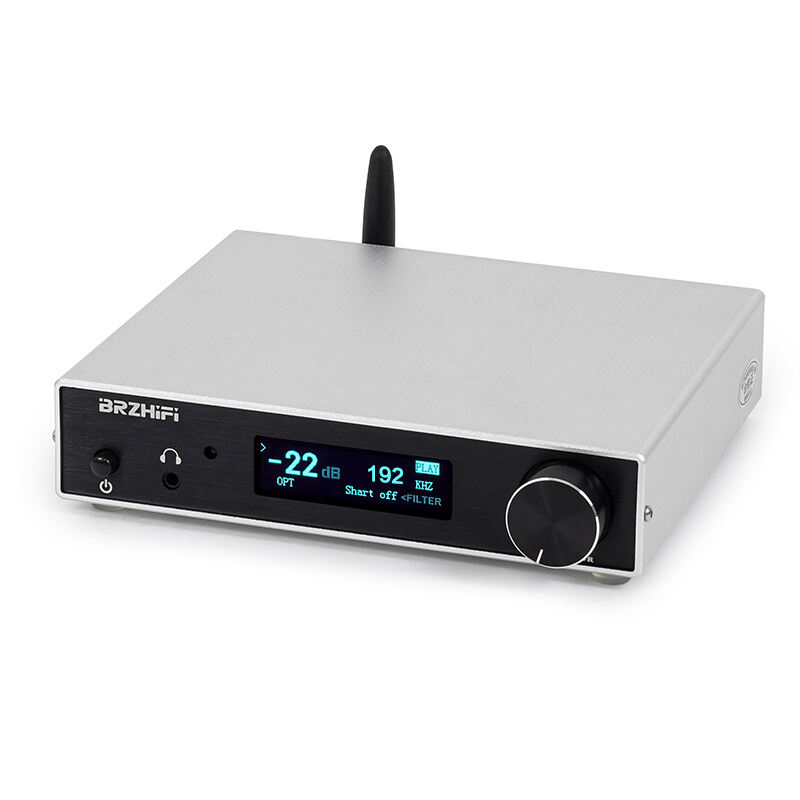
Music enthusiasts and audio professionals constantly seek ways to elevate their listening experience beyond the limitations of standard audio equipment. The quest for pristine sound reproduction leads many to discover the transformative power of high-quality amplification systems. A stereo audio amplifier serves as the crucial bridge between audio sources and speakers, dramatically enhancing the clarity, depth, and precision of sound reproduction. Understanding how these sophisticated devices work and their impact on audio quality can revolutionize your entire listening experience.
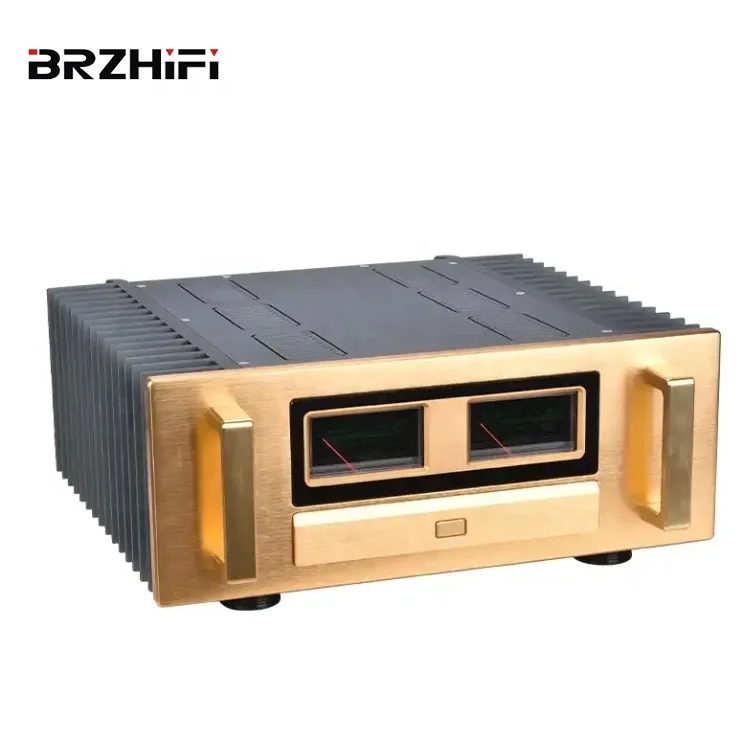
Understanding the Core Technology Behind Stereo Audio Amplification
Signal Processing and Power Management
The fundamental operation of a stereo audio amplifier revolves around its ability to receive weak electrical signals from audio sources and boost them to levels capable of driving speakers effectively. Modern amplifier designs incorporate sophisticated circuitry that preserves the integrity of the original signal while providing the necessary power amplification. The process begins when the amplifier receives input signals from various sources such as CD players, streaming devices, or turntables, which typically produce signals measured in millivolts.
Advanced stereo audio amplifier systems utilize multiple stages of amplification to achieve optimal performance. The first stage involves voltage amplification, where the weak input signal is increased to a usable level while maintaining its original characteristics. The second stage focuses on current amplification, providing the necessary power to drive speakers of various impedances and sensitivities. This dual-stage approach ensures that both delicate musical nuances and powerful dynamic passages are reproduced with exceptional accuracy.
Class A Circuit Architecture and Performance Benefits
High-end stereo audio amplifier designs often employ Class A circuit topology, which represents the pinnacle of amplifier engineering for audiophile applications. In Class A operation, the amplifier's output transistors remain active throughout the entire signal cycle, eliminating crossover distortion that can occur in other amplifier classes. This continuous operation results in the purest possible signal reproduction, though it requires more sophisticated thermal management and power consumption considerations.
The benefits of Class A amplification become particularly evident in the reproduction of complex musical passages where multiple instruments create intricate harmonic interactions. The amplifier's ability to maintain linearity across all signal levels ensures that subtle details like reverb tails, instrument positioning, and ambient information are preserved and accurately conveyed to the listener. Professional recording studios and critical listening environments often rely on Class A amplifier designs for their reference monitoring systems.
Enhanced Frequency Response and Dynamic Range
Precision in Low Frequency Reproduction
One of the most significant improvements that a quality stereo audio amplifier brings to any audio system is enhanced bass reproduction and control. Standard audio equipment often struggles to provide the current delivery necessary for accurate low-frequency reproduction, resulting in loose, undefined bass response. Professional-grade amplifiers feature robust power supplies and high-current output stages that can handle the demanding requirements of bass reproduction without compression or distortion.
The improvement in bass precision extends beyond mere volume or impact to encompass the ability to differentiate between different bass instruments and their spatial positioning within the soundstage. A well-designed stereo audio amplifier can reveal the distinct characteristics of a double bass versus an electric bass guitar, or the subtle differences in kick drum techniques used by different drummers. This level of detail enhancement transforms the listening experience from passive consumption to active musical engagement.
High Frequency Clarity and Extension
Equally important to bass performance is the amplifier's ability to reproduce high frequencies with accuracy and extension. Many listeners first notice the improvement in treble clarity when upgrading to a quality amplifier system. Cymbals gain shimmer and decay naturally, violin strings exhibit their characteristic texture, and vocal sibilants become more intelligible without harshness or fatigue. The enhanced high-frequency performance stems from the amplifier's superior slew rate and bandwidth capabilities.
Modern stereo audio amplifier designs incorporate wide bandwidth specifications that extend well beyond the audible range, ensuring that phase relationships and transient responses remain intact throughout the frequency spectrum. This extended bandwidth capability contributes to improved soundstage imaging and the perception of air and space around individual instruments. The result is a more natural and engaging listening experience that closely approximates the original recording environment.
Soundstage Imaging and Spatial Accuracy
Three-Dimensional Audio Positioning
Professional stereo audio amplifier systems excel at creating precise three-dimensional soundstage imaging that allows listeners to perceive the exact positioning of instruments and performers within the recorded space. This capability stems from the amplifier's ability to preserve the subtle timing and amplitude differences between the left and right channels that encode spatial information. When these micro-details are accurately reproduced, the brain can reconstruct the original acoustic environment with remarkable precision.
The enhancement in spatial accuracy becomes particularly apparent when listening to well-recorded acoustic performances or orchestral works. Individual sections of an orchestra become clearly defined in their proper positions, from the string sections in front to the brass and percussion in the rear. Solo instruments appear to float in specific locations within the soundstage, creating an almost holographic listening experience that rivals attending a live performance.
Channel Separation and Stereo Width
Exceptional channel separation represents another crucial advantage of high-quality amplification systems. A superior stereo audio amplifier maintains complete isolation between left and right channels, preventing crosstalk that can blur stereo imaging and reduce the perceived width of the soundstage. This isolation is achieved through careful circuit design, quality component selection, and meticulous attention to power supply regulation.
The improvement in channel separation translates directly into a more immersive listening experience where the soundstage extends well beyond the physical boundaries of the speakers. Instruments panned to extreme left or right positions maintain their clarity and definition, while center-positioned elements remain stable and focused. This enhanced stereo width creates a more enveloping listening environment that draws the listener deeper into the musical performance.
Noise Floor Reduction and Signal Clarity
Advanced Shielding and Component Quality
Professional-grade stereo audio amplifier designs incorporate extensive measures to minimize noise and interference that can mask subtle musical details. High-quality amplifiers utilize superior component selection, including precision resistors, low-noise capacitors, and carefully matched transistors that contribute to an exceptionally low noise floor. The reduction in background noise allows previously hidden details to emerge, creating a more engaging and revelatory listening experience.
The benefits of reduced noise floor become most apparent during quiet musical passages where subtle ambient information and low-level details would otherwise be obscured. The improved signal-to-noise ratio reveals the natural decay of acoustic instruments, room acoustics of the recording venue, and the subtle breathing and movement of performers. This enhanced clarity transforms familiar recordings into new discoveries, revealing layers of information that were previously inaudible.
Power Supply Regulation and Stability
The power supply section of a stereo audio amplifier plays a crucial role in determining overall sound quality and performance stability. Advanced amplifier designs feature oversized transformers, extensive filtering capacitance, and sophisticated regulation circuits that maintain consistent performance regardless of demanding musical content or varying line conditions. This robust power supply foundation ensures that the amplifier can respond instantly to dynamic musical demands without compression or distortion.
Improved power supply performance becomes particularly evident during complex orchestral crescendos or percussive passages where sudden power demands can overwhelm lesser amplification systems. A well-designed power supply maintains stable voltage rails and provides adequate current delivery, ensuring that even the most demanding musical passages are reproduced with authority and precision. This stability contributes to improved dynamic range and a more natural presentation of musical performances.
FAQ
What makes a stereo audio amplifier different from a receiver or integrated system?
A dedicated stereo audio amplifier focuses exclusively on amplification without incorporating additional features like radio tuners, digital processing, or multiple input switching that are common in receivers. This specialization allows for superior component quality, better circuit design, and enhanced performance characteristics. The simplified signal path and dedicated power supply result in improved sound quality and reduced noise compared to multi-function units.
How much power do I need from a stereo audio amplifier for home use?
The power requirement depends on your speakers' sensitivity, room size, and listening preferences rather than following a universal formula. Most home listening situations require between 20 to 100 watts per channel, but speaker efficiency plays a crucial role in determining actual power needs. High-efficiency speakers may perform excellently with low-power amplifiers, while inefficient speakers might require significantly more power to achieve satisfying volume levels.
Can a stereo audio amplifier improve the sound of digital streaming sources?
Yes, a quality stereo audio amplifier can significantly enhance the performance of digital streaming sources by providing superior amplification characteristics that reveal details and dynamics that may be compressed or obscured by lesser amplification systems. The improved power delivery, reduced noise floor, and better frequency response can transform digital sources into high-quality listening experiences that rival traditional audiophile sources.
What should I consider when matching speakers to a stereo audio amplifier?
Speaker matching involves considering impedance compatibility, power handling capabilities, and sensitivity ratings to ensure optimal performance and system reliability. The amplifier should be stable at your speakers' impedance rating and provide adequate power without risk of clipping or damage. Additionally, consider the speakers' sensitivity rating to determine if the amplifier can provide sufficient volume for your listening preferences and room size requirements.
Table of Contents
- Understanding the Core Technology Behind Stereo Audio Amplification
- Enhanced Frequency Response and Dynamic Range
- Soundstage Imaging and Spatial Accuracy
- Noise Floor Reduction and Signal Clarity
-
FAQ
- What makes a stereo audio amplifier different from a receiver or integrated system?
- How much power do I need from a stereo audio amplifier for home use?
- Can a stereo audio amplifier improve the sound of digital streaming sources?
- What should I consider when matching speakers to a stereo audio amplifier?