
 EN
EN
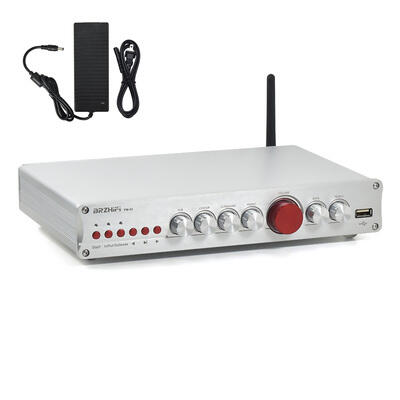
The world of audio equipment has undergone a remarkable transformation in recent years, with compact amplification systems leading the charge toward space-efficient yet powerful sound solutions. Modern consumers demand high-quality audio performance without sacrificing valuable real estate in their homes, offices, or mobile setups. This growing trend has pushed manufacturers to develop innovative technologies that pack impressive power and clarity into increasingly smaller form factors. A small stereo amp represents the perfect embodiment of this evolution, delivering exceptional audio fidelity while maintaining a footprint that fits seamlessly into any environment.
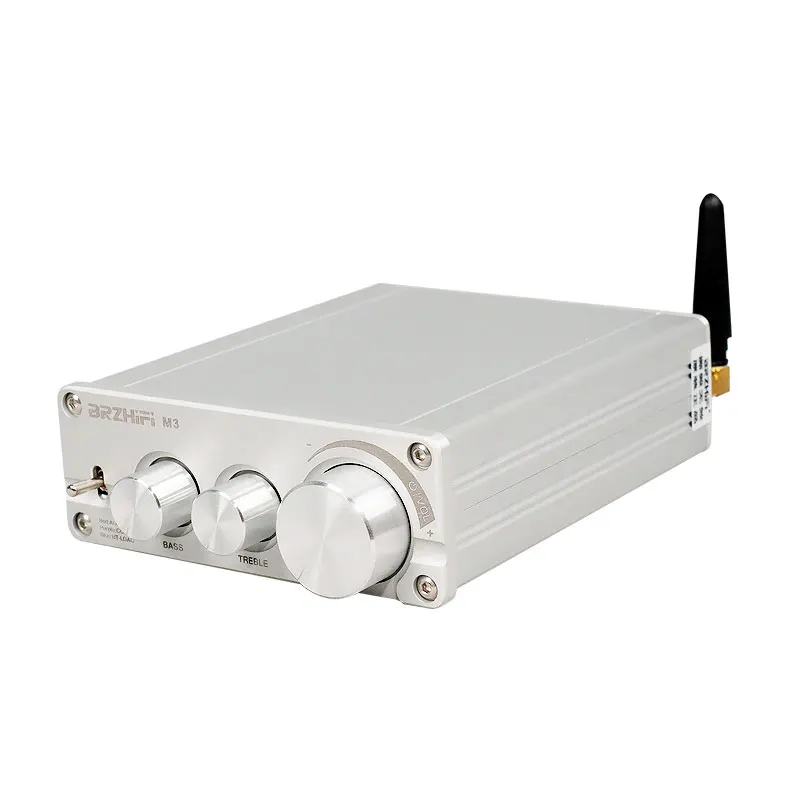
The challenge of creating compact audio solutions extends far beyond simply reducing physical dimensions. Engineers must navigate complex trade-offs between power output, heat management, component quality, and acoustic performance. Each small stereo amp must deliver clean, distortion-free sound while operating within thermal constraints that prevent overheating in confined spaces. This delicate balance requires sophisticated circuit design, premium components, and innovative cooling solutions that maximize efficiency without compromising audio integrity.
Advanced Circuit Design in Compact Amplification
Class D Technology Revolution
The foundation of modern compact amplification lies in Class D topology, which has revolutionized how engineers approach small stereo amp design. Unlike traditional Class A or Class AB designs that generate significant heat and require substantial cooling systems, Class D amplifiers achieve efficiency ratings exceeding 90 percent. This remarkable efficiency translates directly into reduced power consumption, minimal heat generation, and the ability to deliver substantial power output from surprisingly compact enclosures.
Class D amplification works by converting analog audio signals into high-frequency pulse-width modulated digital signals, which are then amplified and filtered back to analog form. This switching methodology eliminates the continuous current flow that characterizes linear amplification, dramatically reducing power waste and thermal buildup. The result is a small stereo amp that can operate at high power levels without the massive heat sinks and ventilation requirements of traditional designs.
Modern Class D implementations incorporate sophisticated feedback loops and error correction algorithms that maintain audio fidelity despite the digital switching process. Advanced pulse-width modulation techniques ensure that the reconstructed analog signal maintains excellent signal-to-noise ratios and low total harmonic distortion, characteristics traditionally associated with much larger amplification systems.
Integrated Circuit Innovations
Contemporary small stereo amp designs leverage highly integrated circuit solutions that combine multiple amplification stages, protection circuits, and control systems onto single semiconductor devices. These integrated amplifier chips eliminate the need for discrete components that would otherwise consume valuable board space and introduce potential points of failure. The integration also enables precise matching between amplification channels, ensuring excellent stereo imaging and channel separation.
Advanced integrated circuits incorporate intelligent thermal management, automatic gain control, and sophisticated protection mechanisms that safeguard both the amplifier and connected speakers. These built-in safeguards monitor operating conditions continuously, adjusting performance parameters to maintain optimal operation while preventing damage from overcurrent, overvoltage, or thermal stress conditions.
The latest generation of amplifier ICs also includes digital signal processing capabilities, enabling real-time audio enhancement, equalization, and room correction features that were previously available only in much larger, more expensive systems. This integration allows a compact small stereo amp to deliver sophisticated audio processing while maintaining the simplicity and reliability that consumers expect from compact audio equipment.
Power Management and Efficiency Optimization
Switching Power Supply Technology
Efficient power conversion represents a critical factor in achieving high performance from compact amplification systems. Traditional linear power supplies, while offering excellent regulation and low noise, require heavy transformers and substantial heat dissipation components that make them impractical for small stereo amp applications. Modern switching power supplies solve these limitations by operating at high frequencies, allowing for much smaller magnetic components while maintaining excellent regulation and efficiency.
Advanced switching regulators incorporate multiple output voltages optimized for different amplifier stages, ensuring that analog circuits receive clean, well-regulated power while digital processing components operate from appropriately conditioned supply rails. This multi-rail approach maximizes performance while minimizing electromagnetic interference that could degrade audio quality or cause operational instabilities.
Sophisticated power management systems also implement intelligent standby modes that reduce power consumption during periods of inactivity. These energy-saving features automatically detect signal presence and adjust power delivery accordingly, extending battery life in portable applications while reducing operating costs in fixed installations. The combination of efficient switching power supplies and intelligent power management enables small stereo amp designs to achieve impressive performance specifications while maintaining environmental responsibility.
Thermal Design Considerations
Effective heat management remains paramount in compact amplifier design, as thermal constraints directly impact both performance and reliability. Engineers employ multiple strategies to address thermal challenges, including strategic component placement, thermal interface materials, and innovative heat spreading techniques that distribute thermal energy across larger surface areas. Advanced thermal modeling software enables designers to optimize heat flow paths and identify potential hot spots before physical prototypes are constructed.
Modern small stereo amp designs often incorporate aluminum or copper heat spreaders that conduct heat away from critical components and distribute it across the entire enclosure surface. This approach transforms the amplifier housing itself into a heat sink, maximizing thermal dissipation without requiring additional ventilation or cooling components that would increase size and complexity.
Intelligent thermal monitoring systems continuously track operating temperatures and implement protective measures when thermal limits approach. These systems may reduce power output temporarily, activate cooling fans, or engage thermal shutdown protection to prevent component damage. Such sophisticated thermal management ensures consistent performance across varying environmental conditions while protecting the investment in high-quality audio equipment.
Acoustic Performance Optimization
Signal Path Integrity
Maintaining signal purity throughout the amplification chain requires careful attention to circuit layout, component selection, and electromagnetic interference mitigation. Compact designs present unique challenges as components are necessarily placed in close proximity, potentially creating unwanted interactions between different circuit sections. Expert layout techniques separate analog and digital sections, implement proper grounding schemes, and use shielding strategies that prevent interference while maintaining compact dimensions.
High-quality small stereo amp designs employ short signal paths with minimal interconnections, reducing opportunities for signal degradation or noise pickup. Premium components, including low-noise operational amplifiers, precision resistors, and high-grade capacitors, ensure that the amplified signal maintains fidelity to the original source material. These component choices become increasingly critical in compact designs where every element must perform optimally within space constraints.
Advanced circuit topologies also incorporate active filtering and noise suppression techniques that eliminate unwanted artifacts without requiring large passive components. Digital filters can replace bulky analog equivalents, while active circuits can achieve superior performance characteristics compared to traditional passive approaches, all while occupying minimal board space in the final small stereo amp design.
Output Stage Optimization
The output stage represents the final link between amplifier and speakers, making its design critical for overall system performance. Compact amplifiers must deliver clean power across the full audio spectrum while maintaining stability with various speaker loads and cable configurations. Advanced output stage designs incorporate multiple feedback loops, comprehensive protection circuits, and sophisticated driver configurations that ensure reliable operation under all realistic operating conditions.
Modern output stages also implement advanced modulation schemes that minimize switching artifacts and electromagnetic emissions. These techniques include dead-time optimization, spread-spectrum switching, and advanced filter designs that eliminate high-frequency noise without affecting audio bandwidth. The result is a small stereo amp output that rivals much larger systems in terms of spectral purity and dynamic range.
Comprehensive speaker protection systems monitor output conditions continuously, detecting potential fault conditions such as short circuits, excessive current draw, or DC offset voltages. These protection systems respond rapidly to prevent speaker damage while maintaining transparent operation during normal conditions. Such sophisticated protection enables users to connect various speaker types with confidence, knowing that both amplifier and speakers are safeguarded against potential damage.
Connectivity and Integration Features
Digital Input Processing
Contemporary small stereo amp designs incorporate multiple digital input options, including USB, optical, coaxial, and wireless protocols such as Bluetooth and WiFi. These digital inputs require sophisticated processing capabilities to handle various sample rates, bit depths, and audio formats while maintaining optimal sound quality. Advanced digital-to-analog converters ensure that digital sources are reproduced with exceptional accuracy and minimal jitter or distortion.
Integrated digital signal processing enables real-time audio enhancement, including equalization, dynamic range compression, and spatial processing effects. These features allow users to optimize the small stereo amp performance for specific listening environments or personal preferences without requiring external processing equipment. The digital processing capabilities also enable advanced features such as room correction, bass management, and automatic level control.
Modern connectivity solutions also support high-resolution audio formats, ensuring compatibility with premium digital music sources and streaming services. Support for formats such as DSD, high-resolution PCM, and lossless compression algorithms enables audiophiles to experience their music collections at the highest possible quality through compact amplification systems.
Control and User Interface Design
Effective control systems balance functionality with simplicity, providing users with intuitive access to essential features without overwhelming them with complexity. Modern small stereo amp designs often incorporate smartphone applications that provide comprehensive control over all amplifier functions while maintaining clean, uncluttered front panel designs. These mobile interfaces enable detailed parameter adjustment and system monitoring from anywhere within wireless range.
Advanced control systems also implement automatic configuration features that detect connected sources and optimize settings accordingly. These intelligent systems can identify input signal types, adjust gain structures, and select appropriate processing modes without user intervention. Such automation ensures optimal performance while simplifying operation for users who prefer plug-and-play simplicity.
Remote control capabilities extend beyond basic volume and source selection to include comprehensive system monitoring and diagnostic functions. Users can monitor amplifier temperatures, power consumption, and operational status remotely, enabling proactive maintenance and troubleshooting. These advanced control features transform the small stereo amp from a simple amplification device into a sophisticated audio system component.
FAQ
What power output can I expect from a modern compact amplifier
Modern small stereo amp designs typically deliver between 25 to 100 watts per channel, depending on the specific model and intended application. Class D technology enables these compact units to achieve power levels that would have required much larger enclosures in previous generations. The actual usable power depends on speaker impedance, with most units optimized for 4-8 ohm loads. Higher efficiency ratings mean that the delivered power translates more effectively into acoustic output, making these compact amplifiers surprisingly capable for their size.
How do compact amplifiers manage heat without large heat sinks
Contemporary compact amplifiers employ multiple thermal management strategies including high-efficiency Class D topology that generates minimal waste heat, aluminum enclosures that function as heat spreaders, and intelligent thermal monitoring systems that adjust performance to prevent overheating. The combination of efficient switching amplification and sophisticated power management reduces thermal load by 70-80% compared to traditional linear designs, enabling effective heat dissipation through the amplifier housing itself without requiring bulky external heat sinks.
Can a small stereo amp drive demanding speakers effectively
Quality compact amplifiers can drive most bookshelf and floor-standing speakers effectively, provided the impedance and power requirements are properly matched. The key factors include adequate current delivery capability, stable operation into varying impedance loads, and sufficient headroom for dynamic peaks. Modern small stereo amp designs incorporate robust output stages and comprehensive protection systems that enable them to handle demanding speaker loads while maintaining audio fidelity. Speaker sensitivity and listening room size are more critical factors than amplifier physical size in determining system capability.
What connectivity options should I look for in a compact amplifier
Essential connectivity features include analog inputs for turntables and traditional sources, digital inputs such as USB and optical for computer and CD player connections, and wireless capabilities including Bluetooth for mobile device streaming. Advanced models may include network connectivity for streaming services, multiple digital input formats supporting high-resolution audio, and smartphone app control for comprehensive system management. The best small stereo amp designs balance comprehensive connectivity with ease of use, ensuring compatibility with both current and future source components.