
 EN
EN
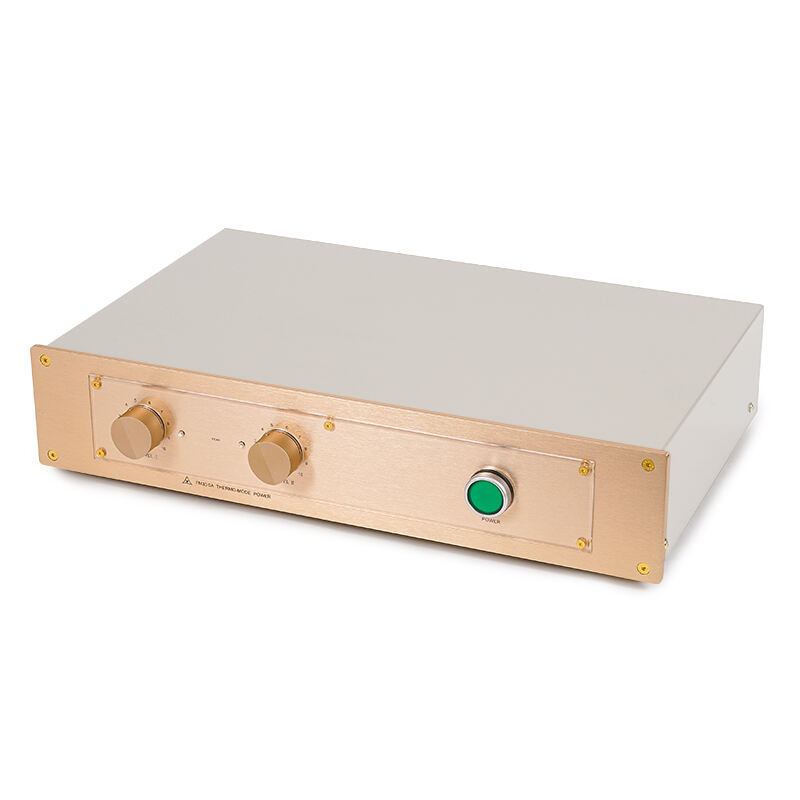
The evolution of audio technology has brought remarkable changes to how we experience sound reproduction, with one of the most significant developments being the transition from analog to digital amplification systems. A digital audio power amplifier represents a fundamental shift in amplification technology, offering distinct advantages over traditional analog designs through advanced signal processing and innovative circuit architectures. Understanding these differences is crucial for audio enthusiasts, engineers, and anyone seeking optimal sound quality in their audio systems.
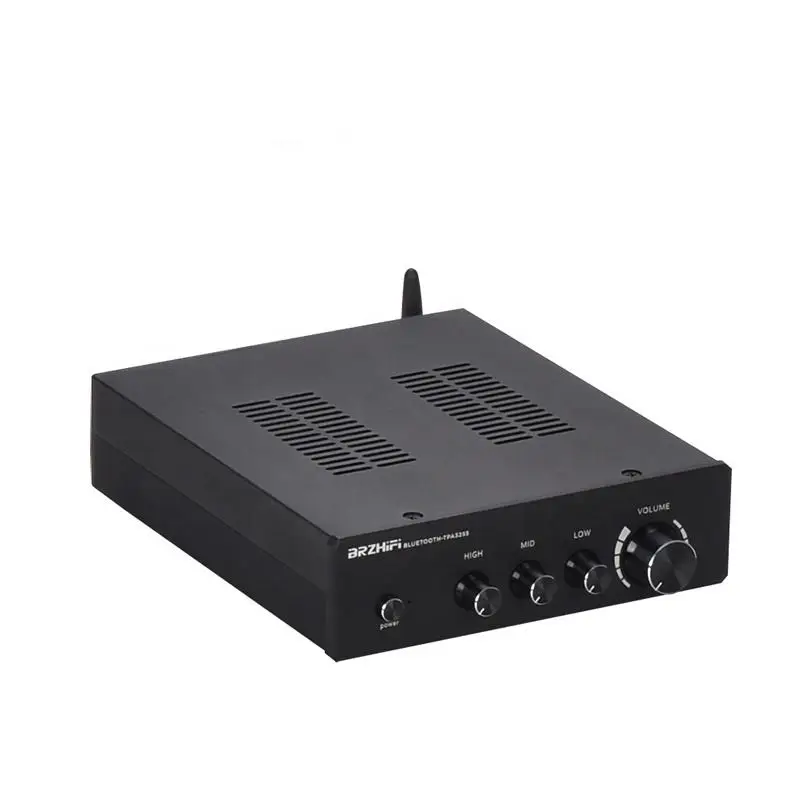
Modern audio reproduction demands have driven manufacturers to develop more efficient, reliable, and versatile amplification solutions. While analog amplifiers have served the audio industry for decades, digital amplification technology has emerged as a superior alternative in many applications. The fundamental differences between these two approaches extend beyond simple circuit design, encompassing everything from power efficiency and thermal management to signal fidelity and component longevity.
The growing popularity of digital amplification stems from its ability to deliver exceptional performance while addressing many limitations inherent in analog designs. Professional audio applications, home theater systems, and high-fidelity audio setups increasingly rely on digital amplification to meet demanding performance requirements while maintaining cost-effectiveness and reliability.
Fundamental Operating Principles
Digital Signal Processing Architecture
A digital audio power amplifier operates using pulse-width modulation (PWM) technology, which converts analog audio signals into digital pulse trains before amplification. This process involves sampling the input signal at extremely high frequencies, typically ranging from 300kHz to 1MHz, creating a series of digital pulses whose width corresponds to the amplitude of the original analog signal. The PWM signal then drives the output transistors in switching mode, alternating rapidly between fully on and fully off states.
This switching operation differs dramatically from analog amplifiers, which operate in linear mode where output transistors conduct varying amounts of current proportional to the input signal. The digital approach eliminates the need for transistors to operate in their linear region, where significant power dissipation occurs as heat. Instead, the switching nature of a digital audio power amplifier ensures that output devices spend minimal time in transitional states, dramatically reducing power loss and thermal generation.
The reconstruction of the original audio signal occurs through low-pass filtering at the amplifier output, which removes the high-frequency switching components while preserving the audio content. This filtering process is critical to the performance of digital amplification systems and requires careful design to maintain signal integrity across the entire audio spectrum.
Analog Amplification Methodology
Traditional analog amplifiers operate using continuous signal amplification, where output transistors modulate their conduction in direct proportion to the input signal amplitude. This linear operation requires transistors to handle varying voltage and current levels simultaneously, resulting in significant power dissipation as heat. Class A, Class AB, and Class B analog amplifiers each employ different biasing schemes to optimize linearity and efficiency, but all suffer from inherent thermal losses.
The analog approach provides direct signal amplification without digital conversion processes, theoretically maintaining the original signal characteristics without introducing switching artifacts. However, this simplicity comes at the cost of efficiency, as analog amplifiers typically achieve maximum theoretical efficiencies of 50-78% depending on their class of operation, with practical implementations often performing significantly lower.
Analog designs also require more complex power supply arrangements, often utilizing linear regulators and large transformer-based power supplies to maintain stable operating conditions. These components add weight, size, and cost while contributing to overall system inefficiency through additional power conversion losses.
Efficiency and Power Management
Energy Conversion Efficiency
The efficiency advantage of a digital audio power amplifier represents one of its most compelling benefits over analog alternatives. Digital amplifiers routinely achieve efficiencies exceeding 90%, with some designs reaching 95% or higher under optimal conditions. This remarkable efficiency stems from the switching operation of output transistors, which spend most of their time in either fully saturated or fully cut-off states, minimizing power dissipation during signal transitions.
High efficiency translates directly into reduced heat generation, allowing digital amplifiers to operate cooler while delivering equivalent or superior power output compared to analog designs. This thermal advantage enables more compact designs, reduces cooling requirements, and improves long-term reliability by minimizing thermal stress on components. The reduced heat generation also allows for higher power density, enabling more powerful amplifiers in smaller enclosures.
Power supply requirements for digital amplification systems are also more flexible, as switching power supplies can be efficiently employed without compromising audio performance. These supplies are lighter, more compact, and more efficient than the large linear power supplies typically required for high-quality analog amplifiers, contributing to overall system efficiency and portability.
Thermal Management Considerations
The superior efficiency of digital amplification dramatically reduces thermal management requirements compared to analog designs. While analog amplifiers often require substantial heat sinks, forced air cooling, or even liquid cooling in high-power applications, a digital audio power amplifier typically operates with minimal heat generation, requiring only modest thermal management solutions.
This thermal advantage extends beyond simple cooling requirements to impact overall system reliability and longevity. Electronic components generally exhibit improved reliability and extended operational life when operating at lower temperatures. The reduced thermal stress in digital amplifiers translates to longer component life, reduced maintenance requirements, and improved long-term stability of electrical characteristics.
Environmental considerations also favor digital amplification in many applications. Lower heat generation reduces cooling energy consumption and enables operation in thermally challenging environments where analog amplifiers might struggle to maintain stable operation. This advantage is particularly significant in automotive, industrial, and outdoor applications where ambient temperatures may be elevated.
Audio Quality and Signal Fidelity
Distortion Characteristics
The distortion profile of a digital audio power amplifier differs fundamentally from analog designs, though both can achieve excellent audio quality when properly implemented. Digital amplifiers typically exhibit very low harmonic distortion across most of their operating range, with total harmonic distortion (THD) figures often below 0.1% at rated power. However, the switching nature of digital amplification can introduce unique artifacts, including intermodulation distortion and high-frequency noise that requires careful filtering and circuit design to minimize.
Analog amplifiers produce different distortion characteristics, typically showing gradual increases in harmonic distortion as power levels approach maximum output. While well-designed analog amplifiers can achieve extremely low distortion figures, they often exhibit more complex harmonic structures that some listeners find subjectively pleasing. The continuous nature of analog amplification eliminates switching artifacts but may introduce other forms of distortion related to transistor non-linearities and power supply interactions.
Modern digital amplifier designs employ sophisticated techniques to minimize switching artifacts, including advanced modulation schemes, multi-level PWM, and noise shaping algorithms. These technologies enable digital audio power amplifier systems to achieve audio quality that rivals or exceeds high-end analog designs while maintaining the efficiency and reliability advantages of switching amplification.
Frequency Response and Bandwidth
The frequency response characteristics of digital and analog amplifiers reflect their different operating principles and design constraints. A digital audio power amplifier typically exhibits excellent frequency response across the audio spectrum, with many designs achieving flat response from below 20Hz to well above 20kHz. The switching frequency of digital amplifiers must be carefully chosen to avoid interference with the audio band while maintaining adequate margin for effective output filtering.
Output filtering in digital amplifiers requires careful design to remove switching frequency components while preserving audio signal integrity. Modern digital amplifier designs employ sophisticated filter topologies that minimize phase shift and group delay variations across the audio band, ensuring accurate signal reproduction. Some advanced designs incorporate digital signal processing to pre-compensate for filter characteristics, achieving exceptionally flat frequency response and linear phase behavior.
Analog amplifiers can achieve very wide bandwidth operation, often extending well beyond the audio spectrum. However, practical analog designs must balance bandwidth against stability considerations, as excessive bandwidth can lead to oscillation or poor transient response. The continuous nature of analog amplification eliminates the need for output filtering, potentially simplifying the signal path, though practical analog designs still require some filtering to prevent radio frequency interference and improve electromagnetic compatibility.
Cost and Manufacturing Considerations
Component Requirements and Complexity
The component requirements for digital and analog amplification systems reflect their different operating principles and performance objectives. A digital audio power amplifier typically requires specialized integrated circuits or digital signal processors to generate PWM signals, along with high-speed switching transistors capable of handling rapid transitions at high frequencies. These components are increasingly common and cost-effective due to widespread adoption in various electronic applications beyond audio.
Manufacturing costs for digital amplifiers benefit from the integration possible in modern semiconductor processes, with many digital amplifier functions consolidated into single-chip solutions. This integration reduces component count, improves reliability, and enables cost-effective production at high volumes. The reduced component count also simplifies assembly processes and reduces the potential for manufacturing defects.
Analog amplifier manufacturing requires precision components and careful attention to thermal management during assembly. High-power analog designs often require custom heat sinks, specialized mounting hardware, and careful attention to component matching and thermal coupling. These requirements can increase manufacturing complexity and cost, particularly for high-power applications where thermal management becomes critical.
Scale Economics and Market Trends
Market trends strongly favor digital amplification technology, driven by increasing demand for energy-efficient, compact, and cost-effective audio solutions. The widespread adoption of digital audio sources, including streaming services, digital media players, and computer-based audio systems, creates natural synergy with digital amplification technology. This alignment reduces overall system complexity and cost while improving integration possibilities.
The economies of scale in digital amplifier production benefit from shared technology development with other switching power applications, including motor drives, power supplies, and renewable energy systems. This cross-pollination of technology development reduces research and development costs while accelerating innovation in digital amplification circuits and techniques.
Environmental regulations and energy efficiency standards increasingly favor digital amplification technology due to its superior efficiency characteristics. These regulatory trends create additional market pressure favoring digital solutions, particularly in commercial and industrial applications where energy consumption directly impacts operating costs.
Application-Specific Performance
Professional Audio Applications
Professional audio applications place demanding requirements on amplification systems, including high reliability, consistent performance, and the ability to handle complex program material with minimal distortion. A digital audio power amplifier excels in many professional applications due to its efficiency, reliability, and ability to maintain consistent performance across varying load conditions and environmental factors.
The efficiency advantage of digital amplification becomes particularly significant in large-scale professional installations, where power consumption and heat generation directly impact operating costs and infrastructure requirements. Professional sound reinforcement systems, recording studios, and broadcast facilities increasingly rely on digital amplification to reduce energy consumption while maintaining uncompromising audio quality.
Digital amplifiers also offer advantages in terms of monitoring and control capabilities, as digital signal processing elements can provide real-time feedback on operating conditions, load impedance, and performance parameters. This monitoring capability enables predictive maintenance and system optimization that is difficult to achieve with analog amplification systems.
Consumer and Home Audio Systems
Consumer audio applications benefit significantly from the compact size, efficiency, and cost-effectiveness of digital amplification technology. Home theater systems, powered speakers, and integrated audio systems increasingly employ digital amplification to deliver high power output in compact, attractive enclosures that integrate easily into residential environments.
The reduced heat generation of a digital audio power amplifier enables installation in confined spaces and furniture-integrated systems where thermal management would be challenging with analog designs. This flexibility opens new possibilities for speaker and system design, allowing for more creative and practical solutions that meet consumer aesthetic and functional requirements.
Battery-powered and portable audio applications particularly benefit from the efficiency of digital amplification, as longer operation times can be achieved with smaller, lighter battery systems. This advantage has made digital amplification the preferred choice for wireless speakers, portable PA systems, and mobile audio applications where portability and battery life are primary concerns.
FAQ
What is the main difference between digital and analog audio amplifiers?
The fundamental difference lies in how they process and amplify audio signals. A digital audio power amplifier converts analog signals to pulse-width modulated digital signals before amplification, using switching transistors that operate in on/off states for maximum efficiency. Analog amplifiers directly amplify the continuous audio signal using transistors operating in linear mode, which is less efficient but provides direct signal amplification without digital conversion processes.
Are digital amplifiers better than analog amplifiers for audio quality?
Both digital and analog amplifiers can achieve excellent audio quality when properly designed and implemented. Digital amplifiers offer advantages in efficiency, reliability, and consistency, while potentially introducing switching artifacts that require careful filtering. Analog amplifiers provide direct signal amplification without switching artifacts but may exhibit different distortion characteristics and thermal limitations. The choice depends on specific application requirements, listening preferences, and system constraints rather than one technology being universally superior.
Why are digital amplifiers more efficient than analog amplifiers?
Digital amplifier efficiency stems from their switching operation, where output transistors spend most time in either fully on or fully off states, minimizing power dissipation as heat. A digital audio power amplifier typically achieves 90-95% efficiency compared to 50-78% for analog designs. This efficiency advantage reduces heat generation, enables smaller designs, and lowers operating costs, making digital amplification particularly attractive for high-power and battery-powered applications.
Can digital amplifiers replace analog amplifiers in all audio applications?
While digital amplifiers offer significant advantages in many applications, complete replacement of analog technology depends on specific requirements and preferences. Digital amplification excels in efficiency, reliability, and cost-effectiveness, making it ideal for most modern applications. However, some specialized applications or audiophile preferences may still favor analog designs. The choice between digital and analog amplification should be based on specific performance requirements, system constraints, and application-specific factors rather than assuming universal superiority of either technology.