
 EN
EN
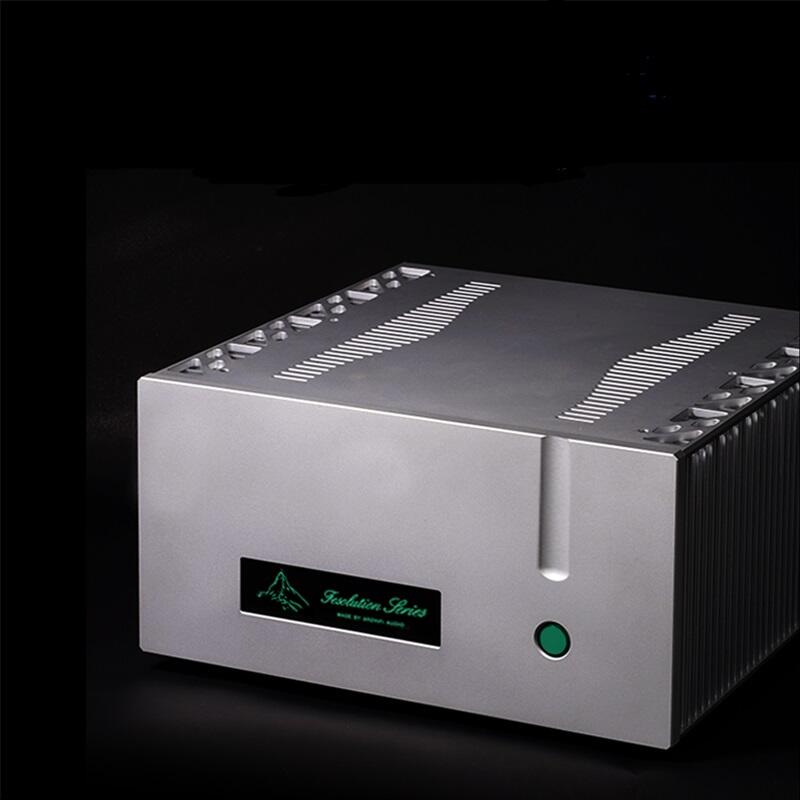
The quest for exceptional audio reproduction begins with understanding how a stereo speaker amplifier shapes the listening experience. Modern audiophiles recognize that amplification technology serves as the critical bridge between source material and the final acoustic output. When properly matched to speakers and room acoustics, a high-quality stereo speaker amplifier can transform an ordinary listening session into an immersive sonic journey. The relationship between amplifier design and sound quality extends far beyond simple volume control, encompassing aspects of spatial imaging, dynamic range, and harmonic accuracy.
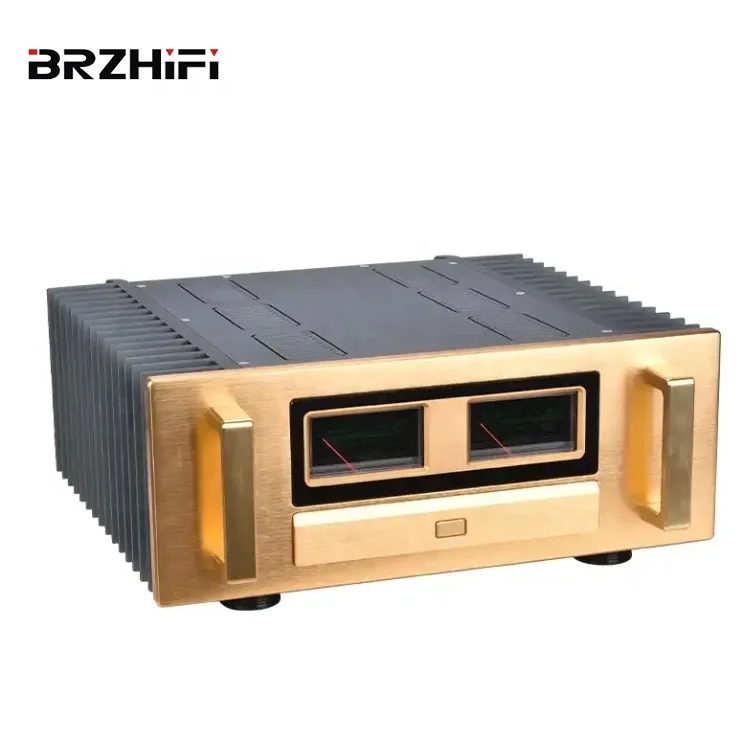
Understanding Soundstage Development Through Amplification
The Physics of Spatial Audio Reproduction
Soundstage creation depends heavily on the stereo speaker amplifier's ability to maintain channel separation and preserve phase relationships between left and right signals. When an amplifier exhibits excellent channel isolation, listeners experience a wider, more defined stereo image that extends beyond the physical boundaries of the speaker placement. Professional audio engineers understand that crosstalk between channels can collapse the soundstage, making instruments appear to originate from a narrow space between speakers rather than a natural three-dimensional environment.
The timing accuracy of a stereo speaker amplifier directly influences how listeners perceive depth and positioning within the soundstage. Amplifiers with superior transient response preserve the subtle timing cues embedded in stereo recordings, allowing the brain to accurately process spatial information. These microscopic time differences between channels create the illusion of instruments positioned at varying distances from the listener, contributing to a more realistic and engaging audio experience.
Power Delivery and Dynamic Headroom Impact
Dynamic headroom capabilities of a stereo speaker amplifier determine how effectively the system can reproduce sudden volume changes without distortion or compression. During complex musical passages with simultaneous quiet and loud elements, amplifiers with insufficient headroom may compress the dynamic range, causing background details to become obscured. High-quality amplification maintains the original dynamic relationships between different instruments and vocal elements, preserving the natural ebb and flow of musical performances.
The power supply design within a stereo speaker amplifier significantly affects its ability to deliver clean, consistent power during demanding audio passages. Linear power supplies with substantial energy storage capabilities can provide instantaneous current delivery when speakers require sudden bursts of power. This consistent power delivery ensures that transient details remain sharp and clearly defined, preventing the smearing or softening that can occur when amplifiers struggle to meet momentary power demands.
Detail Retrieval and Harmonic Accuracy
Low-Level Signal Processing
Detail retrieval in audio reproduction relies on the stereo speaker amplifier's ability to accurately process low-level signals without introducing noise or distortion. The signal-to-noise ratio of an amplifier determines how much background information remains audible during quiet passages or in the spaces between musical notes. Superior amplifiers preserve these subtle details that contribute to the sense of realism and presence in recorded music, allowing listeners to hear room ambience, instrument overtones, and the natural decay of notes.
Input stage design plays a crucial role in determining how faithfully a stereo speaker amplifier reproduces the original source material. High-quality input circuits with carefully selected components can resolve minute variations in signal amplitude and frequency content. These variations often contain the musical information that separates exceptional recordings from merely adequate ones, including the subtle harmonic content that gives instruments their distinctive timbral characteristics.
Frequency Response and Phase Linearity
The frequency response characteristics of a stereo speaker amplifier influence how different musical elements are balanced within the overall presentation. Amplifiers with extended high-frequency response preserve the air and sparkle around cymbals and string instruments, while solid low-frequency extension ensures that bass instruments maintain their proper weight and impact. When frequency response remains linear across the audio spectrum, listeners can appreciate the natural tonal balance that recording engineers intended.
Phase linearity throughout the frequency spectrum ensures that complex waveforms maintain their original shape as they pass through the amplification chain. When phase relationships are preserved, the harmonic structure of instruments remains intact, contributing to more natural and realistic sound reproduction. A well-designed stereo speaker amplifier maintains consistent phase response across its operating bandwidth, preventing the time-based distortions that can make music sound artificial or processed.
Class A Operation and Sound Quality Benefits
Elimination of Crossover Distortion
Class A amplifier topologies offer unique advantages for critical listening applications by operating both output devices continuously throughout the signal cycle. This operating mode eliminates crossover distortion that can occur in other amplifier classes when the signal passes through zero amplitude. The result is smoother, more natural reproduction of musical content, particularly noticeable during quiet passages where even small amounts of distortion become audible to trained listeners.
The continuous conduction in Class A designs means that a stereo speaker amplifier operates with both positive and negative output devices active at all times. This configuration provides superior linearity across the entire signal range, contributing to more accurate reproduction of complex musical waveforms. Musicians and audio professionals often prefer Class A amplification for monitoring applications because it reveals subtle details and nuances that might be masked by the switching artifacts present in other amplifier topologies.
Thermal Stability and Consistency
Class A stereo speaker amplifier designs typically exhibit excellent thermal stability characteristics that contribute to consistent performance during extended listening sessions. The constant current flow through output devices creates predictable thermal conditions that remain stable regardless of signal content or volume levels. This thermal consistency helps maintain amplifier bias points and component operating parameters, ensuring that sound quality remains constant throughout long listening sessions.
Temperature compensation circuits in high-quality Class A amplifiers monitor device temperatures and make automatic adjustments to maintain optimal operating conditions. These sophisticated thermal management systems prevent the performance drift that can occur in other amplifier types as components warm up during use. The result is consistent soundstage presentation and detail retrieval that remains stable from the moment the amplifier is turned on until it is powered down.
Impedance Matching and Speaker Interaction
Load Compatibility Considerations
The output impedance characteristics of a stereo speaker amplifier determine how effectively it can control different speaker loads and maintain consistent frequency response. Amplifiers with low output impedance provide better damping factor control over speaker cone movement, resulting in tighter bass response and improved transient accuracy. This electrical damping helps prevent unwanted resonances and overhang that can muddy the sound presentation and reduce overall clarity.
Complex speaker impedance curves present varying loads to amplifiers across the frequency spectrum, requiring robust current delivery capabilities to maintain consistent performance. A well-designed stereo speaker amplifier can handle these impedance variations without significant changes in frequency response or distortion characteristics. This consistent performance across different load conditions ensures that the amplifier's sonic signature remains stable regardless of the specific speakers being driven.
Current Delivery and Control Authority
High current delivery capability enables a stereo speaker amplifier to maintain control over speaker drivers during demanding musical passages with complex frequency content. Amplifiers with substantial current reserves can drive low-impedance speakers effectively while maintaining the dynamic contrasts and detail resolution that contribute to engaging musical reproduction. This current delivery capability becomes particularly important when driving multi-driver speaker systems with complex crossover networks.
The ability of an amplifier to source and sink current symmetrically affects how accurately it can reproduce both positive and negative signal excursions. Balanced current delivery capabilities ensure that waveform symmetry is maintained throughout the amplification process, preserving the harmonic structure of musical content. This symmetrical operation contributes to natural sound reproduction without the odd-order harmonics that can make music sound harsh or fatiguing during extended listening sessions.
Environmental Factors and Setup Optimization
Vibration Control and Mechanical Isolation
Mechanical vibration can significantly impact the performance of a sensitive stereo speaker amplifier by introducing unwanted resonances and microphonic effects in circuit components. High-quality amplifier chassis designs incorporate vibration-damping materials and structural reinforcement to minimize the transmission of external vibrations to sensitive internal circuitry. These mechanical design considerations become particularly important in systems where the amplifier is located near powerful subwoofers or in environments with significant ambient vibration.
Internal component mounting techniques within a stereo speaker amplifier can influence its susceptibility to vibration-induced performance degradation. Circuit boards mounted with flexible suspension systems or damped mounting hardware exhibit reduced sensitivity to external vibration sources. This mechanical isolation helps preserve the low-level detail resolution and soundstage stability that can be compromised when vibration causes physical movement of critical circuit elements.
Power Quality and Electrical Environment
The quality of electrical power supplied to a stereo speaker amplifier directly affects its ability to reproduce music with maximum fidelity and detail. Power line noise, voltage fluctuations, and harmonic distortion from other electrical devices can all contribute to degraded audio performance. High-quality power supplies with extensive filtering and regulation capabilities help isolate sensitive amplifier circuits from these external electrical disturbances.
Dedicated electrical circuits for audio equipment can provide cleaner power delivery and reduce the potential for ground loops and other electrical interference issues. When a stereo speaker amplifier operates from a clean, stable power source, it can achieve its full performance potential in terms of noise floor, dynamic range, and overall sound quality. Many audiophiles invest in power conditioning equipment specifically to optimize the electrical environment for their amplification components.
FAQ
What makes Class A amplifiers superior for soundstage reproduction
Class A stereo speaker amplifier designs excel at soundstage reproduction because they operate with both output devices conducting continuously throughout the entire signal cycle. This operating mode eliminates crossover distortion and switching artifacts that can blur spatial imaging and reduce the precision of instrument placement within the soundstage. The linear operation of Class A circuits preserves the subtle timing and amplitude relationships between channels that are essential for accurate three-dimensional sound reproduction.
How does amplifier power affect detail retrieval in music
A stereo speaker amplifier with adequate power reserves can reproduce dynamic musical content without compression or distortion that would otherwise mask low-level details. When an amplifier operates within its linear range, even during loud passages, it maintains the ability to resolve quiet background information and subtle harmonic content. Insufficient power forces amplifiers into distortion during peaks, which can obscure the fine details that contribute to musical realism and emotional engagement.
Why is impedance matching important for optimal sound quality
Proper impedance matching between a stereo speaker amplifier and its load ensures maximum power transfer efficiency and prevents frequency response irregularities that can color the sound. When impedance matching is optimized, the amplifier can maintain consistent performance across the entire frequency spectrum while providing adequate damping factor to control speaker cone movement. Poor impedance matching can result in reduced bass control, altered frequency balance, and increased susceptibility to load-induced distortion.
How do environmental factors influence amplifier performance
Environmental factors such as temperature, humidity, vibration, and electrical interference can significantly impact stereo speaker amplifier performance by affecting component stability and introducing unwanted noise or distortion. Proper ventilation prevents thermal stress on components, while vibration isolation reduces microphonic effects in sensitive circuits. Clean electrical power and appropriate grounding techniques help maintain the low noise floor and wide dynamic range necessary for high-fidelity music reproduction.