
 EN
EN
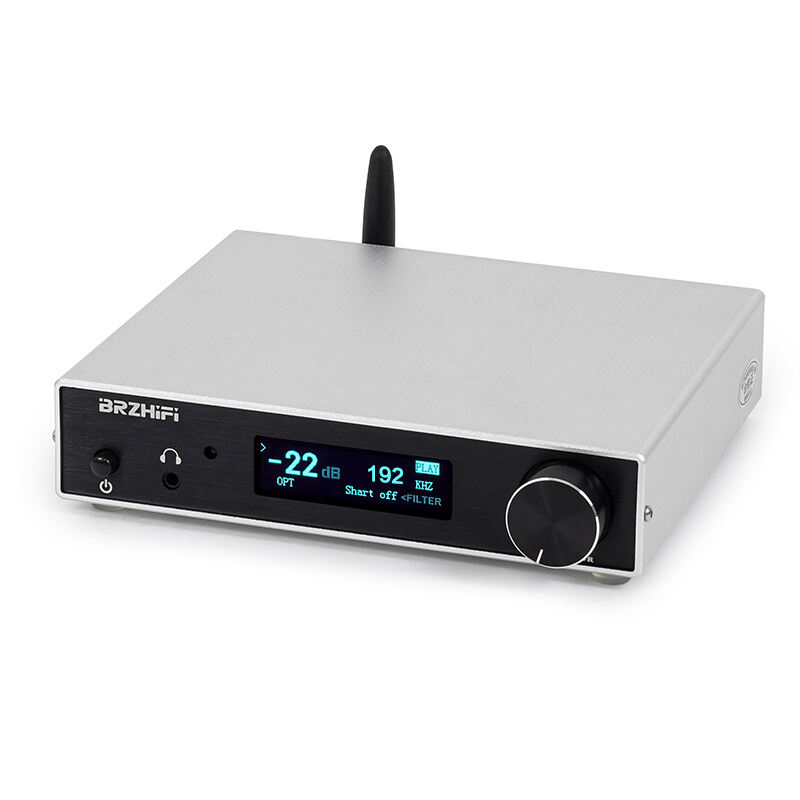
Manufacturing high-quality Class AB audio power amplifiers requires rigorous testing protocols to ensure optimal performance, reliability, and safety standards. Professional audio manufacturers employ comprehensive testing methodologies that evaluate every aspect of an ab power amp design, from initial circuit validation to final production quality assurance. These testing procedures are critical for maintaining consistency across production runs and meeting the stringent requirements of audiophiles and professional audio applications. The complexity of modern ab power amp circuits demands sophisticated measurement techniques and specialized equipment to accurately assess performance characteristics under various operating conditions.
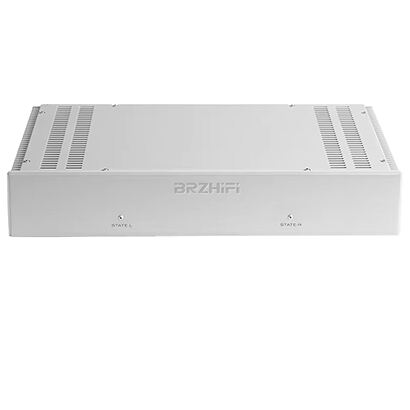
Initial Design Validation and Prototype Testing
Circuit Simulation and Computer-Aided Analysis
Before physical prototypes are constructed, manufacturers utilize advanced circuit simulation software to model ab power amp behavior under various conditions. SPICE-based simulation tools allow engineers to predict thermal performance, distortion characteristics, and frequency response without building physical circuits. These simulations help identify potential design flaws early in the development process, reducing costs and accelerating time-to-market. Monte Carlo analysis techniques are employed to understand how component tolerances affect overall amplifier performance, ensuring robust designs that maintain specifications across production variations.
Computer-aided design tools also enable manufacturers to optimize PCB layouts for minimal interference and optimal heat dissipation. Signal integrity analysis helps identify potential issues with high-frequency performance and electromagnetic compatibility. These digital validation steps are essential for complex ab power amp designs that must meet strict performance criteria while remaining cost-effective for mass production.
Breadboard and Prototype Construction
Following successful simulation validation, manufacturers construct initial breadboard prototypes to verify theoretical predictions in real-world conditions. These early prototypes allow engineers to fine-tune bias settings, adjust feedback networks, and optimize component selection for the target performance specifications. Prototype testing reveals practical considerations that simulations cannot always predict, such as parasitic inductances, thermal gradients, and component aging effects that influence long-term ab power amp reliability.
Multiple prototype iterations are typically required to achieve the desired performance balance between power output, efficiency, and audio quality. Each iteration undergoes extensive testing to validate improvements and identify any unintended consequences of design changes. This iterative approach ensures that the final ab power amp design meets all performance targets while maintaining manufacturability and cost objectives.
Electrical Performance Testing Procedures
Power Output and Efficiency Measurements
Accurate power output testing is fundamental to ab power amp validation, requiring precision load resistors and calibrated measurement equipment. Manufacturers test amplifiers at multiple power levels, from low-level listening conditions to maximum rated output, to ensure consistent performance across the entire operating range. Efficiency measurements are particularly important for Class AB designs, as they must balance the linear operation of Class A with the efficiency benefits of Class B operation.
Testing protocols include both continuous and peak power measurements under various load conditions, including reactive loads that simulate real-world loudspeaker impedances. Thermal cycling tests evaluate how power output and efficiency change as the amplifier reaches steady-state operating temperature. These comprehensive power tests ensure that the ab power amp can deliver its rated specifications under all expected operating conditions while maintaining safe operation within thermal limits.
Distortion Analysis and Frequency Response
Total Harmonic Distortion (THD) testing is crucial for evaluating the audio quality of any ab power amp design. Manufacturers employ high-resolution audio analyzers to measure distortion across the entire audio spectrum, from deep bass frequencies to ultrasonic ranges. Both THD and Intermodulation Distortion (IMD) tests are performed at various power levels to characterize the amplifier's linearity under different operating conditions.
Frequency response testing ensures that the amplifier maintains flat response across the audio band while providing adequate bandwidth margins. Phase response measurements are equally important, as they affect the amplifier's ability to accurately reproduce complex musical signals. Advanced testing includes multitone analysis to evaluate how the ab power amp handles simultaneous frequencies, revealing intermodulation products that single-tone tests might miss.
Thermal Performance and Reliability Testing
Heat Dissipation and Thermal Management
Thermal testing is critical for ab power amp reliability, as excessive heat can degrade performance and reduce component lifespan. Manufacturers use thermal imaging cameras and precision temperature sensors to map heat distribution across the amplifier circuit during operation. These tests identify hot spots that could lead to premature component failure and validate the effectiveness of heat sink designs and thermal management strategies.
Accelerated aging tests subject ab power amp units to elevated temperatures while monitoring key performance parameters over extended periods. These tests simulate years of normal operation in compressed timeframes, allowing manufacturers to predict long-term reliability and identify potential failure modes. Thermal cycling tests evaluate how repeated heating and cooling cycles affect solder joints, component connections, and overall amplifier stability.
Environmental Stress Testing
Professional ab power amp testing includes exposure to various environmental conditions that the amplifier might encounter during shipping, storage, and operation. Humidity testing ensures that the amplifier maintains performance and safety standards in high-moisture environments. Vibration and shock tests simulate transportation stresses and evaluate the mechanical integrity of component mounting and PCB assemblies.
Salt spray testing and corrosion resistance evaluations are particularly important for ab power amp units intended for marine or industrial applications. These tests verify that protective coatings and component selections can withstand harsh environmental conditions without degrading electrical performance or safety characteristics. Temperature cycling combined with electrical stress testing provides comprehensive validation of the amplifier's ability to maintain specifications under real-world operating conditions.
Safety and Compliance Testing
Electrical Safety and Protection Circuits
Safety testing ensures that ab power amp designs protect both users and connected equipment from electrical hazards. Ground fault testing validates that chassis grounding systems provide adequate protection against electrical shock. Insulation resistance measurements verify that high-voltage sections are properly isolated from user-accessible surfaces and low-voltage control circuits.
Protection circuit testing includes verification of overcurrent protection, thermal shutdown systems, and DC offset protection mechanisms. These safety features must operate reliably under fault conditions while minimizing false triggering during normal operation. Manufacturers test protection circuits under various fault scenarios, including short circuits, open circuits, and component failures, to ensure robust protection without compromising audio performance in the ab power amp design.
Electromagnetic Compatibility and Emissions
EMC testing ensures that ab power amp units neither generate excessive electromagnetic interference nor are susceptible to external interference that could affect performance. Conducted emissions testing measures the electrical noise that the amplifier produces on power and signal lines, while radiated emissions testing evaluates electromagnetic radiation from the amplifier chassis and internal circuits.
Immunity testing subjects the ab power amp to various forms of electromagnetic disturbance, including radio frequency interference, electrical fast transients, and voltage variations. These tests verify that the amplifier maintains stable operation and audio quality even in electrically noisy environments. Compliance with international EMC standards is essential for global market acceptance and ensures that the amplifier can coexist with other electronic equipment without causing interference issues.
Production Testing and Quality Assurance
Automated Test Equipment and Procedures
High-volume ab power amp production requires automated testing systems that can rapidly and accurately evaluate key performance parameters for every manufactured unit. Computer-controlled test systems perform standardized measurement sequences, comparing results against predetermined acceptance criteria to identify units that require additional attention or rework. These automated systems ensure consistent quality while minimizing testing time and labor costs.
Statistical process control techniques monitor test results across production batches, identifying trends that might indicate equipment drift, component quality issues, or process variations. Real-time feedback from production testing helps manufacturers maintain consistent ab power amp quality and quickly address any issues that arise during manufacturing. Automated data logging creates comprehensive records for quality tracking and customer support purposes.
Final Inspection and Burn-In Testing
Many manufacturers implement burn-in testing for ab power amp units, operating them at elevated stress levels for extended periods to precipitate infant mortality failures before shipment. This process improves field reliability by identifying units with marginal components or assembly defects that might not be detected during standard production testing. Burn-in parameters are carefully selected to accelerate aging without causing damage to properly manufactured units.
Final inspection procedures include visual examination of assembly quality, verification of proper labeling and documentation, and functional testing of user controls and interfaces. Packaging quality checks ensure that ab power amp units are adequately protected during shipping and storage. These final quality assurance steps provide the last opportunity to identify and correct any issues before products reach customers, maintaining brand reputation and customer satisfaction.
FAQ
What are the most critical performance parameters tested in ab power amp manufacturing
The most critical parameters include power output at various load impedances, total harmonic distortion across the audio spectrum, frequency response flatness, signal-to-noise ratio, and thermal stability under continuous operation. Manufacturers also extensively test protection circuit operation, including thermal shutdown, overcurrent protection, and DC offset detection. These parameters directly impact both audio quality and long-term reliability, making them essential validation points in any comprehensive testing protocol.
How long does typical ab power amp testing take during production
Production testing duration varies significantly based on the complexity of the amplifier and the thoroughness of the test protocol. Basic functional testing might require only 10-15 minutes per unit using automated test equipment, while comprehensive validation including burn-in testing can extend to several hours or even days. Most manufacturers balance testing time with quality requirements, implementing tiered testing approaches where sample units receive extensive validation while all production units undergo essential functional verification.
Why do manufacturers use both automated and manual testing procedures
Automated testing provides rapid, consistent measurement of quantifiable parameters like power output, distortion, and frequency response, while manual testing allows experienced technicians to evaluate subjective qualities and identify issues that automated systems might miss. Manual procedures are particularly valuable for detecting intermittent problems, evaluating mechanical assembly quality, and performing specialized tests that require human judgment. The combination ensures comprehensive quality validation while maintaining production efficiency.
What environmental conditions are ab power amp units tested under
Environmental testing typically includes temperature cycling from below freezing to elevated operating temperatures, humidity exposure ranging from very dry to near-condensation conditions, vibration and shock testing simulating transportation stresses, and sometimes specialized conditions like salt spray for marine applications. These tests ensure that amplifiers maintain performance and safety standards across the full range of conditions they might encounter during their operational lifetime, from shipping and storage through various installation environments.