
 EN
EN
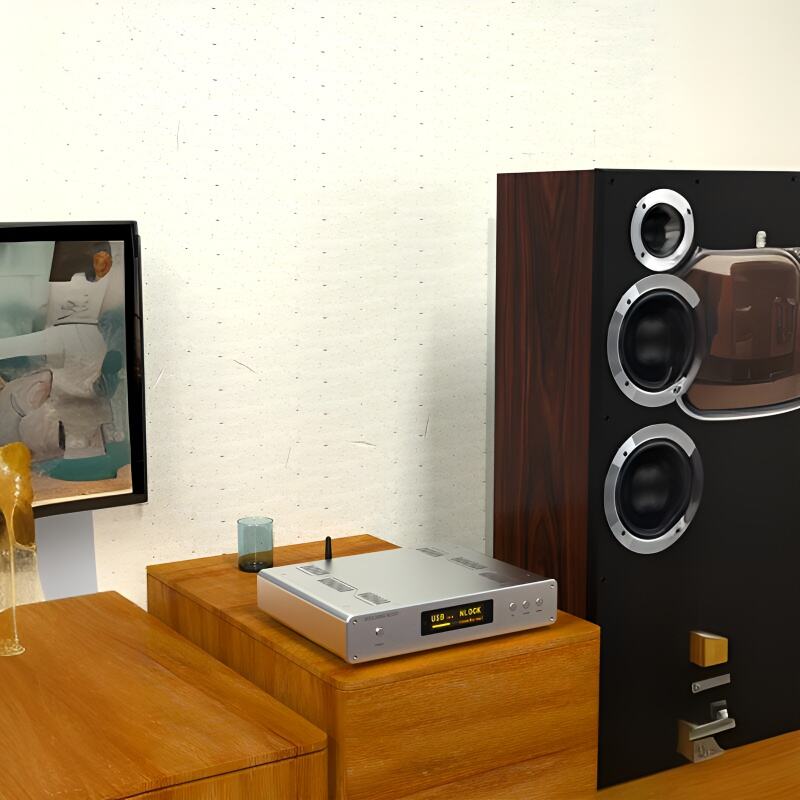
Preamp manufacturers face the constant challenge of delivering pristine audio quality while managing noise interference in their designs. When creating high-fidelity audio systems for home theatre for home entertainment applications, engineers must implement sophisticated noise control techniques and signal purity measures. The pursuit of clean, transparent sound reproduction requires careful attention to circuit topology, component selection, and electromagnetic interference management throughout the manufacturing process.
Circuit Design Fundamentals for Noise Reduction
Topology Selection and Configuration
The foundation of noise control begins with selecting appropriate circuit topologies that inherently minimize unwanted signals. Differential amplifier configurations provide excellent common-mode noise rejection, making them ideal for professional and home theatre for home applications where signal integrity is paramount. These designs utilize matched transistor pairs that cancel out noise signals present on both input terminals while amplifying the desired differential signal.
Manufacturers often employ balanced input stages that reduce susceptibility to external electromagnetic interference. The symmetrical nature of balanced circuits allows noise pickup to be equal on both signal conductors, enabling the differential amplifier to reject these unwanted signals effectively. This approach proves particularly valuable in complex home theatre for home installations where multiple electronic devices may generate interference.
Ground Plane Design and Implementation
Proper ground plane architecture serves as the cornerstone of effective noise control in preamp manufacturing. Engineers create dedicated ground planes for digital and analog sections, preventing digital switching noise from contaminating sensitive analog circuits. Star grounding techniques ensure that return currents from different circuit sections do not interact, eliminating ground loops that could introduce hum and noise into the audio signal path.
Advanced manufacturers implement multi-layer PCB designs with dedicated power and ground planes, providing low-impedance return paths for high-frequency currents. This approach minimizes voltage drops across ground connections and reduces the formation of ground loops that commonly plague home theatre for home systems with multiple interconnected components.
Component Selection and Quality Control
Premium Capacitor Technologies
Capacitor selection plays a crucial role in maintaining signal purity throughout the preamp circuit. Manufacturers specify low-ESR (Equivalent Series Resistance) capacitors in critical signal path locations to minimize distortion and noise contribution. Film capacitors, particularly polypropylene types, offer superior linearity and low dielectric absorption, making them ideal for coupling and bypass applications in high-end home theatre for home preamps.
Power supply filtering requires careful consideration of capacitor technology and placement. Large-value electrolytic capacitors provide bulk energy storage, while smaller ceramic and film capacitors handle high-frequency filtering. The combination creates a comprehensive filtering network that maintains clean power delivery to sensitive amplification stages, directly impacting the noise floor of the complete system.
Precision Resistor Networks
Resistor selection influences both noise performance and long-term stability in preamp designs. Metal film resistors offer low noise characteristics and excellent temperature stability compared to carbon composition alternatives. Manufacturers often specify matched resistor networks for critical gain-setting applications, ensuring consistent performance across production runs and minimizing channel-to-channel variations in home theatre for home installations.
Precision voltage dividers and bias networks require resistors with tight tolerances and low temperature coefficients. These components maintain accurate operating points for transistors and operational amplifiers, preventing drift that could degrade noise performance over time and temperature variations.
Power Supply Design and Regulation
Linear Regulation Techniques
Power supply quality directly impacts preamp noise performance, making regulation circuit design critical for manufacturers. Linear regulators provide superior noise suppression compared to switching alternatives, though at the cost of increased heat generation and lower efficiency. Multi-stage regulation using series-pass transistors creates exceptionally clean power rails for sensitive input stages in home theatre for home preamps.
Ultra-low noise voltage references, such as buried zener diodes or bandgap references, establish stable operating points for regulation circuits. These references maintain consistent output voltages regardless of line and load variations, ensuring that critical amplification stages receive clean, stable power throughout all operating conditions.
Transformer Design and Shielding
Power transformers in high-quality preamps feature careful magnetic design to minimize stray fields that could couple into sensitive circuits. Toroidal transformers offer advantages in reduced electromagnetic radiation and improved regulation compared to traditional EI-core designs. Manufacturers often specify multiple secondary windings to provide isolated power supplies for different circuit sections, preventing interaction between digital control circuits and analog audio paths.
Electrostatic shielding between primary and secondary windings reduces capacitive coupling of high-frequency noise from the AC mains. This shielding, typically implemented as a grounded copper foil layer, provides an additional barrier against noise transmission while maintaining transformer efficiency and regulation characteristics important for home theatre for home applications.
Electromagnetic Interference Management
Shielding Strategies and Materials
Effective EMI shielding requires understanding of both electric and magnetic field coupling mechanisms. Manufacturers employ aluminum and steel enclosures with proper seaming and gasket materials to create continuous conductive barriers around sensitive circuits. The choice of shielding material depends on frequency range and field type, with high-permeability materials like mu-metal providing superior low-frequency magnetic shielding.
Internal compartmentalization using shield cans isolates critical circuit sections from each other and external interference sources. Input stages often receive dedicated shielding to prevent pickup from power supply circuits and digital control sections. This approach proves essential in complex home theatre for home preamps where multiple signal processing functions coexist within a single enclosure.
Cable Routing and Connector Design
Signal integrity preservation extends beyond the PCB to include careful consideration of internal wiring and connector placement. Manufacturers implement twisted-pair wiring for balanced connections and maintain separation between high-level and low-level signal paths. Power supply wiring uses dedicated twisted pairs or coaxial cables to minimize magnetic field generation and coupling to sensitive circuits.
Connector selection impacts both immediate noise performance and long-term reliability. Gold-plated contacts resist corrosion and maintain low contact resistance over time, while proper connector grounding ensures shield continuity throughout the signal chain. These considerations become increasingly important in permanent home theatre for home installations where maintenance access may be limited.
Manufacturing Process Control
Quality Assurance Testing Protocols
Comprehensive testing protocols verify noise performance and signal purity throughout the manufacturing process. Manufacturers implement automated test equipment that measures THD+N (Total Harmonic Distortion plus Noise), signal-to-noise ratio, and frequency response under various operating conditions. These measurements ensure that each unit meets specified performance criteria before shipment to end users.
Burn-in procedures stress components under elevated temperature conditions to identify potential reliability issues before products reach customers. This process helps stabilize component characteristics and ensures consistent long-term performance in demanding home theatre for home applications where reliability is paramount.
Statistical Process Control Implementation
Advanced manufacturers employ statistical process control techniques to monitor production consistency and identify trends that might indicate process variations. Control charts track key parameters such as noise floor measurements, distortion figures, and frequency response characteristics across production lots, enabling rapid identification and correction of manufacturing issues.
Component incoming inspection procedures verify that purchased parts meet specified tolerances and performance criteria. This verification prevents defective components from entering the production stream and ensures that finished products maintain consistent performance characteristics expected in professional home theatre for home installations.
Advanced Signal Processing Techniques
Digital Signal Processing Integration
Modern preamps increasingly incorporate digital signal processing capabilities while maintaining analog signal integrity. Manufacturers implement high-resolution ADC and DAC converters with careful attention to clock jitter minimization and power supply isolation. The integration of digital processing enables advanced features like room correction and dynamic range optimization without compromising fundamental audio quality.
Hybrid analog-digital designs require particular attention to isolation between digital switching circuits and sensitive analog stages. Separate power supplies, dedicated ground planes, and physical separation prevent digital noise from contaminating analog signal paths, maintaining the benefits of both technologies in sophisticated home theatre for home systems.
Feedback Loop Optimization
Negative feedback implementation requires careful consideration of loop stability and noise performance trade-offs. While feedback reduces distortion and output impedance, excessive amounts can degrade transient response and increase sensitivity to load variations. Manufacturers optimize feedback networks to achieve the best compromise between measured performance and subjective sound quality.
Compensation networks within feedback loops ensure stability across all operating conditions while maintaining consistent frequency response. These networks often employ multi-pole compensation techniques that provide adequate phase margin without limiting bandwidth unnecessarily, resulting in preamps that perform reliably in diverse home theatre for home configurations.
FAQ
How do manufacturers measure noise performance in preamps
Manufacturers use specialized audio analyzers to measure noise performance through several key metrics including signal-to-noise ratio, equivalent input noise, and THD+N measurements. These tests are conducted under standardized conditions with specific source impedances and measurement bandwidths to ensure consistent and comparable results across different products and manufacturers.
What role does component matching play in noise control
Component matching is crucial for maintaining low noise performance, particularly in differential amplifier stages where mismatched components can degrade common-mode rejection ratio. Manufacturers often hand-select or use laser-trimmed components to ensure tight tolerances in critical circuits, resulting in superior noise rejection and channel balance in home theatre for home applications.
How do environmental factors affect preamp noise performance
Temperature variations, humidity, and mechanical vibration can all impact preamp noise performance through component parameter changes and physical stress effects. Quality manufacturers design circuits with adequate thermal management and specify components with appropriate temperature coefficients to maintain consistent performance across normal environmental ranges encountered in home theatre for home installations.
What is the importance of power supply ripple rejection in preamps
Power supply ripple rejection determines how effectively a preamp can suppress AC power line noise and switching transients from reaching the audio signal path. High-quality preamps achieve ripple rejection ratios exceeding 80dB through careful regulation circuit design and filtering, ensuring clean audio reproduction even in electrically noisy environments typical of modern home theatre for home systems.