
 EN
EN
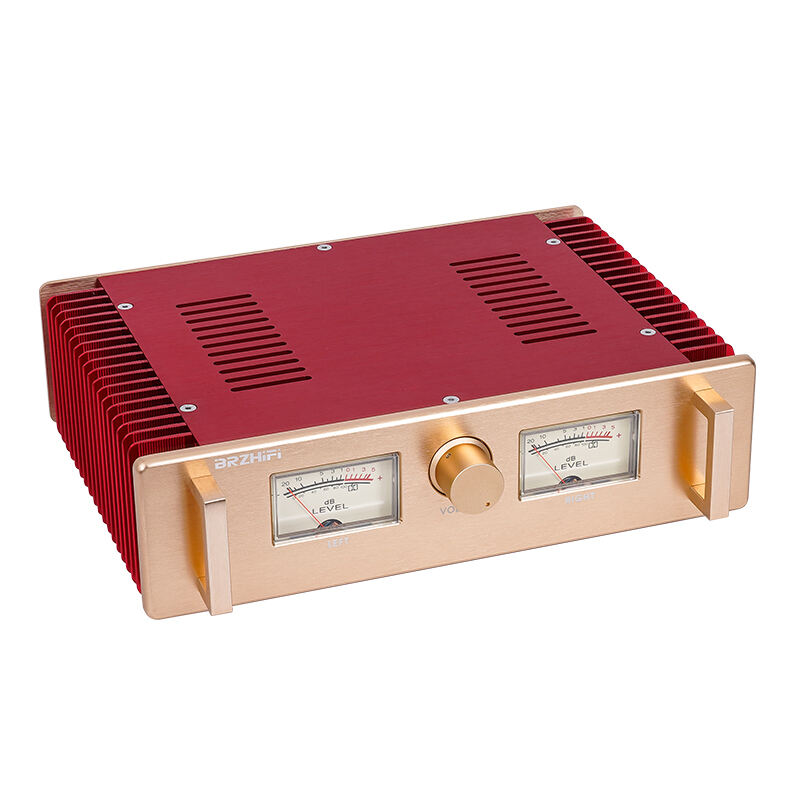
The resurgence of analog audio has sparked renewed interest in vacuum tube technology, particularly among audiophiles seeking warm, natural sound reproduction without breaking the bank. Finding the best affordable tube amp for daily listening has become a priority for music enthusiasts who want to experience the distinctive sonic characteristics of tube amplification while maintaining practical functionality. Modern tube amplifiers offer an impressive balance between classic warmth and contemporary reliability, making them increasingly viable for everyday use across various listening environments and musical genres.

Understanding Tube Amplifier Technology in Modern Context
Core Principles of Vacuum Tube Operation
Vacuum tube amplifiers operate on fundamentally different principles compared to solid-state alternatives, utilizing heated cathodes and electron flow control to achieve signal amplification. The thermionic emission process creates a natural compression and harmonic enrichment that many listeners find musically appealing. When searching for the best affordable tube amp, understanding these operational characteristics helps identify models that maintain authentic tube sound while offering practical daily use capabilities.
Modern tube designs incorporate improved materials and manufacturing techniques that enhance reliability and reduce maintenance requirements compared to vintage units. Contemporary tube amplifiers feature better power supply regulation, optimized circuit topologies, and carefully selected components that maximize performance while minimizing cost. These advances make current tube amplifiers significantly more practical for regular use than their historical counterparts.
Advantages of Tube Amplification for Daily Listening
The sonic benefits of tube amplification extend beyond nostalgic appeal, offering tangible improvements in musical reproduction that enhance daily listening experiences. Tube amplifiers typically produce even-order harmonic distortion that adds perceived warmth and musicality without harshness or fatigue. This characteristic makes them particularly suitable for extended listening sessions, as the natural compression and softened transients reduce listener fatigue compared to some solid-state designs.
Additionally, tube amplifiers often exhibit superior soundstage presentation and dimensional imaging, creating a more immersive listening environment. The best affordable tube amp models maintain these sonic advantages while providing sufficient power output and input flexibility for diverse musical genres and source components. Modern tube designs also incorporate features like remote control, multiple inputs, and headphone outputs that enhance practical usability.
Practical Considerations for Daily Tube Amp Usage
Power Output and Speaker Compatibility
Determining appropriate power requirements represents a crucial factor when selecting the best affordable tube amp for regular use. Most tube amplifiers produce lower wattage output compared to solid-state equivalents, requiring careful speaker matching to achieve optimal performance. Single-ended designs typically output 2-15 watts, while push-pull configurations can deliver 20-50 watts or more, depending on tube type and circuit topology.
Efficient speakers with sensitivity ratings above 90dB work exceptionally well with lower-powered tube amplifiers, creating dynamic and engaging sound even at modest volume levels. Many modern bookshelf and tower speakers are designed with tube amplification compatibility in mind, featuring impedance curves and sensitivity specifications that complement tube amp characteristics. Understanding these relationships ensures successful matching between amplifier and speakers for satisfying daily listening experiences.
Maintenance Requirements and Operational Costs
Contemporary tube amplifiers require minimal maintenance when operated within design parameters, making them more practical for daily use than many assume. Proper warm-up procedures, avoiding excessive volume levels, and ensuring adequate ventilation extend tube life significantly. Most power tubes last 2,000-5,000 hours under normal listening conditions, while small signal tubes can operate for 10,000+ hours before requiring replacement.
Tube replacement costs vary depending on tube type and manufacturer, with budget-friendly options available for most common types. The best affordable tube amp designs utilize readily available tube types that keep operational costs reasonable. Regular bias checking and occasional tube testing help maintain optimal performance and prevent premature failure, though many modern designs incorporate auto-bias circuits that eliminate manual adjustments.
Key Features to Evaluate in Affordable Tube Amplifiers
Circuit Topology and Design Quality
The underlying circuit design significantly impacts both sound quality and long-term reliability in tube amplifiers, making it essential to evaluate topology when selecting the best affordable tube amp. Single-ended designs offer pure Class A operation with minimal feedback, producing distinctive sonic characteristics that many audiophiles prefer. These circuits typically use simpler topologies with fewer components, potentially reducing cost while maintaining authentic tube sound.
Push-pull designs provide greater power output and improved distortion characteristics, making them suitable for less efficient speakers or larger listening rooms. Modern push-pull tube amplifiers often incorporate sophisticated driver stages and output transformers that optimize performance across the audio spectrum. Quality transformers represent a significant cost component in tube amplifiers, so affordable models must balance transformer specifications with overall budget constraints.
Input Flexibility and Connectivity Options
Modern listening habits require tube amplifiers to accommodate various source components and connection types while maintaining sonic purity. The best affordable tube amp designs include multiple line inputs, allowing connection of CD players, streaming devices, turntables with preamps, and other sources. Some models incorporate phono stages for direct turntable connection, eliminating the need for separate preamp components.
Contemporary tube amplifiers may also feature digital inputs, Bluetooth connectivity, or USB connections to accommodate modern source devices. These conveniences enhance daily usability without significantly impacting cost or compromising analog signal path purity. Remote control operation, tone controls, and headphone outputs further increase practical utility for regular listening applications.
Performance Characteristics of Budget Tube Amplifiers
Frequency Response and Dynamic Range
Quality tube amplifiers deliver remarkably linear frequency response across the audible spectrum, with many affordable models achieving performance specifications comparable to much more expensive designs. The best affordable tube amp options typically exhibit slight high-frequency rolloff and gentle low-frequency extension that contributes to their characteristic warm sound signature. This frequency shaping often proves beneficial for digital sources or bright recordings that benefit from subtle harmonic enhancement.
Dynamic range capabilities in tube amplifiers depend heavily on power supply design and output transformer quality. Well-designed affordable models can deliver impressive dynamic contrast and transient response, particularly when paired with appropriate speakers. The natural compression characteristics of tube circuits help maintain musical coherence during complex passages while preserving low-level detail resolution.
Distortion Characteristics and Harmonic Structure
The distortion profile of tube amplifiers differs fundamentally from solid-state designs, producing predominantly second and third-order harmonics that enhance rather than degrade musical content. This harmonic structure creates the perceived warmth and richness associated with tube sound, making even modest distortion levels musically acceptable. The best affordable tube amp models optimize this harmonic balance through careful circuit design and component selection.
Tube amplifiers also exhibit graceful overload characteristics, with distortion increasing gradually as output levels approach maximum power. This soft clipping behavior prevents the harsh distortion artifacts common in overdriven solid-state amplifiers, allowing tube amps to sound musical even when pushed beyond their linear operating range. These characteristics make tube amplifiers forgiving and enjoyable for varied listening levels and musical dynamics.
Selecting the Right Tube Amp for Your System
Room Size and Listening Environment Considerations
The physical listening environment significantly influences tube amplifier selection, with room size, acoustics, and typical listening levels all affecting performance requirements. Smaller rooms and near-field listening situations allow lower-powered tube amplifiers to perform optimally, making single-ended designs viable options. The best affordable tube amp for intimate spaces might produce only 5-10 watts but deliver satisfying volume levels and dynamic range in appropriate environments.
Larger rooms or challenging acoustic environments may require higher-powered push-pull designs to achieve desired sound pressure levels and bass control. Modern affordable tube amplifiers offer various power output options, allowing system matching based on specific room and usage requirements. Understanding the relationship between amplifier power, speaker efficiency, and room characteristics ensures optimal performance from any tube amplifier investment.
Musical Genre Compatibility and Listening Preferences
Different musical genres benefit from specific tube amplifier characteristics, making listening preferences important selection criteria. Classical and acoustic music often sound exceptional through single-ended designs that preserve natural timbres and spatial information. Jazz and vocals particularly benefit from the midrange warmth and harmonic richness that tube amplifiers provide, while rock and electronic music may favor the increased power and dynamics of push-pull configurations.
The best affordable tube amp for diverse musical tastes should offer good performance across various genres while excelling in preferred musical styles. Some listeners prioritize ultimate transparency and accuracy, while others prefer the enhanced musicality and warmth that comes with subtle coloration. Understanding these preferences helps narrow the selection to models that best match individual listening priorities and musical preferences.
FAQ
How long do tubes last in affordable tube amplifiers during daily use
Power tubes in quality affordable tube amplifiers typically last 2,000-5,000 hours under normal daily listening conditions, while preamp tubes can operate for 10,000+ hours before replacement. Proper warm-up procedures, avoiding excessive volume levels, and ensuring adequate ventilation significantly extend tube life. Most users find that tubes last 2-3 years with regular daily use, making operational costs quite reasonable when spread over time.
What speaker impedance works best with budget tube amplifiers
Most affordable tube amplifiers are designed for 4, 8, or 16-ohm speaker loads, with 8-ohm being the most common. The best affordable tube amp models often include multiple output taps to accommodate different speaker impedances optimally. Higher impedance speakers (8-16 ohms) typically work better with tube amplifiers than low-impedance designs, as they present easier loads for the output transformers and allow better power transfer efficiency.
Can affordable tube amps compete with solid-state amplifiers in terms of reliability
Modern affordable tube amplifiers demonstrate excellent reliability when properly designed and manufactured, often matching solid-state units for dependable daily operation. Contemporary tube designs incorporate improved materials, better quality control, and enhanced circuit protection that significantly reduces failure rates compared to vintage units. While tubes do require eventual replacement, the amplifier circuitry itself typically provides years of trouble-free service with minimal maintenance requirements.
What makes a tube amplifier suitable for extended daily listening sessions
Tube amplifiers excel at extended listening due to their natural compression characteristics and harmonic distortion profile that reduces listening fatigue. The best affordable tube amp designs produce even-order harmonics that sound musical rather than harsh, while their gentle dynamic compression prevents ear fatigue during long sessions. Additionally, the warm tonal balance of tube amplifiers tends to be less fatiguing than some analytical solid-state designs, making them ideal for all-day background music or serious listening sessions.