
 EN
EN
Audio enthusiasts and professionals have long debated the superiority of different amplifier topologies, yet one design consistently emerges as the gold standard for sonic purity. The pure class a amplifier represents the pinnacle of audio reproduction technology, delivering unmatched fidelity that discerning listeners immediately recognize. This amplification approach operates under fundamentally different principles than conventional designs, resulting in characteristics that explain why audiophiles consistently choose this topology for critical listening applications.
Understanding the preference for pure class a amplifier designs requires examining both the technical foundations and the perceptual advantages these circuits provide. Unlike other amplifier classes that compromise efficiency for performance or vice versa, class A topology prioritizes absolute signal integrity above all other considerations. This design philosophy creates measurable differences in distortion characteristics, frequency response, and dynamic behavior that translate directly into superior listening experiences. Professional recording engineers, mastering specialists, and serious music lovers consistently turn to pure class a amplifier solutions when accuracy and musicality are paramount.
Technical Foundation of Pure Class A Operation
Continuous Conduction Principles
The fundamental advantage of a pure class a amplifier lies in its continuous conduction operating mode, where the output transistors remain active throughout the entire signal cycle. This approach eliminates the switching distortion that plagues other amplifier topologies, ensuring that every portion of the audio waveform receives consistent amplification. The active devices in pure class a amplifier circuits never turn completely off, maintaining a constant bias current that keeps them in their linear operating region at all times.
This continuous operation creates several measurable benefits that explain listener preferences. The absence of crossover distortion, which occurs when amplifier stages hand off signal reproduction duties, results in cleaner low-level detail retrieval and improved harmonic accuracy. Pure class a amplifier designs also exhibit superior linearity across their entire operating range, meaning that both loud passages and subtle musical nuances receive identical treatment from the amplification chain.
Thermal Stability and Consistency
The thermal characteristics of pure class a amplifier circuits contribute significantly to their preferred sound signature. Constant power dissipation creates stable operating temperatures that minimize thermal drift and bias point variations. This thermal stability ensures that the amplifier's performance characteristics remain consistent regardless of program material complexity or listening duration. Musicians and recording professionals particularly appreciate this consistency during extended mixing sessions where tonal accuracy must remain unchanged.
Temperature stability in pure class a amplifier designs also reduces the mechanical stress on semiconductor junctions, contributing to longer device lifespan and more predictable aging characteristics. This reliability factor makes pure class a amplifier topology attractive for professional applications where equipment failure cannot be tolerated. The consistent thermal environment also minimizes thermal noise contributions, further improving the signal-to-noise ratio that listeners perceive as background quietness.
Sonic Characteristics That Drive Preference
Harmonic Distortion Profile
The distortion characteristics of a pure class a amplifier create the sonic signature that listeners consistently prefer over other amplifier topologies. Unlike switching amplifiers that generate harsh odd-order harmonics, pure class a amplifier designs produce predominantly even-order harmonic distortion that the human ear perceives as musically pleasant. This harmonic structure mimics the distortion patterns found in high-quality analog recording equipment, creating a familiar and engaging listening experience.
Research in psychoacoustics demonstrates that the specific harmonic distortion profile of pure class a amplifier circuits aligns with natural hearing preferences. The gradual rolloff of harmonic content and the absence of high-order intermodulation products create a presentation that listeners describe as warm, natural, and non-fatiguing. Professional mastering engineers rely on these characteristics to make accurate tonal judgments during the critical final stages of music production.
Dynamic Response and Transient Handling
The superior transient response of pure class a amplifier designs contributes significantly to their preferred sound character. Without the switching delays and recovery times associated with other amplifier classes, pure class a amplifier circuits can respond instantaneously to rapid signal changes. This immediate response capability becomes particularly important when reproducing complex musical passages with multiple simultaneous instruments or percussive elements that require precise timing accuracy.
Listeners often describe the dynamic capabilities of a pure class a amplifier as providing better instrument separation and spatial imaging. The absence of slew rate limitations and the consistent bias conditions allow these amplifiers to preserve the subtle timing relationships that create stereophonic depth and width. Classical music enthusiasts particularly appreciate how pure class a amplifier topology maintains the original acoustic space characteristics of concert hall recordings.
Efficiency Trade-offs and Design Considerations
Power Consumption Characteristics
The continuous bias current required by pure class a amplifier operation results in constant power consumption regardless of signal level. This inefficiency represents the primary trade-off that designers and users must accept to achieve superior audio quality. A typical pure class a amplifier may consume the same power while idle as it does during moderate listening levels, requiring robust power supply design and adequate thermal management systems.
Despite the efficiency penalty, many listeners consider the power consumption acceptable given the sonic benefits provided by pure class a amplifier topology. The constant power draw also means that the amplifier remains at optimal operating temperature continuously, eliminating the warm-up periods required by other designs. This ready-to-perform characteristic appeals to professionals who need consistent results immediately upon power application.
Heat Management Solutions
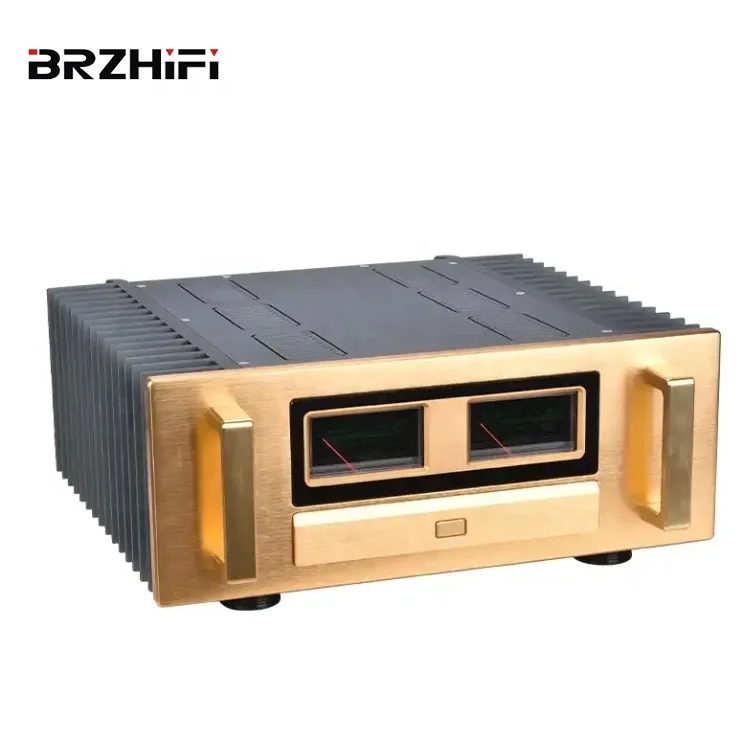
Effective thermal management becomes crucial for pure class a amplifier designs due to their continuous power dissipation requirements. Manufacturers employ various cooling strategies, from passive heat sinking to active thermal regulation systems, to maintain safe operating temperatures while preserving audio quality. The heat sink design often becomes a significant portion of the amplifier's total size and weight, contributing to the substantial physical presence of pure class a amplifier products.
Advanced pure class a amplifier designs incorporate thermal feedback systems that maintain optimal bias conditions across varying ambient temperatures. These sophisticated thermal management approaches ensure that the amplifier's sonic characteristics remain stable regardless of environmental conditions or extended operation periods. Professional users particularly value this thermal stability during lengthy recording sessions where consistent sound quality is essential.
Applications Where Pure Class A Excels
Professional Recording and Mastering
Recording studios and mastering facilities consistently choose pure class a amplifier designs for reference monitoring applications where absolute accuracy is required. The low distortion characteristics and consistent performance of these amplifiers allow engineers to make confident decisions about mix balance, equalization, and dynamic processing. Many legendary recordings have been mixed and mastered using pure class a amplifier systems, establishing a sonic reference that continues to influence modern production standards.
The reliability and consistency of pure class a amplifier operation makes these designs particularly valuable in professional environments where downtime costs significantly impact productivity. Engineers develop familiarity with specific amplifier characteristics that allow them to translate their monitoring experience across different projects and clients. This consistency factor explains why many studios maintain pure class a amplifier systems for decades, viewing them as essential tools rather than replaceable equipment.
Critical Listening and Audiophile Applications
Serious music listeners gravitate toward pure class a amplifier designs when building reference-quality playback systems. The superior resolution and natural tonal balance of these amplifiers reveal musical details that remain hidden when using conventional amplification approaches. Audiophiles often describe pure class a amplifier sound as more involving and emotionally engaging, creating stronger connections between listeners and their favorite recordings.
The low-level detail retrieval capabilities of a pure class a amplifier become particularly apparent with high-resolution audio sources and high-efficiency speakers. This combination allows listeners to experience the full dynamic range and spatial information contained in quality recordings. Many audiophiles consider pure class a amplifier topology essential for reproducing the subtle ambient cues and harmonic textures that create realistic soundstage presentation.
Comparing Class A to Alternative Topologies
Class AB and Class D Distinctions
While Class AB amplifiers attempt to balance efficiency with sound quality, they cannot match the consistent linearity of pure class a amplifier designs. The switching between different bias conditions in Class AB operation creates measurable distortion artifacts during crossover transitions, particularly at low signal levels where these effects become most audible. Listeners often perceive these artifacts as a subtle harshness or grain that becomes fatiguing during extended listening sessions.
Class D switching amplifiers offer superior efficiency but sacrifice the analog purity that defines pure class a amplifier performance. The pulse-width modulation approach used in Class D designs requires complex filtering to reconstruct analog signals, introducing phase shifts and timing errors that sensitive listeners readily detect. While Class D technology continues advancing, the fundamental switching approach cannot replicate the continuous analog processing that makes pure class a amplifier designs so appealing to critical listeners.
Tube Versus Solid State Class A
Both vacuum tube and solid-state implementations of pure class a amplifier topology share the fundamental advantages of continuous conduction, though each approach offers distinct sonic characteristics. Tube-based pure class a amplifier designs typically provide more prominent even-order harmonic enhancement, creating the warm, vintage sound that many listeners associate with classic recordings. However, tube amplifiers require more maintenance and exhibit greater measurement variations than their solid-state counterparts.
Solid-state pure class a amplifier implementations offer superior consistency and lower maintenance requirements while preserving the essential sonic benefits of continuous conduction operation. Modern semiconductor devices allow designers to achieve extremely low distortion levels that exceed vacuum tube capabilities in measurable parameters. The choice between tube and solid-state pure class a amplifier designs often comes down to personal preference regarding harmonic coloration and practical considerations about reliability and maintenance.
Future Developments in Class A Technology
Efficiency Improvements
Recent advances in semiconductor technology enable more efficient pure class a amplifier designs without compromising sonic quality. New device geometries and improved thermal management techniques allow designers to reduce power consumption while maintaining the continuous bias conditions that define pure class a amplifier operation. These efficiency improvements make pure class a amplifier topology more practical for a broader range of applications, including portable and battery-powered systems.
Hybrid approaches that combine pure class a amplifier operation with intelligent power management systems represent promising future developments. These systems maintain class A operation during normal listening levels while switching to higher efficiency modes only during peak power demands. This approach preserves the sonic advantages of pure class a amplifier design for typical program material while reducing overall power consumption and heat generation.
Integration with Digital Systems
Modern pure class a amplifier designs increasingly incorporate digital control systems that optimize performance parameters in real-time. These intelligent systems monitor temperature, bias current, and load conditions to maintain optimal pure class a amplifier operation across varying conditions. Digital integration also enables remote monitoring and adjustment capabilities that appeal to professional users who require consistent performance across multiple installations.
The integration of pure class a amplifier stages with digital signal processing creates powerful hybrid systems that combine analog purity with digital flexibility. These designs allow users to apply sophisticated room correction and speaker optimization while preserving the essential sonic characteristics that make pure class a amplifier topology so desirable. This combination approach represents a significant advancement in high-end audio system design.
FAQ
What makes pure class a amplifier sound different from other amplifier types
Pure class a amplifier designs operate with continuous bias current flowing through the output devices, eliminating the crossover distortion that occurs in other amplifier topologies. This continuous operation results in superior linearity, lower distortion at all signal levels, and more natural harmonic characteristics that listeners perceive as smoother and more musical sound quality.
Why do pure class a amplifier designs consume so much power
The continuous bias current required to maintain pure class a amplifier operation means that the output devices are always conducting power, regardless of signal level. This constant power consumption is necessary to eliminate switching distortion and maintain optimal linearity, but results in significant heat generation and lower overall efficiency compared to other amplifier classes.
Are pure class a amplifier designs suitable for home use
Modern pure class a amplifier designs can be excellent choices for home audio systems, particularly for listeners who prioritize sound quality over efficiency. While these amplifiers generate more heat and consume more power than alternatives, proper thermal management and reasonable power ratings make them practical for residential applications where superior audio performance is the primary goal.
How long do pure class a amplifier designs typically last
Pure class a amplifier designs often exhibit exceptional longevity due to their stable operating conditions and constant thermal environment. The continuous bias current eliminates the thermal cycling stress that affects other amplifier types, while the simple circuit topologies reduce component count and potential failure points. Many pure class a amplifier systems provide decades of reliable service with minimal maintenance requirements.