
 EN
EN
While audiophiles often praise the exceptional sound quality of a pure class a amplifier, these sophisticated devices come with several practical limitations that potential buyers should carefully consider before making a purchase. Understanding these drawbacks helps consumers make informed decisions about whether this amplifier topology suits their specific home audio requirements and living situations.
Heat Generation and Thermal Management Challenges
Excessive Heat Production
The most significant practical limitation of a pure class a amplifier stems from its inherent thermal characteristics. These amplifiers continuously draw maximum current regardless of the audio signal level, creating substantial heat output even during quiet passages or idle periods. This constant power consumption means the amplifier operates at elevated temperatures throughout its operational cycle.
The thermal output from a pure class a amplifier can noticeably affect room temperature, particularly in smaller listening spaces. During summer months or in poorly ventilated areas, this additional heat source may require increased air conditioning usage, indirectly raising household energy costs beyond the amplifier's direct power consumption.
Cooling Requirements and Placement Restrictions
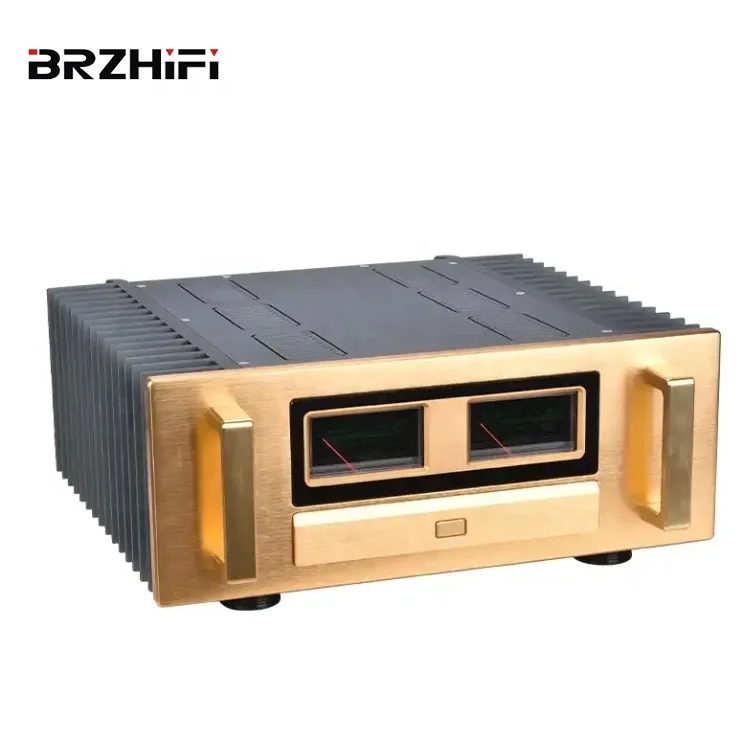
Proper thermal management becomes crucial when integrating a pure class a amplifier into home audio systems. These devices typically require adequate ventilation clearance on all sides, limiting placement options within entertainment centers or enclosed cabinets. The heat sinks necessary for thermal dissipation often result in larger, heavier chassis designs that demand sturdy shelving or dedicated stands.
Many pure class a amplifier models feature prominent heat sinks or cooling fins that may not complement contemporary interior design aesthetics. The requirement for unrestricted airflow around these thermal management features can complicate integration with existing furniture arrangements or custom installations.
Energy Consumption and Operating Costs
High Power Draw Characteristics
The continuous high current draw of a pure class a amplifier results in significantly elevated electricity consumption compared to other amplifier topologies. Even during periods of complete silence, these amplifiers maintain full power consumption, contributing to substantial monthly utility bills for regular users.
Environmental consciousness and rising energy costs make the power consumption characteristics of a pure class a amplifier increasingly problematic for many households. The amplifier's energy efficiency rarely exceeds 25 percent, meaning approximately 75 percent of consumed electricity converts directly to heat rather than useful audio output.
Long-term Financial Impact
Beyond initial purchase costs, the ongoing operational expenses of a pure class a amplifier can accumulate substantially over the device's lifespan. Regular users may experience noticeable increases in monthly electricity bills, particularly when operating high-powered models for extended listening sessions.
The combination of continuous power consumption and potential cooling costs creates ongoing financial obligations that extend well beyond the initial equipment investment. These operational expenses should factor into total ownership cost calculations when comparing amplifier options.
Physical Size and Weight Considerations
Substantial Chassis Requirements
The thermal management needs of a pure class a amplifier necessitate robust heat sink systems that significantly increase overall device dimensions and weight. These amplifiers often feature oversized chassis designs to accommodate extensive cooling apparatus, making them challenging to integrate into compact audio systems or space-limited environments.
The substantial weight of most pure class a amplifier models requires careful consideration of shelf loading capacities and structural support. Standard audio equipment racks may need reinforcement to safely support these heavy components, potentially requiring additional hardware investments or custom solutions.
Installation and Mobility Challenges
Moving or repositioning a pure class a amplifier often requires multiple people due to weight considerations and awkward dimensions. This lack of portability complicates system reconfiguration, seasonal storage, or relocation scenarios that many homeowners encounter periodically.
The physical demands of pure class a amplifier installation may necessitate professional assistance or specialized equipment handling procedures, adding complexity and potential costs to setup processes that other amplifier types handle more straightforwardly.
Noise and Mechanical Considerations
Cooling Fan Requirements
Many pure class a amplifier designs incorporate cooling fans to manage thermal loads, introducing mechanical noise that can interfere with quiet listening environments. Fan noise becomes particularly problematic during low-level listening sessions where the cooling system's acoustic signature may become audible and distracting.
Temperature-controlled fan systems in a pure class a amplifier may cycle on and off unpredictably, creating intermittent noise disturbances that can interrupt listening experiences. Even high-quality, low-noise fans generate some acoustic signature that purist audiophiles may find objectionable in dedicated listening rooms.
Transformer and Component Noise
The substantial power supply requirements of a pure class a amplifier often result in larger transformers and power supply components that may generate mechanical vibrations or electrical hum. These low-frequency emissions can transmit through equipment racks or shelving, creating structure-borne noise that affects the listening environment.
Proper isolation techniques become necessary to minimize transmission of mechanical vibrations from pure class a amplifier components, potentially requiring specialized isolation platforms or vibration control accessories that add to overall system complexity and cost.
Reliability and Maintenance Factors
Component Stress and Longevity
The continuous high-temperature operation characteristic of a pure class a amplifier places sustained stress on internal components, potentially affecting long-term reliability compared to amplifiers operating at lower thermal levels. Output devices, capacitors, and other heat-sensitive components may experience accelerated aging under these demanding conditions.
Regular maintenance becomes more critical for pure class a amplifier systems due to thermal cycling effects and the demanding operating environment. Dust accumulation on heat sinks requires more frequent cleaning to maintain proper thermal performance and prevent component degradation.
Service and Repair Considerations
The specialized nature of pure class a amplifier circuits may limit service options to qualified technicians familiar with these specific topologies. Replacement parts for high-power output devices and specialized components may carry premium costs and extended lead times compared to more common amplifier designs.
Thermal stress-related failures in a pure class a amplifier often require comprehensive diagnostics to identify affected components, potentially resulting in higher service costs and longer repair times than simpler amplifier configurations experience.
FAQ
Do pure class a amplifiers require special electrical circuits
Most residential pure class a amplifier models operate safely on standard household electrical circuits, though high-powered units may benefit from dedicated lines to prevent voltage drops during peak demand periods. The continuous high current draw can stress shared circuits, particularly when other high-consumption devices operate simultaneously on the same electrical branch.
Can pure class a amplifiers damage speakers more easily than other types
Pure class a amplifier designs typically provide excellent speaker protection through their inherent current limiting characteristics and smooth clipping behavior. However, their ability to deliver sustained high power output means users must exercise appropriate volume control to prevent speaker damage, particularly with lower-power rated loudspeakers that may not handle the amplifier's full output capability.
How much does operating a pure class a amplifier increase electricity bills
The actual cost increase depends on local electricity rates, amplifier power rating, and usage patterns, but typical pure class a amplifier models add between 20 to 100 dollars monthly to utility bills when operated regularly. Higher-powered models or continuous operation scenarios can result in significantly larger increases, making operational cost calculation important before purchase.
Are there any safety concerns with pure class a amplifier heat output
While properly designed pure class a amplifier models incorporate appropriate thermal protection and safety features, their high operating temperatures require careful installation and adequate ventilation. Surface temperatures can reach levels that may cause burns if touched during operation, and proper clearances must be maintained to prevent fire hazards or damage to nearby materials and equipment.