
 EN
EN
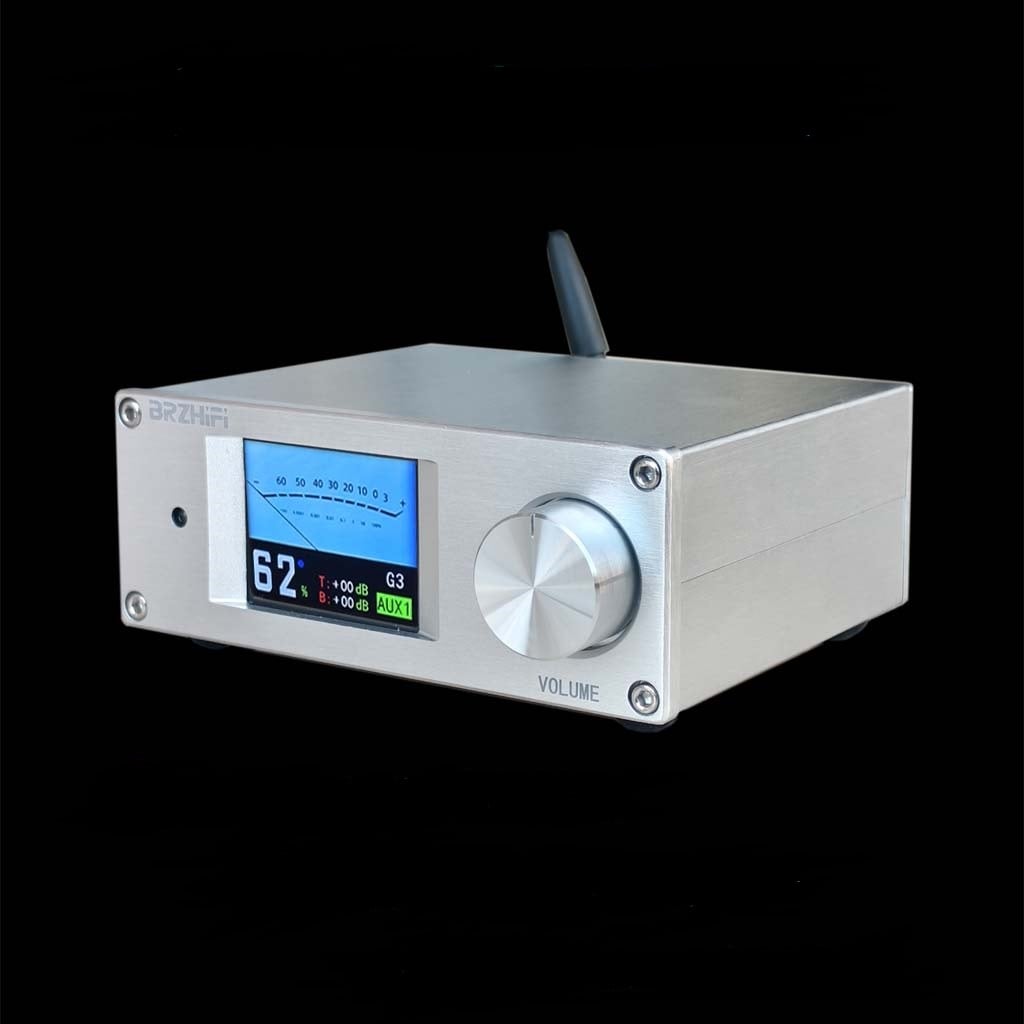
Audiophile music playback demands precision, accuracy, and uncompromising fidelity. For serious listeners who invest in high-resolution recordings and reference-grade audio systems, the choice of playback equipment becomes paramount. Premium players are not simply luxury items or marketing constructs—they represent essential components that unlock the full potential of meticulously engineered audio chains. These specialized players distinguish themselves through superior digital-to-analog conversion, reduced jitter, enhanced power supply design, and meticulous attention to signal path integrity. Understanding why premium players matter requires examining the technical foundations of digital audio reproduction and recognizing how playback quality directly influences the listening experience.
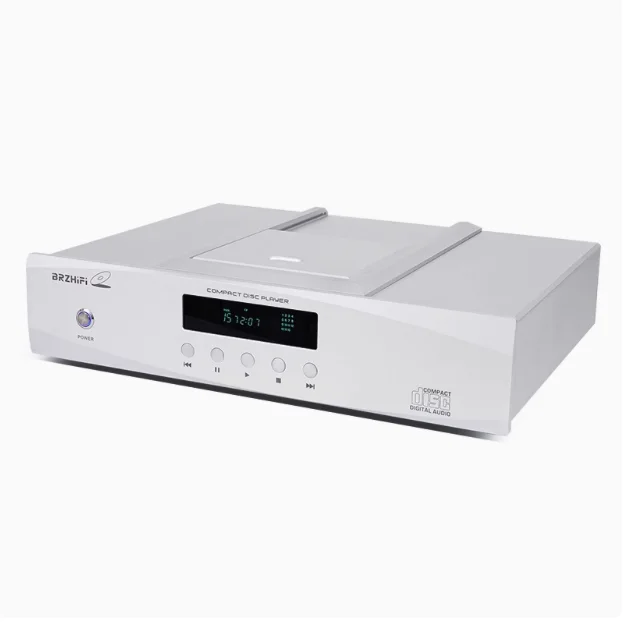
The audiophile community consistently emphasizes source quality as the foundation of any high-performance system. While amplifiers and speakers receive considerable attention, the players that deliver digital audio signals establish the baseline for everything downstream. Premium players employ advanced clock systems, isolated digital stages, and carefully selected components that minimize distortion and preserve musical information. For listeners pursuing authentic reproduction of recorded performances, these technical advantages translate directly into audible improvements. The question is not whether premium players offer benefits, but rather how these benefits manifest across different musical genres, recording qualities, and system configurations.
Technical Foundations That Differentiate Premium Players
Digital-to-Analog Conversion Architecture
The digital-to-analog converter represents the critical interface between binary data and analog audio signals. Premium players utilize high-grade DAC chips or discrete ladder designs that offer superior linearity, lower noise floors, and reduced harmonic distortion compared to standard implementations. Entry-level players often employ single-chip solutions that integrate multiple functions, while premium players dedicate separate stages to digital filtering, conversion, and analog output buffering. This architectural separation allows designers to optimize each stage independently and implement advanced power supply filtering that prevents digital noise from contaminating the analog domain. Audiophile-focused players frequently incorporate multiple DAC chips per channel or employ parallel converter arrays that enhance dynamic range and reduce quantization errors.
Clock Precision and Jitter Reduction
Timing accuracy directly affects digital audio quality. Premium players implement ultra-low-jitter master clocks, often using temperature-compensated crystal oscillators or even atomic clock references in flagship models. Jitter—timing variations in the digital signal—introduces distortion artifacts that smear transient details and degrade soundstage precision. High-quality players employ multiple techniques to minimize jitter: dedicated clock power supplies, shortest-path circuit layouts, galvanic isolation between digital and analog stages, and sophisticated phase-locked loop designs. These players maintain timing accuracy measured in picoseconds rather than nanoseconds, preserving the temporal relationships within complex musical passages. The audible result includes improved imaging, clearer instrumental separation, and more natural decay characteristics.
Power Supply Design and Regulation
Premium players dedicate substantial engineering resources to power delivery systems. These players typically feature oversized toroidal transformers, multiple regulated power rails, and extensive reservoir capacitance that ensures stable voltage delivery during dynamic musical peaks. Separate power supplies for digital and analog circuits prevent switching noise from the transport mechanism or digital processor from reaching sensitive analog output stages. Advanced players incorporate linear regulators with ultra-low output impedance, discrete voltage references, and even battery power options for critical analog sections. This meticulous power management directly influences noise performance, dynamic range, and the player's ability to resolve low-level musical details that disappear when power delivery proves inadequate.
Audible Performance Benefits for Critical Listening
Dynamic Range and Microdynamic Resolution
Premium players excel at reproducing the full dynamic scope of recorded music. These players maintain composure during orchestral crescendos while simultaneously revealing subtle breath sounds, finger movements, and acoustic venue reflections that standard players obscure. The superior signal-to-noise ratio of premium players—often exceeding 120 dB—creates a 'black background' that allows quiet musical elements to emerge with clarity. This dynamic capability proves especially valuable for classical music, jazz recordings with natural acoustic spaces, and any genre where microdynamic expression conveys musical meaning. Listeners report that premium players make familiar recordings sound more 'alive,' with instrumental textures and spatial cues that were previously masked by the noise floor or compression artifacts of lesser players.
Soundstage Accuracy and Spatial Presentation
The three-dimensional soundstage represents one of the most immediately apparent differences when comparing premium players to standard alternatives. High-quality players preserve the phase relationships and timing cues embedded in stereo recordings, allowing the brain to reconstruct accurate spatial images. Premium players present instruments and voices with precise localization, appropriate depth layering, and realistic stage width that extends beyond the physical speaker positions. This spatial accuracy results from reduced jitter, balanced channel outputs, and circuit designs that maintain phase coherence across the frequency spectrum. For audiophiles who value holographic imaging and the sensation of 'being there' with the musicians, premium players provide essential capabilities that transform listening from mere sound reproduction into immersive musical experiences.
Tonal Balance and Frequency Extension
Premium players maintain neutral tonal balance without the colorations that plague budget designs. These players reproduce bass frequencies with authority and control, extend high-frequency response without harshness or artificial brightness, and present midrange frequencies with natural warmth and presence. The extended frequency response of premium players—often flat from below 5 Hz to beyond 40 kHz—ensures complete reproduction of high-resolution audio formats and preserves harmonic structures that contribute to timbral accuracy. Circuit designs that minimize phase shift and group delay keep frequency ranges properly aligned in time, preventing the tonal imbalances that make some players sound 'digital' or fatiguing. Audiophiles recognize that accurate tonal balance allows them to hear recordings as engineers intended, without the compensatory adjustments or listener fatigue associated with colored playback.
System Synergy and Investment Protection
Matching Players to High-Resolution Systems
Audiophile systems require balanced component quality throughout the signal chain. Premium players prevent bottlenecks that would limit the performance potential of expensive amplifiers and reference speakers. When listeners invest thousands in downstream components, using standard players wastes that investment by feeding those components with compromised source signals. Premium players offer output stage designs that properly drive various amplifier input impedances, balanced XLR connections that reject interference in longer cable runs, and digital outputs that allow external DAC upgrades. These players integrate seamlessly into evolving systems, supporting both current needs and future upgrades. The technical specifications of premium players—output voltage, output impedance, channel matching, and load-driving capability—ensure compatibility with professional-grade amplification and prevent the impedance mismatches that degrade sound quality.
Format Versatility and Future Compatibility
Premium players typically support multiple disc formats, high-resolution file playback, and various digital input options that extend their useful lifespan. These players often include USB inputs for computer audio, coaxial and optical digital inputs for external sources, and even network streaming capabilities that keep the player relevant as audio distribution methods evolve. The robust build quality and serviceable designs of premium players mean they remain functional for decades rather than becoming obsolete within a few years. Manufacturers of premium players provide firmware updates, replacement parts, and long-term technical support that protect the buyer's investment. For audiophiles who view their playback systems as long-term investments rather than disposable electronics, premium players represent practical choices that deliver value across extended ownership periods.
Build Quality and Mechanical Isolation
The physical construction of premium players directly affects their sonic performance. These players feature heavy chassis that resist external vibrations, precision-machined transport mechanisms that minimize read errors, and damped enclosures that prevent resonances from coloring the sound. Premium CD players employ massive disc platters, multiple-point suspension systems, and even magnetic levitation mechanisms that isolate the optical pickup from environmental vibrations. The difference becomes audible when comparing playback of the same disc on standard versus premium players—the premium unit extracts cleaner data with fewer error-correction interventions. This mechanical precision matters because even modern digital error correction cannot perfectly reconstruct data when the transport introduces excessive read errors. Premium players read discs more accurately on first pass, reducing the computational burden on error-correction systems and preserving more of the original musical information.
FAQ
Do premium players actually sound better than standard CD players in blind tests?
Controlled blind tests consistently demonstrate that experienced listeners can identify premium players when using high-quality audio systems and familiar reference recordings. The differences become more apparent with complex musical material, transparent speaker systems, and properly treated listening environments. While casual listeners using modest equipment may not perceive substantial differences, audiophiles with trained hearing and resolving systems reliably distinguish premium players based on soundstage depth, dynamic ease, and timbral accuracy. The key factors are system resolution and listener experience—both must reach certain thresholds before the advantages of premium players become clearly audible.
Are premium digital players necessary when using external DACs?
Premium players remain valuable even when paired with external DACs because transport quality significantly affects the digital signal quality. The players that feed digital data to external converters must still minimize jitter, maintain clean power delivery to the transport mechanism, and provide stable clock signals. Premium players used as dedicated transports offer superior mechanical isolation, lower electrical noise, and more precise timing than standard players, allowing external DACs to perform at their highest potential. Many audiophiles use premium players specifically as transports, valuing their build quality and digital output performance even when bypassing the internal DAC.
How do premium players handle different recording qualities?
Premium players reveal both the strengths and weaknesses of source recordings with equal transparency. Well-engineered recordings sound exceptional on premium players, displaying all the spatial depth, dynamic range, and timbral accuracy the recording engineers achieved. Conversely, poorly recorded or heavily compressed material sounds exactly as it is—premium players do not artificially enhance or 'forgive' recording flaws. This honest reproduction helps audiophiles build music collections of high-quality recordings and appreciate the difference between reference-standard productions and commercial releases optimized for casual playback. Premium players serve critical listeners who want authentic reproduction rather than euphonic coloration that masks recording quality.