
 EN
EN
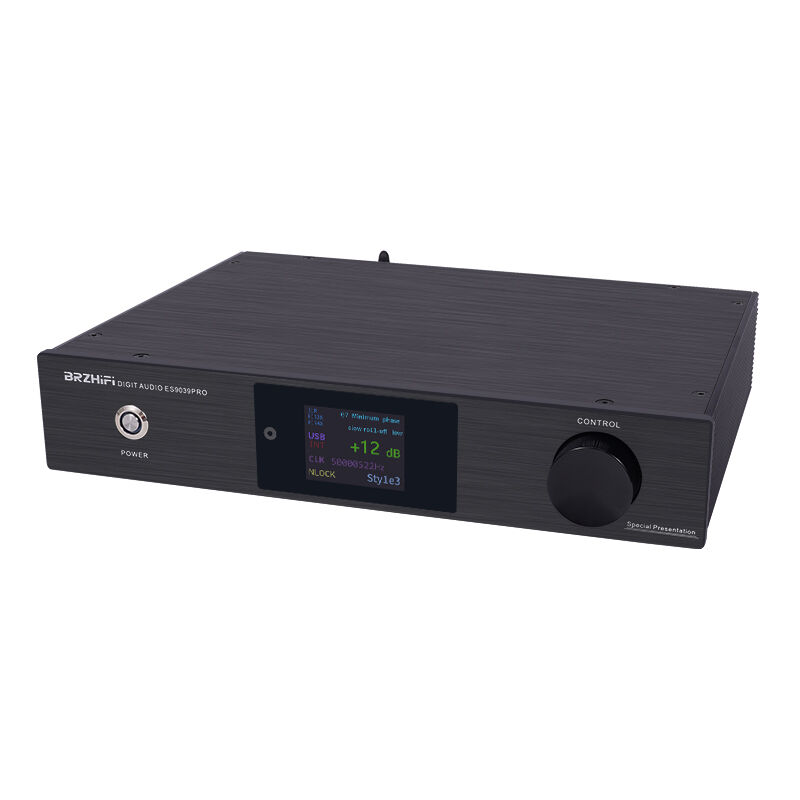
The modern audio landscape has witnessed a remarkable transformation with the emergence of high-fidelity digital amplification technology. Today's discerning audiophiles and music enthusiasts seek equipment that delivers pristine sound quality without compromising on efficiency or reliability. The quest for the best hifi digital amplifiers has become increasingly sophisticated as manufacturers continue to push the boundaries of what's possible in home audio reproduction. These advanced amplification systems represent the perfect marriage of cutting-edge digital processing and traditional audio engineering principles, offering unprecedented sound clarity and power efficiency that was unimaginable just a decade ago.
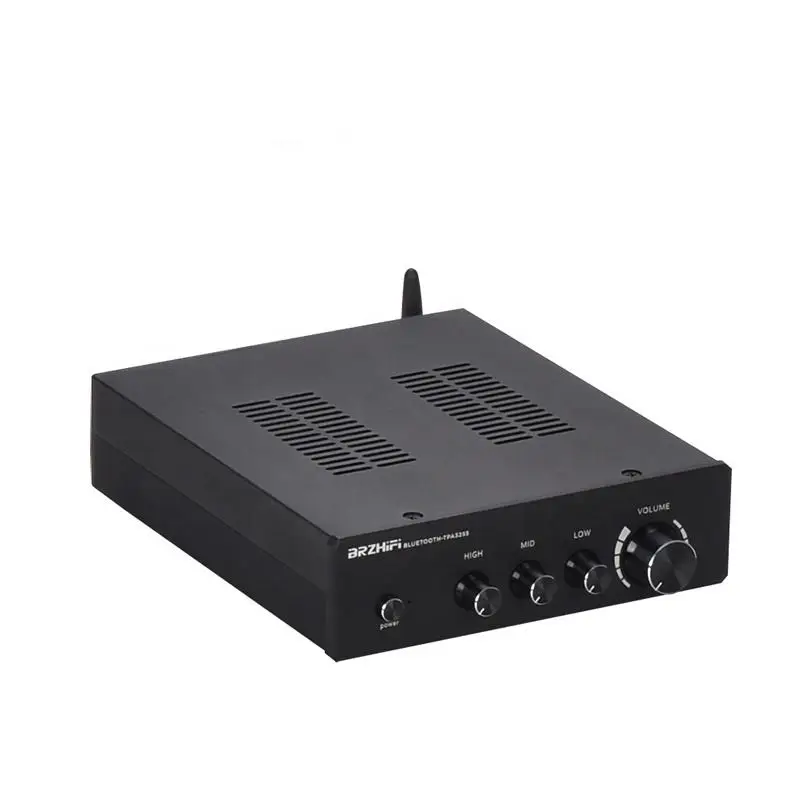
Understanding Digital Amplification Technology
Class D Amplifier Architecture
Class D amplifiers form the backbone of most modern digital amplification systems, utilizing pulse-width modulation to achieve exceptional efficiency ratings often exceeding 90 percent. This technology represents a fundamental shift from traditional analog amplification methods, employing high-frequency switching to recreate audio signals with remarkable accuracy. The best hifi digital amplifiers leverage sophisticated Class D topologies that minimize heat generation while maximizing power output, making them ideal for both compact desktop systems and powerful home theater setups. Advanced switching frequencies in premium models often exceed 400kHz, ensuring that any switching artifacts remain well above the audible range and don't interfere with music reproduction.
Modern Class D implementations incorporate feedback systems and error correction algorithms that continuously monitor and adjust the output signal to maintain fidelity across all frequency ranges. The switching power supply design inherent in these amplifiers allows for significantly reduced weight and size compared to traditional linear amplifiers, while simultaneously providing cleaner power delivery with lower noise floors. Engineers have refined these circuits to address early concerns about switching noise and electromagnetic interference, resulting in amplifiers that rival or exceed the performance of their analog counterparts in most measurable parameters.
Digital Signal Processing Integration
Contemporary digital amplifiers often incorporate advanced DSP capabilities that enable real-time audio enhancement and room correction features. These processors can analyze incoming audio signals and apply sophisticated algorithms to optimize frequency response, phase alignment, and dynamic range compression as needed. The integration of DSP technology in the best hifi digital amplifiers allows for unprecedented customization of the listening experience, with some models offering parametric equalization, crossover management, and even psychoacoustic processing that adapts to different musical genres or listening preferences.
Digital connectivity options have become standard in high-end models, with many amplifiers featuring multiple input formats including USB, optical, coaxial, and wireless protocols like Bluetooth aptX and Wi-Fi streaming. This versatility ensures compatibility with modern source devices while maintaining the signal in the digital domain throughout the entire amplification chain, theoretically preserving maximum fidelity by avoiding unnecessary analog-to-digital conversions. Advanced models may include network streaming capabilities, allowing direct access to high-resolution audio files and streaming services without requiring additional components.
Key Performance Characteristics
Power Output and Efficiency
The power specifications of digital amplifiers often appear impressive on paper, but understanding the real-world performance requires examining continuous power ratings rather than peak or maximum figures. The best hifi digital amplifiers typically provide substantial power output with minimal heat generation, thanks to their high efficiency ratings that translate to lower electricity consumption and reduced cooling requirements. Many premium models can deliver 100 watts or more per channel into 8-ohm loads while consuming less than 10 watts at idle, representing a significant improvement over traditional amplifier designs that might consume 50-100 watts just to remain powered on.
Dynamic range capabilities in modern digital amplifiers often exceed 110dB, providing the headroom necessary to handle sudden transients and peaks in complex musical passages without compression or distortion. This wide dynamic range is particularly beneficial for classical music, jazz, and other genres that feature significant variations in volume levels throughout individual tracks. The combination of high efficiency and substantial power reserves makes these amplifiers suitable for driving a wide variety of speaker loads, from sensitive bookshelf monitors to demanding floor-standing speakers with complex crossover networks.
Distortion and Noise Performance
Total harmonic distortion measurements in quality digital amplifiers typically register well below 0.01 percent across the entire audio bandwidth, with some flagship models achieving THD figures as low as 0.001 percent. This exceptionally low distortion is achieved through careful circuit design, high-quality components, and advanced feedback systems that continuously monitor and correct the output signal. Signal-to-noise ratios exceeding 100dB are common in premium models, ensuring that background noise remains inaudible even during quiet musical passages or when using highly sensitive speakers that might reveal noise issues with lesser amplifiers.
Intermodulation distortion, which can be more audible than harmonic distortion in certain circumstances, is also carefully controlled in the best hifi digital amplifiers through sophisticated circuit topologies and component selection. Many manufacturers now publish comprehensive distortion measurements across multiple test conditions, including different power levels and frequency ranges, providing potential buyers with detailed performance data. The consistent low-distortion performance across all operating conditions is one of the key advantages of well-designed digital amplifiers over their analog counterparts, which may exhibit varying distortion characteristics depending on the operating point and environmental conditions.
Design and Build Quality Considerations
Component Selection and Manufacturing
Premium digital amplifiers distinguish themselves through careful selection of critical components, including high-quality switching transistors, precision timing circuits, and low-noise power supply components. The switching devices used in Class D output stages must handle high currents and voltages while switching at frequencies well into the ultrasonic range, requiring components with exceptional specifications for reliability and performance. Many manufacturers of the best hifi digital amplifiers use custom-selected or matched components to ensure consistent performance across production runs and minimize unit-to-unit variations that could affect sound quality or reliability.
The power supply design plays a crucial role in overall amplifier performance, with switching power supplies offering advantages in efficiency and size while requiring careful attention to ripple suppression and electromagnetic interference. High-end models often incorporate multiple power supply rails with independent regulation for different circuit sections, ensuring that digital processing circuits don't interfere with sensitive analog stages. Quality capacitors, inductors, and filtering components throughout the power supply chain contribute significantly to the overall sound quality and long-term reliability of the amplifier system.
Thermal Management and Reliability
Effective heat dissipation remains important even in highly efficient digital amplifiers, as the switching components and power supply elements generate heat that must be managed to ensure reliable operation and component longevity. Many premium amplifiers feature sophisticated thermal management systems including heat sinks designed specifically for the switching frequencies involved, forced-air cooling systems, and thermal monitoring circuits that can adjust performance parameters to prevent overheating. The compact form factor possible with digital amplification doesn't eliminate the need for proper thermal design, particularly in high-power applications or installations with limited ventilation.
Long-term reliability considerations include component aging characteristics, environmental tolerance, and the robustness of protection circuits that safeguard against overvoltage, overcurrent, and thermal conditions. Quality digital amplifiers incorporate multiple layers of protection including soft-start circuits that prevent inrush current damage, DC offset detection that protects connected speakers, and fault monitoring systems that can automatically shut down the amplifier if potentially damaging conditions are detected. These protection systems must operate quickly enough to prevent damage while avoiding false triggers that could interrupt normal operation during demanding musical passages.
Connectivity and Integration Options
Digital Input Formats and Processing
Modern high-end digital amplifiers support multiple input formats to accommodate various source devices and audio formats, with many models accepting high-resolution PCM signals up to 32-bit/384kHz and DSD formats for compatibility with SACD and high-resolution downloads. The quality of the digital-to-analog conversion stage significantly impacts overall performance, with the best hifi digital amplifiers often incorporating premium DAC chips and careful analog output stage design to ensure that the conversion process doesn't introduce audible artifacts or limit dynamic range. Multiple digital inputs allow connection of various sources including CD players, streaming devices, computers, and mobile devices without requiring external switching or additional equipment.
Advanced models may include network connectivity for direct streaming from online services or local network storage, eliminating the need for separate streaming devices and potentially reducing the number of components in the audio chain. Wireless connectivity options including Bluetooth and Wi-Fi provide convenient connection methods for mobile devices and tablets, though the implementation quality can vary significantly between manufacturers. High-quality wireless implementations maintain audio fidelity through advanced codec support and careful antenna design to minimize interference and dropouts.
Control Systems and User Interface
User interface design has become increasingly important as digital amplifiers offer more features and customization options than their analog predecessors. Many models provide both physical controls and app-based interfaces that allow detailed adjustment of DSP parameters, input selection, and system configuration from smartphones or tablets. The quality and responsiveness of these control systems can significantly impact the user experience, with the best implementations offering intuitive operation and quick access to commonly used functions while providing advanced options for users who want to fine-tune their system's performance.
Remote control capabilities range from basic infrared remotes to sophisticated app-based systems that can control multiple components and create custom presets for different listening scenarios. Some advanced amplifiers can learn and respond to commands from universal remotes or home automation systems, enabling integration into larger smart home setups. The availability of firmware updates through network connections allows manufacturers to add features and improve performance over the life of the product, extending its useful life and maintaining compatibility with evolving audio standards and formats.
Market Categories and Price Segments
Entry-Level Digital Amplification
The entry-level segment of the digital amplifier market offers remarkable value for consumers seeking high-quality audio reproduction without the premium price associated with flagship models. These amplifiers typically focus on core functionality and reliable performance while omitting some of the advanced features found in higher-end models. Despite their lower cost, many entry-level models still deliver impressive specifications including low distortion, high efficiency, and sufficient power for most home audio applications. The best hifi digital amplifiers in this category often provide an excellent introduction to digital amplification technology while leaving room for future upgrades as listening preferences evolve.
Manufacturers in this segment often achieve cost savings through simplified control systems, fewer input options, and standardized component selection while maintaining the core benefits of digital amplification technology. These models typically offer excellent price-performance ratios and can drive a wide variety of speakers effectively, making them suitable for both beginners and experienced listeners who prioritize performance over extensive feature sets. The reliability and efficiency advantages of digital amplification are particularly valuable in this price segment, where traditional amplifiers might compromise on build quality or performance to achieve similar price points.
Premium and Flagship Models
High-end digital amplifiers represent the current state-of-the-art in home audio amplification, incorporating cutting-edge technologies and premium components to achieve reference-level performance. These models often feature custom-designed switching circuits, advanced DSP processing, and multiple high-resolution input options that support the latest audio formats and streaming protocols. The attention to detail in premium amplifiers extends to every aspect of the design, from the selection of individual components to the mechanical design of the chassis and thermal management systems that ensure optimal performance under all operating conditions.
Flagship models may incorporate proprietary technologies and design innovations that differentiate them from competitors, such as unique feedback systems, custom DSP algorithms, or advanced power supply designs that push the boundaries of what's possible with current technology. The best hifi digital amplifiers in this category often serve as technology showcases for manufacturers, demonstrating the potential of digital amplification when cost constraints are minimized and engineering resources are focused on achieving maximum performance rather than meeting specific price targets.
Application Scenarios and System Integration
Home Theater and Multi-Channel Applications
Digital amplifiers have found widespread adoption in home theater systems where their efficiency advantages and compact form factors provide significant benefits over traditional multi-channel amplifiers. The ability to provide substantial power to multiple channels simultaneously without excessive heat generation or power consumption makes digital amplification particularly well-suited to demanding multi-channel applications. Many models designed for home theater use incorporate advanced bass management, room correction, and surround sound processing capabilities that eliminate the need for separate processors or receivers in many installations.
The consistent performance characteristics of digital amplifiers across all channels ensure uniform sound quality throughout the listening area, avoiding the channel-to-channel variations that can occur with analog designs operating at different power levels or thermal conditions. Advanced models may include individual DSP processing for each channel, allowing precise calibration and optimization for specific speaker locations and acoustical environments. This level of customization enables home theater enthusiasts to achieve professional-level audio performance in domestic environments without the complexity and cost associated with separate processing and amplification components.
Stereo Music Systems and Critical Listening
Two-channel stereo applications place the highest demands on amplifier performance in terms of resolution, imaging, and musical accuracy, requiring the best hifi digital amplifiers to demonstrate their capabilities in direct comparison with high-end analog alternatives. The low noise floors and exceptional linearity achievable with quality digital designs provide the foundation for detailed and accurate music reproduction that can reveal subtle nuances in recordings that might be masked by higher distortion levels or noise in lesser amplifiers. Critical listening applications benefit from the consistent performance characteristics of digital amplifiers, which maintain their specifications across different operating conditions and don't exhibit the thermal drift or aging effects that can affect analog circuits over time.
The wide bandwidth capabilities of modern digital amplifiers ensure accurate reproduction of both the fundamental frequencies and harmonic content that contribute to the realistic reproduction of acoustic instruments and vocals. Many audiophiles have discovered that well-implemented digital amplification can provide a more accurate and faithful reproduction of the original recording than traditional amplifiers, particularly when driving challenging speaker loads that might cause performance degradation in analog designs. The combination of high power capability, low distortion, and consistent performance makes digital amplification an increasingly popular choice for serious music lovers who demand the highest levels of fidelity from their audio systems.
FAQ
How do digital amplifiers compare to traditional analog amplifiers in terms of sound quality
Modern digital amplifiers can match or exceed the sound quality of traditional analog amplifiers in most measurable parameters including distortion, noise, and frequency response. The best hifi digital amplifiers achieve THD levels below 0.01 percent and signal-to-noise ratios exceeding 100dB, specifications that rival or surpass high-end analog designs. While some listeners prefer the sonic characteristics of tube or Class A amplifiers, digital amplifiers provide more accurate reproduction of the original recording with consistent performance regardless of operating conditions or component aging. The efficiency advantages of digital designs also allow for more power in smaller, cooler-running packages without compromising audio quality.
What should I consider when choosing a digital amplifier for my audio system
Key considerations include power requirements based on your speakers' sensitivity and impedance, the types of input sources you'll be connecting, and any special features like room correction or wireless connectivity that might be beneficial for your installation. Consider the amplifier's continuous power rating rather than peak specifications, and ensure it can comfortably drive your speakers to desired listening levels with adequate headroom for dynamic peaks. The quality of the digital-to-analog conversion stage is crucial if you'll be using digital sources, while analog input quality matters for turntables or other analog sources. Build quality, warranty support, and the manufacturer's reputation for reliability should also factor into your decision, particularly for higher-end models where service availability may be important for long-term ownership.
Do digital amplifiers require special setup or maintenance procedures
Digital amplifiers generally require less maintenance than traditional analog designs due to their high efficiency and lower heat generation, but proper ventilation and dust management remain important for optimal performance and longevity. Unlike tube amplifiers, there are no tubes to replace or bias adjustments to maintain, and the solid-state design provides consistent performance without periodic recalibration. However, digital amplifiers with network connectivity may require occasional firmware updates to maintain compatibility with evolving audio formats and streaming protocols. Proper cable management and isolation from electromagnetic interference sources can help maintain optimal performance, particularly with sensitive input stages that might be affected by nearby digital devices or switching power supplies.
Can digital amplifiers effectively drive all types of speakers including difficult loads
High-quality digital amplifiers can successfully drive most speaker types including those with challenging impedance characteristics, thanks to their high current capability and consistent performance across varying load conditions. The best hifi digital amplifiers maintain stable operation into reactive loads and can provide substantial current delivery for speakers with low impedance dips that might challenge lesser amplifiers. However, extremely low impedance loads or speakers with unusual phase characteristics may still benefit from amplifiers specifically designed for such applications. The key is matching the amplifier's specifications to your specific speakers' requirements, considering not just nominal impedance but also the minimum impedance and phase characteristics across the frequency range to ensure optimal performance and reliability.
Table of Contents
- Understanding Digital Amplification Technology
- Key Performance Characteristics
- Design and Build Quality Considerations
- Connectivity and Integration Options
- Market Categories and Price Segments
- Application Scenarios and System Integration
-
FAQ
- How do digital amplifiers compare to traditional analog amplifiers in terms of sound quality
- What should I consider when choosing a digital amplifier for my audio system
- Do digital amplifiers require special setup or maintenance procedures
- Can digital amplifiers effectively drive all types of speakers including difficult loads