
 EN
EN
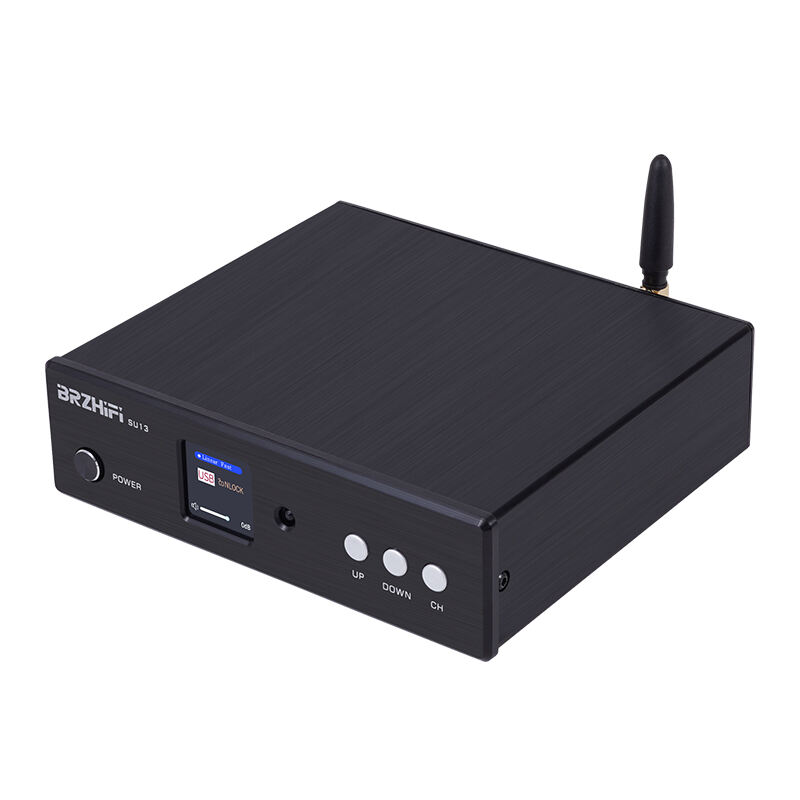
Audio enthusiasts seeking exceptional sound quality understand that the foundation of any premium listening experience lies in selecting the best digital players available in today's market. These sophisticated devices serve as the cornerstone of high-end audio systems, transforming digital audio files into pristine analog signals that reveal every nuance of your favorite recordings. Modern audiophile-grade players incorporate advanced digital-to-analog conversion technology, precision-engineered components, and meticulous attention to signal path design that separates them from consumer-grade alternatives.
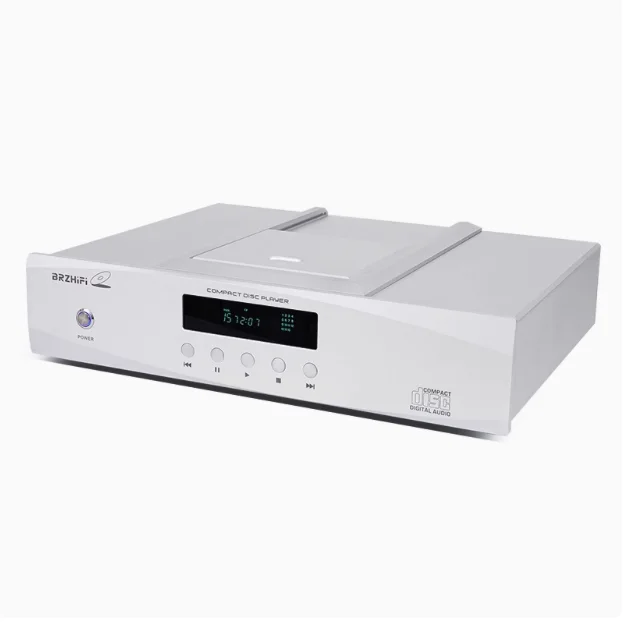
The pursuit of audio excellence has driven manufacturers to develop increasingly sophisticated digital playback solutions that cater to discerning listeners who demand uncompromising performance. Professional audio engineers and serious music lovers recognize that the best digital players must excel in multiple technical areas including jitter reduction, power supply stability, output stage design, and mechanical construction quality. These factors work synergistically to ensure that the original musical intent reaches your ears with maximum fidelity and emotional impact.
Understanding the technical specifications and design philosophies behind premium digital players empowers consumers to make informed decisions when building their reference-quality audio systems. The investment in superior digital playback technology pays dividends in long-term listening satisfaction, revealing musical details and spatial information that lesser players simply cannot reproduce accurately.
Digital-to-Analog Conversion Excellence
High-Resolution DAC Architecture
The digital-to-analog converter represents the heart of any digital player, and the best digital players employ cutting-edge DAC chipsets that support high-resolution audio formats up to 32-bit/384kHz and DSD256 playback capabilities. Premium manufacturers often select flagship DAC chips from renowned companies like ESS Technology, AKM, or Burr-Brown, implementing them in carefully optimized circuits that maximize their inherent performance potential. These advanced converters utilize sophisticated oversampling algorithms and noise-shaping techniques to minimize quantization errors and deliver exceptionally smooth, natural-sounding audio reproduction.
Modern high-end digital players frequently incorporate multiple DAC chips in parallel or differential configurations, effectively doubling the conversion precision while reducing distortion and noise floor levels. This approach requires precise matching of components and careful PCB layout to maintain phase coherence and channel balance across the entire frequency spectrum. The implementation quality of the DAC section often distinguishes truly exceptional players from merely competent alternatives.
Precision Clock Systems
Jitter reduction stands as one of the most critical factors determining digital playback quality, as timing errors in the digital signal chain can introduce audible artifacts that compromise musical naturalness. The best digital players incorporate ultra-precise master clock generators, often featuring temperature-compensated crystal oscillators or even atomic clock references in flagship models. These sophisticated timing systems ensure that digital data streams maintain perfect temporal accuracy throughout the conversion process.
Advanced players may employ multiple independent clocks for different sample rates, allowing optimal timing precision for each supported format. Some manufacturers implement proprietary jitter elimination circuits that re-clock incoming digital signals, effectively removing timing errors introduced by source components or digital interconnects. This attention to temporal accuracy results in improved soundstage depth, enhanced instrumental separation, and more coherent musical presentation.
Power Supply and Isolation Technologies
Linear Power Supply Design
Exceptional digital players rely on meticulously engineered power supply systems that provide ultra-clean, stable voltage rails to all critical circuit sections. Linear power supplies, featuring large toroidal transformers and extensive filter capacitor banks, represent the gold standard for audiophile applications due to their inherently low noise characteristics and excellent regulation under varying load conditions. The best digital players often incorporate separate power supplies for analog and digital sections, preventing switching noise from contaminating sensitive analog circuits.
Premium manufacturers invest heavily in power supply topology, utilizing techniques such as choke filtering, cascaded regulation stages, and dedicated supplies for different circuit blocks. Some flagship models even feature separate power supply chassis, connected via umbilical cables to eliminate any possibility of magnetic field interference from power transformers affecting sensitive analog components. This obsessive attention to power delivery translates directly into lower noise floors, improved dynamic range, and enhanced musical clarity.
Vibration Control and Mechanical Design
Mechanical vibration represents a significant enemy of precision digital playback, as even minute oscillations can introduce timing jitter and modulate sensitive analog circuits. The best digital players incorporate sophisticated isolation systems including heavy, non-resonant chassis construction, internal damping materials, and isolation feet designed to decouple the player from external vibrations. CNC-machined aluminum chassis with extensive internal bracing provide optimal mechanical stability while dissipating heat effectively.
Advanced models may feature suspended sub-chassis designs that isolate critical components from external disturbances, similar to high-end turntable design principles. Some manufacturers implement active vibration cancellation systems or magnetic levitation platforms for the most sensitive circuit boards. The transport mechanism itself requires precision engineering with high-quality bearings, balanced components, and servo systems optimized for minimal mechanical noise and maximum tracking accuracy.
Output Stage Configuration and Connectivity
Balanced and Unbalanced Outputs
Professional-grade digital players provide both balanced XLR and unbalanced RCA output connections to accommodate various system configurations and cable preferences. Balanced outputs offer superior noise rejection over long cable runs and provide optimal compatibility with professional audio equipment, while high-quality unbalanced outputs serve audiophile systems with single-ended topologies. The best digital players implement these output stages with discrete, Class-A circuitry featuring premium operational amplifiers or fully discrete transistor designs.
Output impedance matching plays a crucial role in system integration, and premium players offer selectable output levels or impedance settings to optimize compatibility with various preamplifiers and integrated amplifiers. Some models provide dedicated headphone outputs with independent volume controls and specialized amplifier circuits designed for high-impedance headphones. The quality of output coupling capacitors, when used, significantly affects sonic character, leading many manufacturers to specify premium film capacitors or implement capacitor-less DC-coupled designs.
Digital Output Capabilities
Modern digital players serve dual roles as both standalone DACs and digital transports, requiring comprehensive digital output options including coaxial S/PDIF, optical TOSLINK, AES/EBU, and USB connections. The best digital players maintain bit-perfect digital output quality through careful attention to signal integrity, proper impedance matching, and isolation techniques that prevent ground loops and digital noise from affecting connected equipment. USB outputs increasingly support asynchronous transfer modes that allow downstream DACs to control timing, eliminating potential jitter issues.
High-end models often feature multiple digital output formats simultaneously active, enabling connection to multiple external DACs or digital processors without switching. Some players incorporate format conversion capabilities, allowing PCM-to-DSD conversion or sample rate adjustment to match downstream equipment requirements. The implementation of galvanic isolation on digital outputs prevents ground loops while maintaining signal integrity across different system configurations.
Format Support and File Handling
Comprehensive Format Compatibility
Contemporary digital players must support an extensive range of audio formats to accommodate diverse music collections and source materials. The best digital players handle standard formats like CD-Audio, WAV, FLAC, and ALAC while also supporting high-resolution formats including DSD64, DSD128, DSD256, and PCM files up to 32-bit/768kHz resolution. This comprehensive format support ensures compatibility with music purchased from various online stores and ripped from physical media at different quality levels.
Advanced players incorporate sophisticated digital signal processing capabilities that can handle format conversion, sample rate adjustment, and digital filtering options. Some models offer user-selectable digital filters with different characteristics optimized for various musical genres or personal preferences. The ability to play native DSD files without PCM conversion represents a significant advantage for players targeting serious audiophiles who collect SACD rips and high-resolution downloads.
Storage and Network Integration
Modern digital players increasingly integrate network streaming capabilities alongside local storage options, providing access to both personal music libraries and streaming services. Internal solid-state storage eliminates mechanical noise while offering fast access to frequently played albums, while network connectivity enables access to NAS drives and streaming platforms like Tidal, Qobuz, and Spotify Connect. The best digital players implement high-quality network isolation and dedicated streaming processors to maintain audio quality when accessing remote sources.
USB input capability allows direct connection to external storage devices and computers, with advanced players supporting asynchronous USB protocols that provide optimal timing control. Some models feature multiple USB inputs with different characteristics optimized for various source types. The implementation of network streaming often includes support for protocols like UPnP, DLNA, and Roon Ready certification, ensuring compatibility with popular music management software and multi-room audio systems.
User Interface and Control Systems
Intuitive Operation and Display
Premium digital players balance sophisticated technical capabilities with user-friendly operation through well-designed control interfaces and informative displays. High-resolution LCD or OLED screens provide detailed information about currently playing tracks, format specifications, and system status while maintaining excellent readability in various lighting conditions. The best digital players feature responsive control systems with minimal menu complexity, allowing quick access to essential functions without sacrificing advanced features.
Remote control quality varies significantly among different manufacturers, with premium models featuring substantial, well-balanced remote units with logical button layouts and reliable infrared communication. Some players support smartphone apps that provide enhanced control capabilities including playlist management, format selection, and system configuration. The integration of voice control or touch-screen interfaces in flagship models demonstrates the evolution toward more intuitive user interaction paradigms.
Customization and Setup Options
Serious audiophiles appreciate extensive customization options that allow fine-tuning of player behavior to match system characteristics and personal preferences. The best digital players offer adjustable digital filter settings, output level controls, display brightness adjustment, and power management options that optimize performance for specific installation requirements. Advanced models may include parametric equalization, room correction capabilities, or digital crossover functions for active speaker systems.
Setup flexibility extends to physical installation considerations, with some players designed for rack mounting while others prioritize desktop aesthetics. Modular construction allows component upgrades in flagship models, ensuring long-term viability as technology evolves. The availability of firmware updates maintains compatibility with new formats and streaming services while potentially improving sonic performance through algorithm refinements.
FAQ
What makes premium digital players worth their higher cost compared to standard CD players?
Premium digital players justify their investment through superior component quality, advanced DAC technology, precision power supplies, and comprehensive format support that standard CD players cannot match. These players typically feature linear power supplies, high-resolution DAC chips, sophisticated jitter reduction circuits, and robust mechanical construction that translates into noticeably better sound quality. Additionally, premium players offer extensive connectivity options, network streaming capabilities, and support for high-resolution audio formats that extend their utility far beyond basic CD playback.
How important is the DAC chip selection in determining overall sound quality?
While DAC chip selection influences sound quality, the implementation surrounding the converter plays an equally critical role in determining final performance. The best digital players combine flagship DAC chips with optimized analog output stages, precision power supplies, and carefully designed circuit layouts that maximize the converter's potential. Factors such as clock quality, power supply isolation, and component matching often contribute more to audible performance differences than the specific DAC chip model alone.
Can digital players significantly improve the sound of streaming music services?
High-quality digital players can substantially enhance streaming music reproduction through superior DAC technology, advanced jitter reduction, and optimized analog output stages that reveal more detail and musical nuance than built-in DACs found in computers or mobile devices. However, the improvement depends on the streaming service quality settings and the resolution of source material. Premium players with network streaming capabilities often provide better isolation between network processing and audio conversion compared to computer-based playback systems.
What connectivity options should I prioritize when selecting a digital player for my system?
The ideal connectivity configuration depends on your current equipment and future expansion plans, but balanced XLR outputs provide the best noise rejection for high-end systems, while multiple digital outputs offer flexibility for external DAC connections. USB inputs supporting asynchronous protocols ensure optimal computer audio integration, and network connectivity enables access to streaming services and network storage. Consider players offering both balanced and unbalanced analog outputs along with comprehensive digital connectivity to maximize system integration possibilities.
Table of Contents
- Digital-to-Analog Conversion Excellence
- Power Supply and Isolation Technologies
- Output Stage Configuration and Connectivity
- Format Support and File Handling
- User Interface and Control Systems
-
FAQ
- What makes premium digital players worth their higher cost compared to standard CD players?
- How important is the DAC chip selection in determining overall sound quality?
- Can digital players significantly improve the sound of streaming music services?
- What connectivity options should I prioritize when selecting a digital player for my system?