
 EN
EN
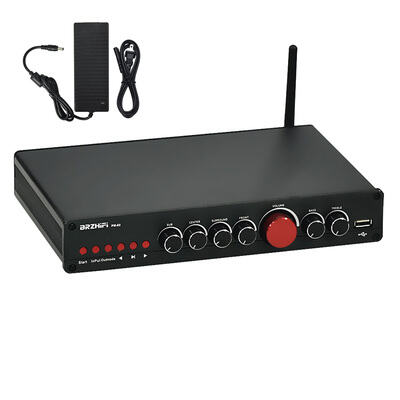
When building a high-quality audio system, understanding the relationship between passive speakers and amplifier matching becomes crucial for achieving optimal sound reproduction. The best passive bookshelf speakers require careful consideration of amplifier characteristics, impedance matching, and power delivery to unlock their full potential. Unlike active speakers that contain built-in amplification, passive speakers rely entirely on external amplifiers to drive their drivers and create the sound waves we hear. This fundamental dependency creates a complex interplay between speaker specifications and amplifier capabilities that directly impacts your listening experience.
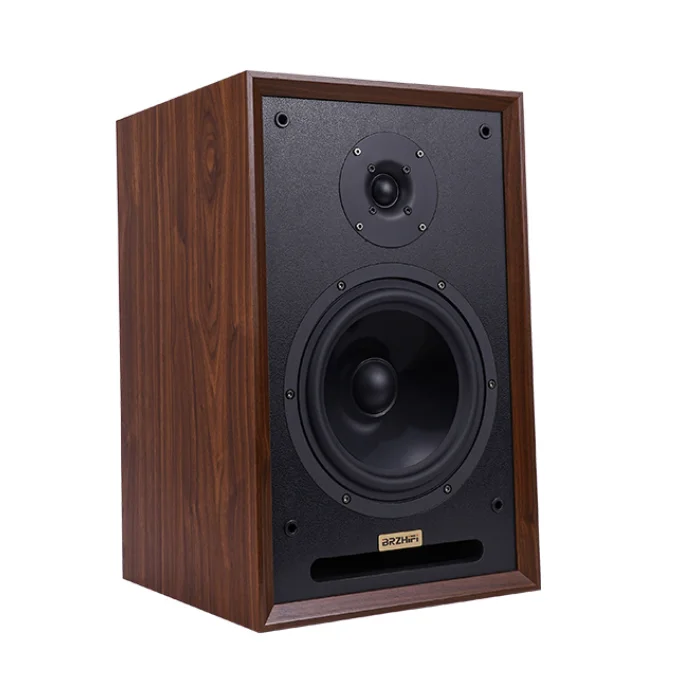
Understanding Passive Speaker Impedance and Amplifier Compatibility
Speaker Impedance Fundamentals
Speaker impedance represents the electrical resistance that passive speakers present to amplifiers across different frequencies. Most best passive bookshelf speakers feature nominal impedances of 4, 6, or 8 ohms, though this value fluctuates significantly throughout the frequency spectrum. Lower impedance speakers draw more current from amplifiers, requiring more robust power supplies and output stages. Higher impedance speakers are generally easier to drive but may require more voltage to achieve the same sound pressure levels. Understanding these impedance characteristics helps determine which amplifiers will provide optimal performance with specific speaker models.
The impedance curve of passive speakers varies dramatically with frequency, often dipping to half the nominal value at certain points. This variability means amplifiers must maintain stable operation across a wide range of impedance loads. Quality amplifiers designed for the best passive bookshelf speakers incorporate current limiting, thermal protection, and stable gain structures to handle these impedance swings gracefully. Matching amplifier output impedance to speaker impedance following the damping factor principle ensures tight bass response and accurate transient reproduction.
Power Matching Considerations
Power matching between amplifiers and passive speakers involves balancing multiple factors including continuous power handling, peak power capabilities, and dynamic headroom requirements. The best passive bookshelf speakers typically specify both RMS and peak power handling ratings, providing guidance for amplifier selection. Conservative matching suggests using amplifiers with 1.5 to 2 times the speaker's RMS rating to ensure adequate headroom for musical peaks and transients. This approach prevents amplifier clipping, which can damage speaker drivers through distorted signals.
However, underpowering speakers can be equally problematic, as insufficient amplifier power leads to compression, reduced dynamics, and potential driver damage from clipped signals. Modern best passive bookshelf speakers often benefit from higher-powered amplifiers that remain in their linear operating region during normal listening levels. Class AB and Class D amplifiers offer different advantages for passive speaker matching, with Class AB providing traditional sound characteristics and Class D offering efficiency and compact form factors suitable for bookshelf applications.
Frequency Response Integration Between Speakers and Amplifiers
Amplifier Bandwidth and Speaker Requirements
The frequency response characteristics of amplifiers significantly influence how the best passive bookshelf speakers reproduce audio content across the audible spectrum. Wide-bandwidth amplifiers with flat response from 20Hz to 20kHz ensure that passive speakers receive clean, undistorted signals throughout their operating range. Amplifier bandwidth limitations can create phase shifts, frequency roll-offs, and transient smearing that compromises speaker performance regardless of driver quality. High-quality amplifiers maintain consistent gain and low distortion across extended frequency ranges, allowing passive speakers to accurately reproduce source material.
Phase coherence between amplifier output and speaker input becomes particularly important for imaging and soundstage accuracy. The best passive bookshelf speakers rely on amplifiers with minimal phase distortion to maintain proper driver timing and coherent wavefront propagation. Amplifiers with global negative feedback can introduce phase delays that interact poorly with speaker crossover networks, while zero-feedback designs may offer superior transient response but potentially higher distortion levels. Understanding these trade-offs helps in selecting amplifier topologies that complement specific passive speaker designs.
Harmonic Distortion and Speaker Sensitivity
Speaker sensitivity ratings directly impact amplifier power requirements and influence distortion characteristics in passive audio systems. The best passive bookshelf speakers with high sensitivity ratings above 90dB require less amplifier power to achieve given sound pressure levels, making them compatible with lower-powered tube amplifiers or single-ended solid-state designs. Low-sensitivity speakers below 85dB demand more amplifier power and current delivery capability, typically requiring robust solid-state amplifiers with substantial power supplies.
Amplifier distortion characteristics interact with speaker sensitivity and impedance to create the overall system sound signature. Low-distortion amplifiers preserve the natural voicing of the best passive bookshelf speakers, while amplifiers with higher harmonic content can add warmth or coloration that some listeners prefer. Second-harmonic distortion from tube amplifiers often complements passive speakers, creating pleasing sonic characteristics, while odd-order distortion from overdriven solid-state amplifiers typically produces harsh, fatiguing sound reproduction.
Crossover Networks and Amplifier Interface Considerations
Passive Crossover Impedance Effects
Passive crossover networks in bookshelf speakers present complex impedance loads that challenge amplifier stability and performance. These networks use inductors, capacitors, and resistors to divide frequency ranges between woofers and tweeters, creating impedance variations that can exceed 10:1 ratios across the audio spectrum. The best passive bookshelf speakers employ well-designed crossovers that maintain reasonable impedance curves, but amplifiers must still cope with reactive loads that can cause oscillation or instability in poorly designed circuits.
Crossover component quality significantly influences how amplifiers interface with passive speakers, as high-quality inductors and capacitors minimize losses and maintain signal integrity. Cheap crossover components introduce resistance, distortion, and phase shifts that degrade amplifier-speaker interaction regardless of individual component quality. The best passive bookshelf speakers incorporate premium crossover components that preserve amplifier signal quality while providing proper driver protection and frequency division.
Driver Protection and Amplifier Limiting
Amplifier limiting and protection circuits play crucial roles in preventing damage to passive speaker drivers during high-power operation or fault conditions. Modern amplifiers designed for use with the best passive bookshelf speakers incorporate sophisticated protection schemes including current limiting, thermal shutdown, and DC offset protection. These features prevent common failure modes that can destroy speaker voice coils, such as amplifier oscillation, power supply failures, or excessive DC voltage at outputs.
Soft limiting circuits in quality amplifiers gradually compress signal peaks rather than hard clipping, protecting both amplifier output stages and speaker drivers from damage. This approach maintains musical dynamics while preventing the harsh distortion that results from amplifier clipping. Some amplifiers include speaker protection relays that disconnect outputs during power-on sequences or fault conditions, providing additional safety for expensive passive speakers. Understanding these protection mechanisms helps in selecting amplifiers that will reliably drive the best passive bookshelf speakers without risk of damage.
Listening Room Acoustics and System Integration
Room Interaction Effects
Room acoustics profoundly influence how amplifier and passive speaker combinations perform in real-world listening environments. The best passive bookshelf speakers interact with room boundaries, furniture, and acoustic treatments in ways that can emphasize or suppress certain frequencies. Amplifiers with adjustable gain structures or tone controls can help compensate for room-induced frequency response irregularities, while graphic equalizers provide more precise correction capabilities for challenging acoustic environments.
Bass response presents particular challenges for passive bookshelf speakers in small rooms, where boundary effects and standing waves create uneven low-frequency reproduction. Amplifiers with high damping factors provide better bass control and definition, helping to minimize room-induced bass problems. Some amplifiers include room correction DSP that automatically adjusts frequency response based on microphone measurements, optimizing performance for specific listening spaces and passive speaker combinations.
Positioning and Setup Optimization
Proper positioning of the best passive bookshelf speakers significantly impacts amplifier requirements and overall system performance. Speakers placed close to walls or corners exhibit increased bass output due to boundary reinforcement, potentially requiring amplifiers with less low-frequency emphasis or power. Free-standing speakers away from boundaries typically need more bass output and may benefit from amplifiers with extended low-frequency response and higher power ratings to compensate for reduced boundary loading.
Toe-in angles, listening distances, and speaker heights all influence how passive speakers interact with amplifiers and room acoustics. Optimal positioning often involves compromises between imaging accuracy, frequency response, and practical placement constraints. Amplifiers with adjustable output levels or balance controls can help fine-tune system performance once speaker positions are optimized. The synergy between amplifier characteristics, speaker placement, and room acoustics ultimately determines the success of any passive speaker system configuration.
Advanced Matching Techniques and Considerations
Bi-amping and Multi-amplifier Configurations
Bi-amping represents an advanced technique for optimizing amplifier matching with the best passive bookshelf speakers that feature separate woofer and tweeter input terminals. This approach uses separate amplifiers for high and low frequencies, allowing independent optimization of power delivery and amplifier characteristics for each driver. Low-frequency amplifiers can prioritize current delivery and damping factor, while high-frequency amplifiers can emphasize low distortion and extended bandwidth. Bi-amping eliminates intermodulation distortion between frequency ranges and provides greater dynamic headroom for each driver section.
Active crossovers used in bi-amped systems replace passive crossover networks, reducing amplifier loading complexity and eliminating crossover losses. Digital active crossovers provide precise frequency division, phase alignment, and individual driver protection that surpasses what passive networks can achieve. However, bi-amping requires careful gain matching between amplifiers and proper crossover point selection to maintain coherent sound reproduction. The best passive bookshelf speakers designed for bi-amping include binding post configurations that facilitate easy conversion from single-amplifier to bi-amplified operation.
Tube Versus Solid-State Amplifier Characteristics
The choice between tube and solid-state amplifiers significantly influences passive speaker system performance and overall sound character. Tube amplifiers typically provide lower damping factors and higher output impedances that can interact beneficially with certain passive speaker designs, creating warmer, more musical sound reproduction. The best passive bookshelf speakers with moderate sensitivity and benign impedance curves often pair well with tube amplifiers, benefiting from the natural compression and harmonic structure that tubes provide.
Solid-state amplifiers offer higher power output, better bass control, and more neutral sound reproduction that allows passive speaker characteristics to dominate system voicing. Modern solid-state designs have largely eliminated the harsh, clinical sound signatures that characterized early transistor amplifiers, while maintaining advantages in power delivery and frequency response accuracy. Class A solid-state amplifiers combine some tube-like sonic characteristics with solid-state reliability and power capability, making them excellent matches for high-quality passive bookshelf speakers that benefit from clean, powerful amplification.
FAQ
What impedance should I look for in bookshelf speakers to match my amplifier?
Most amplifiers work best with 8-ohm speakers, providing optimal power delivery and stability. However, 4-ohm speakers can provide more power from compatible amplifiers, while 6-ohm speakers offer a compromise between power and amplifier compatibility. Check your amplifier specifications to ensure it can safely drive the speaker impedance you choose, as some amplifiers may struggle with very low impedance loads.
How much amplifier power do I need for bookshelf speakers?
A good rule of thumb is to choose an amplifier with 1.5 to 2 times your speaker's RMS power rating to ensure adequate headroom for musical peaks. For example, speakers rated at 50 watts RMS would benefit from a 75-100 watt amplifier. However, speaker sensitivity also matters - high-sensitivity speakers need less power, while low-sensitivity speakers require more powerful amplifiers to reach the same volume levels.
Can I damage my bookshelf speakers by using too powerful an amplifier?
Powerful amplifiers rarely damage speakers when used responsibly, as speaker damage typically results from distorted signals rather than clean power. However, it's easier to accidentally overdrive speakers with very powerful amplifiers, so exercise caution with volume levels. Underpowered amplifiers that clip and distort are actually more dangerous to speakers than clean, powerful amplifiers used at reasonable levels.
Do bookshelf speakers sound better with tube or solid-state amplifiers?
The choice depends on personal preference and speaker characteristics. Tube amplifiers often provide warmer, more musical sound that many listeners prefer, especially with jazz, classical, and acoustic music. Solid-state amplifiers typically offer better bass control, higher power output, and more neutral sound reproduction that works well across all music genres. Try both types if possible to determine which combination sounds best to your ears in your listening environment.