
 EN
EN
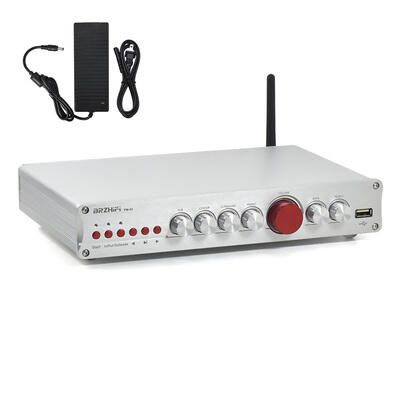
In the world of digital audio production and high-fidelity listening, selecting the right usb dac can make or break your monitoring setup. Whether you're a professional audio engineer, music producer, or discerning audiophile, understanding the key factors that influence latency performance in a usb dac is crucial for achieving optimal audio quality. Low-latency monitoring requires careful consideration of multiple technical specifications, interface protocols, and hardware components that work together to minimize delay between input and output signals.
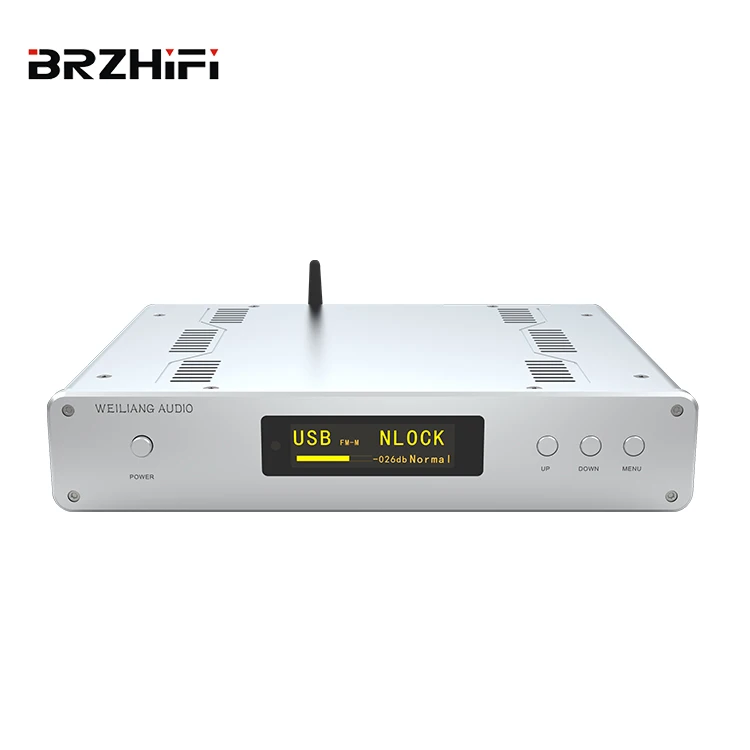
The digital-to-analog conversion process inherently introduces some degree of latency, but modern usb dac technology has evolved significantly to address this challenge. Professional-grade units now offer latency measurements in the single-digit milliseconds, making them suitable for real-time monitoring applications where timing is critical. The key lies in understanding how different components and design choices impact overall system performance.
Understanding USB DAC Latency Fundamentals
Digital Signal Processing Chain
The latency in any usb dac stems from several processing stages within the digital signal chain. First, the USB interface receives digital audio data from your computer or audio source, which must then be buffered and processed by the internal digital signal processor. This initial stage typically accounts for the largest portion of measurable delay in most consumer-grade units.
Following the initial reception, the digital audio undergoes sample rate conversion if necessary, digital filtering, and error correction processes. Each of these steps adds incremental delay, though modern implementations have optimized these processes to minimize their impact on overall latency. High-end usb dac models often employ dedicated processing chips specifically designed for low-latency applications.
Analog Output Stage Considerations
The final conversion from digital to analog signals represents another critical point in the latency equation. The quality and speed of the DAC chips themselves, typically from manufacturers like ESS Sabre, AKM, or Cirrus Logic, directly influence both audio quality and processing speed. Professional monitoring applications often require multiple output channels, which can impact overall system latency depending on the implementation.
Output buffer amplification stages also contribute to the total latency budget, particularly in units designed to drive high-impedance headphones or professional monitor speakers. The electrical characteristics of these analog circuits, including slew rate and bandwidth limitations, can introduce additional microsecond-level delays that accumulate across the entire signal path.
Critical Specifications for Low-Latency Performance
USB Protocol and Driver Implementation
The USB protocol version and driver implementation significantly impact the latency performance of any usb dac system. USB 2.0 Audio Class compliant devices offer plug-and-play compatibility but may not achieve the lowest possible latency due to standardized buffer sizes and timing constraints. Professional units often include proprietary ASIO drivers that bypass the operating system's audio subsystem for more direct hardware control.
USB 3.0 and newer protocols provide increased bandwidth and more sophisticated timing mechanisms, allowing for smaller buffer sizes and reduced overall system latency. However, the actual implementation quality varies significantly between manufacturers, making real-world testing essential when selecting a usb dac for critical monitoring applications.
Sample Rate and Bit Depth Impact
Higher sample rates generally correlate with reduced latency in well-designed usb dac implementations, as the increased temporal resolution allows for smaller buffer windows. Operating at 96kHz or 192kHz sample rates can provide measurable latency improvements compared to standard 44.1kHz or 48kHz rates, though this comes at the cost of increased processing overhead and power consumption.
Bit depth selection also influences latency characteristics, with 24-bit and 32-bit processing requiring more computational resources than 16-bit audio. Modern usb dac designs typically handle these higher bit depths without significant latency penalties, but older or budget-oriented units may show measurable performance differences.
Professional Monitoring Requirements
Real-Time Audio Production Needs
Professional audio production environments demand usb dac performance that enables real-time monitoring without perceptible delay. Recording musicians need to hear their performances in real-time alongside previously recorded tracks, making latency tolerance extremely low. Industry standards generally consider latency below 10 milliseconds acceptable for most applications, with critical applications requiring sub-5 millisecond performance.
Multi-channel monitoring setups present additional challenges, as each output channel must maintain phase coherence and identical latency characteristics. Professional usb dac units designed for these applications often include sophisticated clocking systems and parallel processing architectures to maintain consistent timing across all outputs simultaneously.
Integration with Digital Audio Workstations
The interaction between your chosen usb dac and digital audio workstation software significantly impacts overall system latency. Different DAW platforms implement audio buffering and driver communication in varying ways, making compatibility testing essential. Some usb dac manufacturers provide specific optimization guides or plugins designed to work seamlessly with popular professional software packages.
Buffer size settings within the DAW environment directly control the trade-off between latency and system stability. Smaller buffers reduce latency but increase the risk of audio dropouts or system instability, particularly on older or less powerful computer systems. The usb dac's driver quality determines how small these buffers can be set while maintaining reliable operation.
Hardware Architecture and Design Considerations
Internal Clocking Systems
The master clock implementation within a usb dac fundamentally determines its latency characteristics and overall audio quality. High-quality crystal oscillators provide the timing reference for all digital processing operations, with more precise clocking generally correlating with lower jitter and reduced latency variations. Professional-grade usb dac units often allow external clock synchronization for multi-device setups.
Phase-locked loop circuits within the usb dac maintain synchronization between the incoming USB data stream and the internal processing clock. The design and quality of these PLL circuits directly impact the unit's ability to maintain stable, low-latency operation under varying computer load conditions and USB bus traffic patterns.
Power Supply and Signal Isolation
Clean, stable power supplies contribute significantly to consistent latency performance in usb dac designs. Digital switching noise and ground loops can introduce timing variations that manifest as increased latency variation or jitter in the output signal. High-end units often incorporate galvanic isolation between the USB interface and audio processing sections to minimize these effects.
Linear power supply designs generally provide superior performance compared to switching supplies, though they require larger and heavier implementations. The power supply design choice impacts not only audio quality but also the consistency of timing-critical operations within the usb dac's digital processing chain.
Testing and Measurement Methodologies
Objective Latency Measurement Techniques
Accurate measurement of usb dac latency requires specialized test equipment and methodologies to capture the complete signal path delay. Professional audio analyzers can measure round-trip latency by sending a test signal through the system and measuring the time difference between input and output. These measurements must account for both the digital processing delay and any analog circuit delays in the complete signal chain.
Software-based measurement tools provide accessible alternatives for basic latency testing, though their accuracy depends on the computer's audio subsystem and measurement methodology. Loopback testing, where the usb dac output is connected back to an input, can reveal system-level latency characteristics but may not isolate the DAC's specific contribution to total delay.
Real-World Performance Evaluation
Laboratory measurements provide important baseline data, but real-world performance evaluation requires testing under actual usage conditions. Factors such as computer CPU load, USB bus utilization, and concurrent software applications can significantly impact the practical latency performance of any usb dac system.
Subjective evaluation by experienced audio professionals remains an important validation step, as measurable latency differences don't always correlate directly with perceptible performance differences in practical applications. The usb dac's behavior under stress conditions, including buffer underruns and system recovery, often proves more important than optimal-case latency specifications.
Budget and Performance Optimization
Cost-Effective Solutions for Different Applications
Entry-level usb dac units suitable for casual monitoring and consumer applications typically achieve latency performance adequate for most users at significantly lower cost than professional-grade equipment. These units may sacrifice some ultimate performance but often provide excellent value for applications where ultra-low latency isn't critical.
Mid-range usb dac options frequently offer the best balance between performance and cost for serious enthusiasts and semi-professional applications. These units typically incorporate higher-quality components and more sophisticated design approaches while remaining accessible to budget-conscious users who still require reliable low-latency performance.
Professional Investment Considerations
High-end professional usb dac units command premium prices but deliver performance levels necessary for critical monitoring applications. The investment in professional-grade equipment often pays dividends through improved workflow efficiency, reduced monitoring fatigue, and enhanced creative decision-making capabilities enabled by accurate, low-latency audio reproduction.
Long-term reliability and manufacturer support become increasingly important factors at higher price points, as professional users depend on their usb dac equipment for revenue-generating activities. Extended warranty coverage, firmware update availability, and technical support responsiveness should factor into purchase decisions for professional applications.
FAQ
What latency level is acceptable for professional audio monitoring?
Professional audio monitoring typically requires latency below 10 milliseconds for acceptable performance, with critical applications like live recording needing sub-5 millisecond latency. The exact tolerance depends on the specific application, with some users detecting latency as low as 2-3 milliseconds in direct A/B comparisons.
Do expensive usb dac units always provide better latency performance?
While higher-priced usb dac units generally offer superior latency performance, the correlation isn't absolute. Some mid-range units achieve excellent latency specifications through focused design optimization, while some expensive units prioritize audio quality or features over minimal latency. Always verify actual latency specifications rather than assuming price correlates with performance.
Can software settings significantly impact usb dac latency?
Yes, software configuration dramatically affects usb dac latency performance. Buffer size settings, sample rate selection, driver choice, and DAW optimization can create latency differences of several milliseconds or more. Proper software configuration often proves more important than hardware specifications in achieving optimal real-world latency performance.
How does USB cable quality affect latency in usb dac systems?
USB cable quality primarily impacts signal integrity and reliability rather than latency directly. Poor-quality cables may cause data transmission errors that force retransmission and buffer underruns, effectively increasing perceived latency. High-quality cables with proper shielding and impedance matching ensure consistent, reliable data transfer that supports optimal usb dac performance.